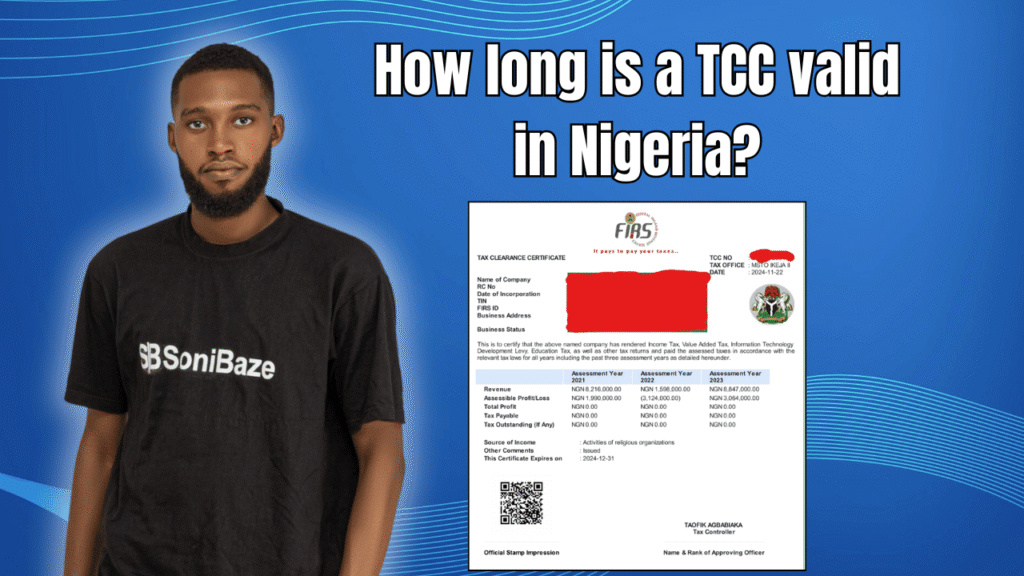
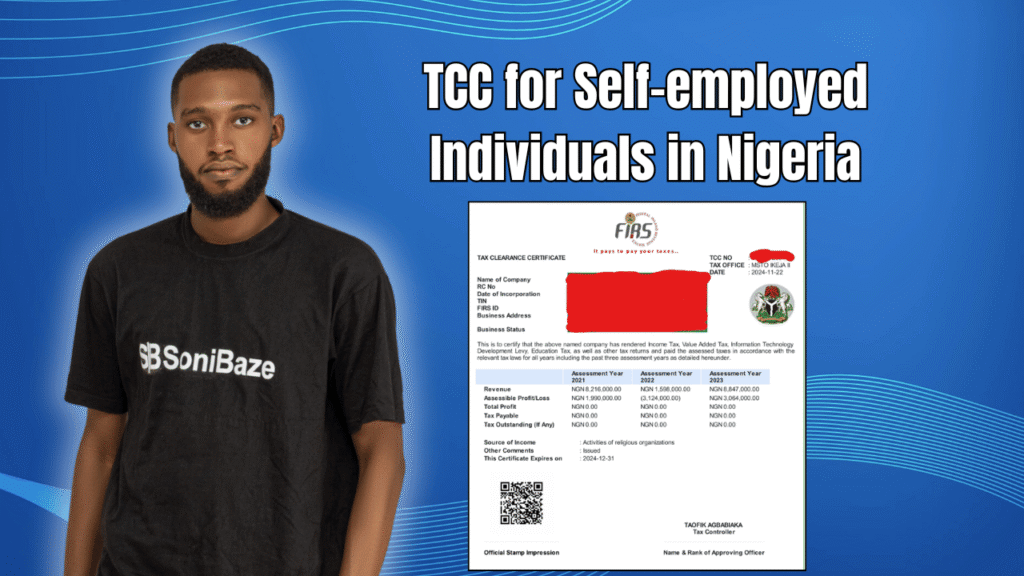
A lot of self-employed people in Nigeria assume the Tax Clearance Certificate is a corporate thing. Something for companies with accountants and compliance teams. Not for the freelance consultant, the sole trader, the independent professional running their practice.
That assumption gets expensive. The TCC is required for loan applications, visa processing, government contracts, and a growing number of formal business transactions. Self-employed individuals who have not filed returns and obtained one often hit a wall at the exact moment they need it most.
This article covers what the TCC means for self-employed individuals specifically, which authority issues it, what documents you need, and how the process works.
Obtain Your Tax Clearance Certificate (TCC)
Let us help you obtain your Tax Clearance Certificate (TCC) quickly and hassle-free. Our experts provide reliable support throughout the application process, ensuring your business meets all tax compliance requirements.
What Is a Tax Clearance Certificate?
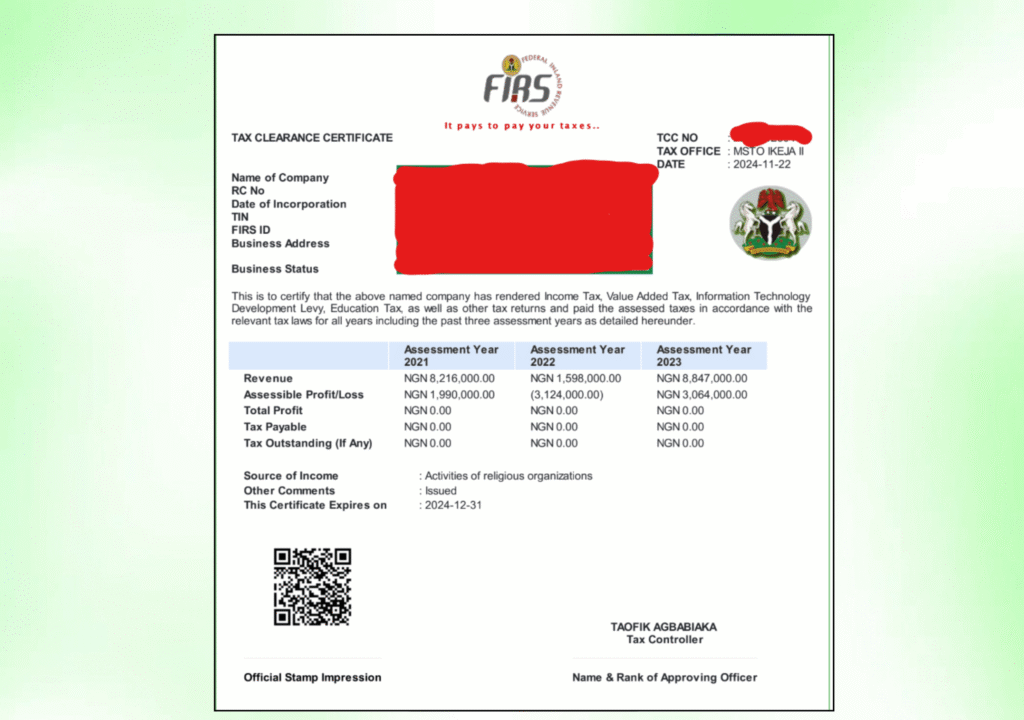
A Tax Clearance Certificate is an official document confirming that a taxpayer has met their tax obligations for a specified period, usually the preceding three years. It is issued by either the Federal Inland Revenue Service or the relevant State Internal Revenue Service, depending on the taxpayer’s category.
For self-employed individuals, the certificate shows your name, your Tax Identification Number, and the nature of your business or profession. It tells any requesting institution that you have filed your returns and settled your tax liabilities for the years covered.
Which Tax Authority Issues TCC to Self-Employed Individuals?
This is where many self-employed people get confused, and getting it wrong means filing in the wrong place entirely.
Self-employed individuals, sole proprietors, and partners in business names pay Personal Income Tax to the State Board of Internal Revenue of the state where they reside or primarily conduct their business. Not FIRS. The State Internal Revenue Service is the issuing authority for this category of taxpayers.
FIRS handles companies incorporated under the Companies and Allied Matters Act. If you run a registered limited liability company, FIRS is your authority. But if you operate as a self-employed individual, a sole proprietor, or under a business name, your state tax authority handles your returns and issues your TCC.
Knowing this distinction upfront saves time. Applying at FIRS when you should be at your State IRS means starting over.

Who Qualifies as Self-Employed for TCC Purposes?
Self-employed individuals for tax purposes include a broad range of people: lawyers, doctors, architects, consultants, engineers, freelancers, artisans, traders, and any other person earning income from their own professional practice or business activity rather than from an employer’s payroll.
If you earn income independently and are not on anyone’s PAYE schedule, you fall into this category. Employees who also run side businesses occupy a middle ground where both their employer-withheld PAYE and their self-employment income need to be accounted for before a TCC can be issued.
Why Self-Employed Individuals Need a TCC
The uses are more varied than most people realise. Loan applications from banks and financial institutions frequently require a TCC as evidence of financial credibility. Visa applications for several countries ask for it. Government tenders and procurement processes list it as a standard requirement.
Beyond transactions, the TCC is also proof of legal compliance. Self-employed individuals who build a reputation for clean documentation tend to move more smoothly through partnerships, investor conversations, and formal business relationships than those who cannot produce compliance records when asked.
Documents Required for TCC Application
The exact list can vary slightly between states, but the core documents are consistent.
Tax Identification Number. You need a TIN before anything else. If you do not have one, register with FIRS online to get one first. The TIN links your tax records across the system.
Proof of income or business activity. For self-employed individuals, this is typically a statement of accounts or a schedule of income and expenses for the years being assessed. It does not have to be formally audited for all states, but it needs to show your income and the basis on which your tax was calculated.
Evidence of tax payments. Receipts or bank transfer records confirming that the taxes assessed for the relevant years were actually paid. This is non-negotiable. Filed returns without evidence of payment will not produce a certificate.
Previous tax returns. Copies of the annual returns you filed for the years being covered. The TCC confirms three years of compliance, so you need to have filed for those three years.
Valid means of identification. A National ID card, international passport, or driver’s licence.
Completed TCC application form. Available at your State Internal Revenue Service office or, in some states, through the state tax authority’s online portal.
Obtain Your Tax Clearance Certificate (TCC)
Let us help you obtain your Tax Clearance Certificate (TCC) quickly and hassle-free. Our experts provide reliable support throughout the application process, ensuring your business meets all tax compliance requirements.
How the Application Process Works
Register and Get a TIN First
If you have not previously registered with the tax authorities, the first step is obtaining a Tax Identification Number. This is done through the FIRS TIN registration portal or through your State IRS depending on your category. Without a TIN, there is no tax record to clear.
File Your Annual Returns
Annual tax returns for self-employed individuals are due between January and March of the year following the tax year. This means your 2024 income returns were due by March 2025. Returns not filed on time attract penalties.
Before applying for a TCC, your returns for the three years being covered must be on file. If they are not, you need to file them first, including any outstanding ones, before the TCC application will be processed.
Compute and Pay Any Outstanding Tax
Filing returns reveals what tax was owed. Any outstanding liabilities from prior years need to be settled before FIRS or the State IRS will issue a clearance certificate. This is the point where people who have been ignoring their returns for years face the cumulative bill.
Pay through the approved payment channels rather than making cash payments directly to tax officers. Keep every payment receipt.
Submit the TCC Application
With returns filed and taxes paid, submit the TCC application form along with your supporting documents to your State Internal Revenue Service. In some states this can be done through an online portal, in others it still requires a physical visit.
Collect Your Certificate
Processing time varies by state. Some issue the certificate within a few days of a complete application. Others take two to four weeks. Following up through the official channel if there is no response after two weeks is reasonable.
FIRS TaxPro-Max and the e-TCC
FIRS introduced the TaxPro-Max platform as part of efforts to digitalise tax administration in Nigeria. For taxpayers under FIRS jurisdiction, specifically companies rather than self-employed individuals, the electronic TCC is now issued through this platform and can be verified online using the TCC number.
Some state tax authorities have also moved toward electronic certificates and online verification. It is worth checking whether your state’s IRS has an online portal, since the process in digitised states is considerably faster than in those still running paper-based systems.
Common Problems and How to Avoid Them
Applying at the wrong authority. Self-employed individuals who go to FIRS instead of their State IRS waste time and sometimes pay for services they do not need. Confirm your correct authority before submitting anything.
Missing return years. A TCC covers three years. If you have not filed for one of those years, the certificate cannot be issued until that year’s return is submitted and assessed. Going back to file outstanding returns adds time to the process.
No payment records. Some people filed their returns but paid the assessed tax in cash without keeping receipts. Without evidence of payment, the tax authority has no record of settlement. Always pay through official bank channels and retain your receipts permanently.
Outdated TIN. TINs registered years ago and never used can sometimes have data inconsistencies in the system. If your TIN does not return your correct records when queried, visit the FIRS office or your State IRS to have the records corrected before applying.
TCC for Self-Employed at a Glance
| Item | Detail |
|---|---|
| Issuing authority | State Internal Revenue Service (for self-employed individuals) |
| Coverage period | Three preceding tax years |
| Validity | One year from date of issue |
| Key prerequisite | Filed returns and paid taxes for the covered years |
| Application channel | State IRS office or state online portal where available |
| Processing time | Varies by state, typically a few days to four weeks |
Frequently Asked Questions
Can a self-employed person get a TCC from FIRS?
Generally no, not for personal income tax. Self-employed individuals pay Personal Income Tax to their State Internal Revenue Service, which is also the body that issues their TCC. FIRS handles companies. If you operate a registered limited liability company alongside your self-employment, FIRS issues the company’s TCC while your state IRS handles your personal TCC.
What if I have not filed tax returns for several years?
You need to file all outstanding returns before a TCC can be issued. Most State IRS offices will process back returns, and the taxes assessed for those years, along with any applicable penalties, need to be paid before the certificate is granted. Starting this process early is important if you have accumulated several unfiled years.
Is the TCC valid for one year or three years?
The certificate is valid for one year from the date it is issued. The three-year figure refers to the period of tax compliance it covers, meaning it confirms you paid taxes for the preceding three years. You need to renew it annually.
Does having a TCC mean I have no other tax obligations?
No. A TCC confirms you were compliant up to the period it covers. You are still required to file returns and pay taxes for subsequent years. Local government levies, tenement rates, and other local charges are also separate and not covered by the TCC.
How much does it cost to get a TCC?
Obtaining a TCC from the State Internal Revenue Service does not carry a standard government fee beyond any taxes owed. Some states charge a small administrative fee for processing. The main cost is the tax liability itself, along with any penalties for late filing if returns were not submitted on time.
Can I use my TCC for a visa application?
Yes. Several foreign embassies and high commissions in Nigeria accept a valid TCC as evidence of financial credibility and tax compliance as part of the visa documentation package.
Conclusion: Sort Your Returns Before You Need the Certificate
The self-employed in Nigeria who stay on top of their annual filings never have a TCC problem. The certificate becomes a routine renewal every year rather than an emergency document to chase when something important is on the line.
If you have not filed returns for a year or more, start with getting your income records together and approaching your State Internal Revenue Service to regularise your position. The conversation is usually more straightforward than people expect, and clearing the backlog opens the door to a certificate that most formal opportunities in Nigeria will eventually ask for.
Obtain Your Tax Clearance Certificate (TCC)
Let us help you obtain your Tax Clearance Certificate (TCC) quickly and hassle-free. Our experts provide reliable support throughout the application process, ensuring your business meets all tax compliance requirements.