The Tax Clearance Certificate is one of those documents that shows up on nearly every compliance checklist in Nigeria. Government contracts require it. Banks ask for it. Licence renewals depend on it. Yet many business owners and individuals are not entirely sure who actually issues it or where to go when they need one.
The short answer is that two different agencies issue it, depending on whether you are a company or an individual. Getting this wrong sends you to the wrong office, which wastes time you often do not have.
This article sets out exactly who issues the TCC in Nigeria, how the responsibility is divided, and what each applicant category needs to know before starting the process.
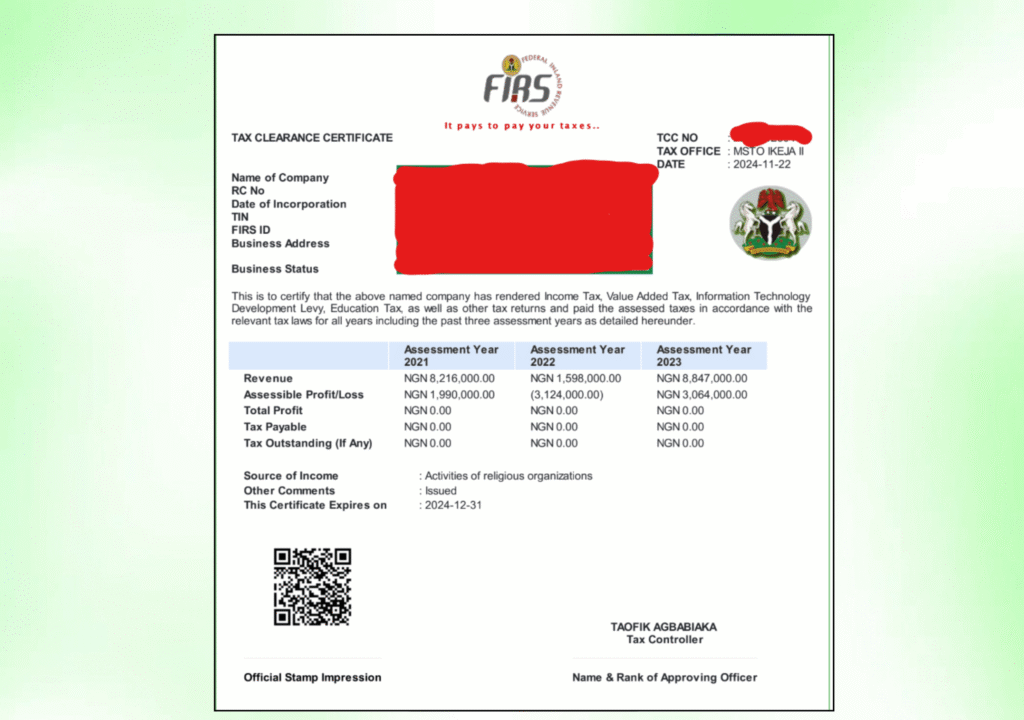
Obtain Your Tax Clearance Certificate (TCC)
Let us help you obtain your Tax Clearance Certificate (TCC) quickly and hassle-free. Our experts provide reliable support throughout the application process, ensuring your business meets all tax compliance requirements.
What Is a Tax Clearance Certificate?
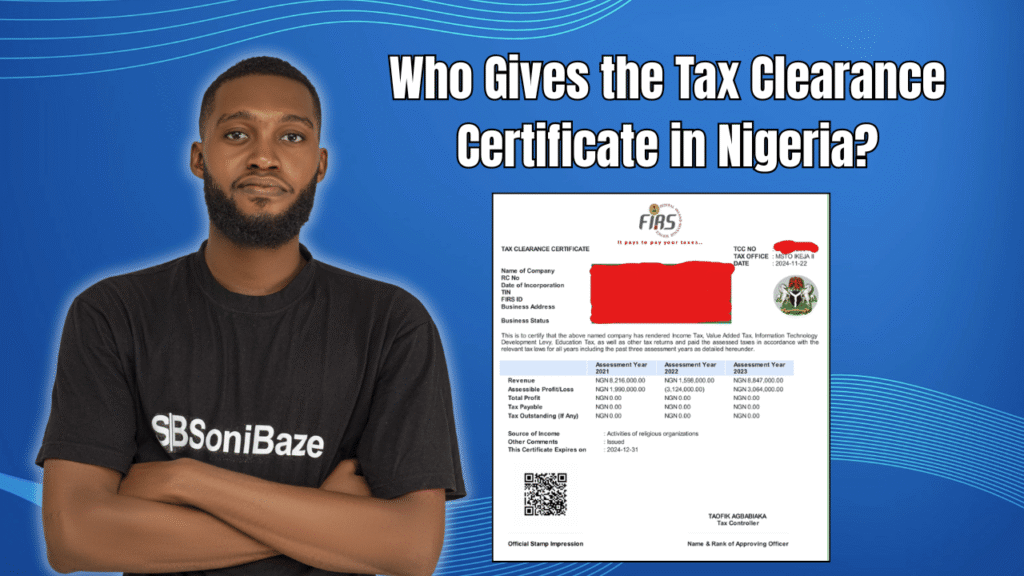
A Tax Clearance Certificate is an official document confirming that a taxpayer has fulfilled all their tax obligations for a specific period, usually the three years immediately before the current year of assessment. It does not mean your taxes for the current year are settled. It covers what has already passed and been paid.
The certificate shows the taxpayer’s name, Tax Identification Number, and for companies, the nature of business. For individuals, it also shows the name of the employer. The TCC covers the three preceding years of assessment, meaning a certificate obtained in 2025 covers your tax record for 2022, 2023, and 2024.
Who Issues the Tax Clearance Certificate in Nigeria?
Two agencies share responsibility for issuing TCC in Nigeria, and the split is clear.
FIRS Issues TCC for Companies
The Federal Inland Revenue Service is the sole agency responsible for issuing Tax Clearance Certificates to companies in Nigeria. This applies regardless of which state the company operates in. A company based in Kano, a company in Enugu, and a company in the FCT all go to FIRS for their TCC. The state of operation does not change which authority handles company tax clearance.
FIRS issues TCCs under the authority granted by the Federal Inland Revenue Service Establishment Act 2007. Company Income Tax, Value Added Tax, and Education Tax all fall under FIRS jurisdiction, and clearance across all these obligations is what the company TCC confirms.

State Internal Revenue Services Issue TCC for Individuals
For individuals, the Tax Clearance Certificate is issued by the relevant State Internal Revenue Service in the state where the individual resides or works. A personal income tax payer in Lagos applies to the Lagos State Internal Revenue Service. Someone in Rivers State goes to the Rivers State Board of Internal Revenue. Someone in Abuja, as a resident of the FCT, applies to the FCT Inland Revenue Service.
The split exists because personal income tax in Nigeria is a state-level tax collected under the Pay As You Earn scheme for employees, or through direct assessment for self-employed individuals and business owners whose businesses are not incorporated as companies.
What About PAYE Employees?
Employees whose taxes are deducted through PAYE are covered by their employer’s remittance to the relevant State Internal Revenue Service. However, an individual employed under PAYE still needs to apply personally for their own TCC when required.
For group applications, employers can process TCC requests for their employees as a group through the State IRS rather than each employee applying individually. This is particularly common for large organisations where multiple staff members may need the certificate simultaneously.
Why the Split Matters
Sending a company application to a State IRS, or an individual application to FIRS, results in misdirected effort. Neither agency will process an application that belongs to the other’s jurisdiction.
For company directors who are also individuals, both types of TCC may be relevant. The company obtains its TCC from FIRS. The director obtains their personal TCC from the State IRS where they are resident. These are two separate documents covering two separate tax profiles.
Obtain Your Tax Clearance Certificate (TCC)
Let us help you obtain your Tax Clearance Certificate (TCC) quickly and hassle-free. Our experts provide reliable support throughout the application process, ensuring your business meets all tax compliance requirements.
The e-TCC: How Digital Issuance Works Now
FIRS now issues electronic Tax Clearance Certificates through its TaxPro Max portal. The e-TCC is a digitised version of the traditional paper certificate. It comes with a unique QR code and digital signature, which makes it verifiable online without the need for physical confirmation.
For companies whose tax returns are fully filed and whose liabilities are cleared for the three preceding years, the system can generate the TCC instantly upon application through the portal. The certificate is displayed on screen and also sent to the company’s registered email address.
If the system cannot generate the TCC, it will indicate the reason. Common reasons include unfiled returns for one or more years, an outstanding tax liability, or a pending reconciliation between the company’s records and FIRS records. Each of these requires resolution before the certificate can be issued.
Several State Internal Revenue Services have also introduced electronic TCC systems. Lagos State operates the e-TCC system through the LIRS portal. Ogun State uses the OGETAX portal. Other states vary, and some still process applications physically at tax offices.
When You Need a TCC
The TCC is required in a wide range of situations. Government contract bids always list it as a mandatory compliance document. Banks often ask for it as part of credit assessments or high-value account openings. Licence and permit renewals from agencies such as NCC require it. Certificate of Occupancy applications and property title transfers require it. Immigration applications including expatriate permits and residency documents require it.
A new company is not automatically exempt. If your company was incorporated last month and a contract requires a TCC, you can still apply. FIRS will issue a certificate showing zero liability for the period before your company’s formation, which confirms that no taxes were outstanding during a period when none were yet due.
Who Gives the TCC in Summary
| Applicant Type | Issuing Authority | Portal or Channel |
|---|---|---|
| Registered company | Federal Inland Revenue Service (FIRS) | TaxPro Max portal at taxpro.firs.gov.ng |
| Individual or sole trader | State Internal Revenue Service (SIRS) of the relevant state | State IRS portal or physical tax office |
| PAYE employee (individual TCC) | State Internal Revenue Service of the state of employment or residence | State IRS portal or physical tax office |
| PAYE group application for employees | State Internal Revenue Service via employer | State IRS group application process |
| FCT resident (individual) | FCT Inland Revenue Service | FCT IRS office or portal |
Frequently Asked Questions
Can a company apply for TCC at the State Internal Revenue Service?
No. FIRS is the only agency authorised to issue TCC for companies. State IRS offices do not issue TCC for registered companies regardless of where the company is located. Submitting a company application to a State IRS will not result in a valid certificate.
How many years does the TCC cover?
The TCC covers the three years immediately before the current year of assessment. A certificate applied for and issued in 2025 covers the 2022, 2023, and 2024 tax years. This three-year coverage is standard for both FIRS-issued and State IRS-issued certificates.
Can a new company with no tax history get a TCC?
Yes. A company that has recently been incorporated and has not yet generated taxable income can still apply for a TCC. FIRS will issue the certificate showing zero tax liability for the period, which confirms that no obligations existed and none were unpaid. This is a valid TCC accepted by most procurement and regulatory bodies.
What is the difference between a FIRS TCC and a State IRS TCC?
A FIRS TCC confirms company-level compliance with federal taxes including Company Income Tax, VAT, and Education Tax. A State IRS TCC confirms personal income tax compliance for individuals and is state-specific. The two documents serve different purposes and are not interchangeable.
How long does it take to get a TCC from FIRS?
Under the TaxPro Max system, companies with fully filed returns and no outstanding liabilities can receive their e-TCC almost immediately after application. Where there are discrepancies or outstanding liabilities to resolve, the process can take anywhere from a few days to several weeks depending on the complexity of the issue.
What happens if my TCC application is declined?
FIRS or the State IRS will indicate the reason for the decline. Common reasons include unfiled returns for one or more years, outstanding tax payments, or discrepancies in the company’s registration data. Resolving the underlying issue and reapplying is the standard path forward. Engaging a tax consultant helps speed up the resolution, particularly for multi-year filing gaps.
Conclusion: Know Your Issuing Authority Before You Apply
The single most important thing to understand about the TCC in Nigeria is the jurisdictional split. FIRS handles companies. State Internal Revenue Services handle individuals. Mixing these up sends applicants in the wrong direction and costs time that most people apply for this certificate at the last minute.
Whether you are a business owner renewing a licence, a contractor preparing a government bid, or an individual applying for credit or immigration documents, confirming which authority handles your category before you start puts you ahead of the process rather than behind it.
Obtain Your Tax Clearance Certificate (TCC)
Let us help you obtain your Tax Clearance Certificate (TCC) quickly and hassle-free. Our experts provide reliable support throughout the application process, ensuring your business meets all tax compliance requirements.