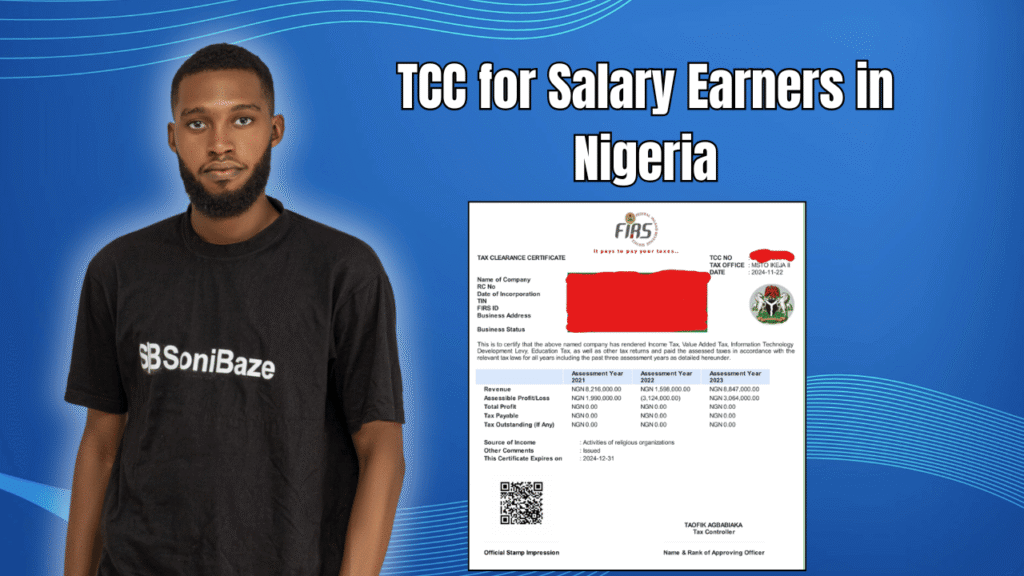
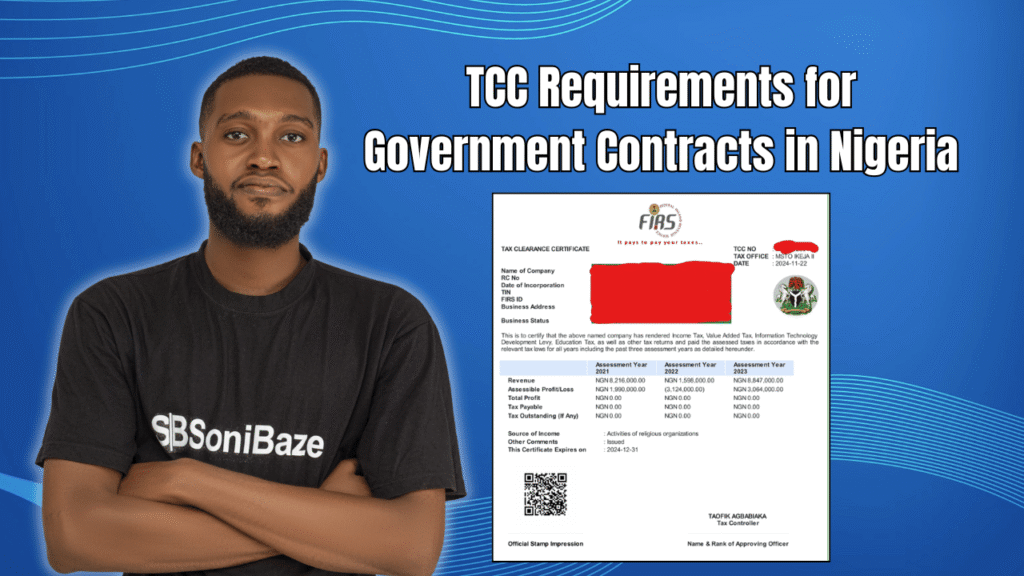
A lot of Nigerian businesses lose government contract bids not because their pricing was wrong or their technical proposal was weak. They lose because a compliance document was missing or expired. The Tax Clearance Certificate sits near the top of that list.
If your company is actively bidding for government contracts, or planning to, this article covers what the TCC actually is, what it requires, how it fits into the procurement process, and the details most applicants overlook.
Obtain Your Tax Clearance Certificate (TCC)
Let us help you obtain your Tax Clearance Certificate (TCC) quickly and hassle-free. Our experts provide reliable support throughout the application process, ensuring your business meets all tax compliance requirements.
What Is a Tax Clearance Certificate?
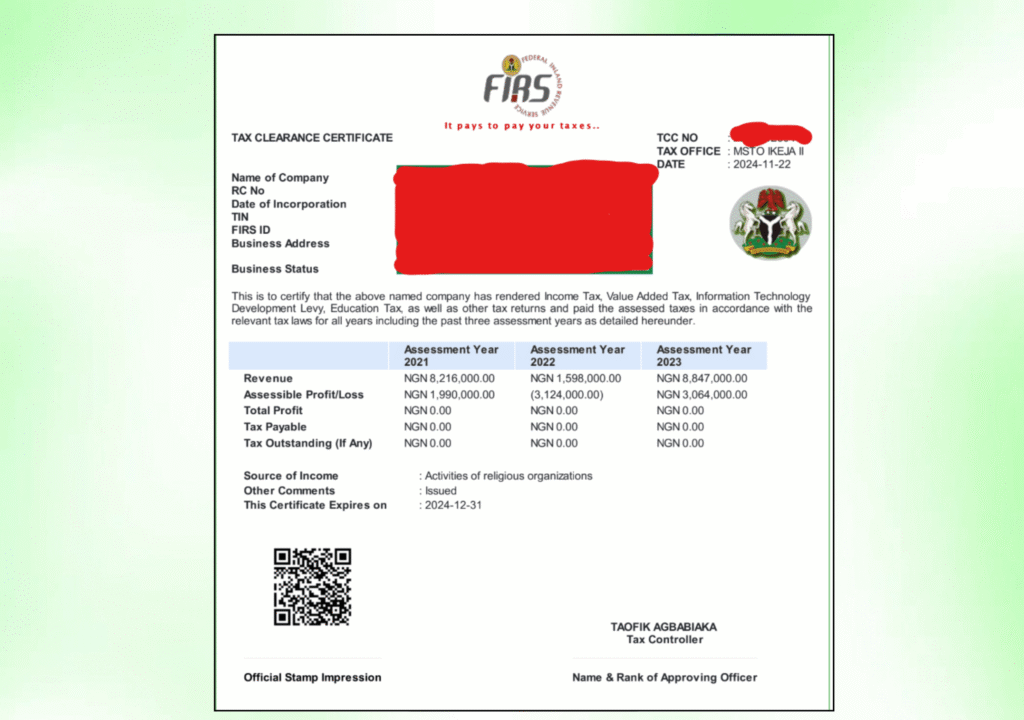
A Tax Clearance Certificate is an official document that confirms a taxpayer has declared income and paid all applicable taxes for a specified period, usually the three years immediately preceding the current year of assessment.
It is issued by the Federal Inland Revenue Service for companies and by the State Internal Revenue Service for individuals and personal income tax matters. The certificate does not just confirm that you have a TIN or that your company exists on the tax register. It confirms that tax obligations have been assessed, filed, and settled.
Since the Nigeria Tax Administration Act 2025 took effect in January 2026, the process has been significantly digitised. Companies can now generate their TCC online through the NRS e-TCC portal, often within minutes, provided their filings and payments are fully up to date.
Why the TCC Matters for Government Contracts
Government procurement in Nigeria requires multiple compliance certificates, and the TCC is one of the most consistently demanded. Most government contracts at the federal level require it as a pre-qualification document. Submitting a bid without a valid, current TCC is enough to get your entire application disqualified before technical evaluation begins.
The certificate demonstrates fiscal responsibility. It tells the procuring agency that your company has been paying its taxes, filing returns on time, and operating as a compliant business entity. Beyond procurement, a valid TCC is also required for business licence renewals, loan applications, expatriate quota processing, and some land transactions.

Who Needs a TCC for Government Contracts?
Any company or individual intending to bid for or execute contracts with federal or state government agencies needs a valid TCC. This includes:
Limited liability companies bidding for supply, works, or services contracts. Consultants and professional service providers in IT, engineering, legal, financial, and management fields. Non-governmental organisations participating in government-funded programmes. Sole traders and self-employed professionals bidding as individual contractors. Foreign companies and their local subsidiaries executing transactions with Nigerian government entities.
The obligation applies regardless of company size. A small firm with five employees and an enterprise with five hundred face the same requirement on a government tender checklist.
FIRS TCC vs State IRS TCC: Understanding the Difference
This is where many businesses get caught out. The TCC is not a single document from a single authority. Which body issues it depends on the type of tax being certified.
The FIRS issues TCC for companies and corporate entities, covering companies income tax, value added tax, and related federal tax obligations. The State Internal Revenue Service issues TCC for individuals, sole traders, and personal income tax matters. Each state has its own IRS, meaning an individual in Abuja deals with the FCT Internal Revenue Service, while one in Lagos deals with the Lagos State Internal Revenue Service.
For government procurement, what matters is matching the right certificate to the right entity type. A company’s FIRS-issued TCC covers its corporate tax compliance. A sole trader bidding as an individual needs a TCC from the relevant state IRS. Getting this wrong is a common source of rejected applications.
Documents Required to Apply for a TCC
The specific documents differ slightly depending on whether the applicant is a company or an individual, but the core requirements follow the same pattern.
Tax Identification Number. This is mandatory for all applicants. Every registered taxpayer in Nigeria must have a TIN before they can apply for a TCC.
Evidence of tax payments. This means receipts, payment records, or bank statements showing that tax liabilities for the relevant years have actually been settled. Filings alone are not sufficient. If the tax was assessed and not paid, the TCC will not be issued.
Filed tax returns. Returns for the preceding three years of assessment must have been submitted and accepted. Outstanding returns are one of the most common blockers in TCC applications.
Company incorporation documents. For corporate applicants, this includes the Certificate of Incorporation and the CAC status report confirming current directors and shareholders.
Audited financial statements. For companies, audited accounts are used to determine taxable income and verify that the declared figures match what was filed with FIRS. A company with audited accounts that contradict its filed returns will face queries during the TCC assessment.
Recent financial statements. Some applications also ask for current management accounts or bank statements to support the financial picture being presented.
Obtain Your Tax Clearance Certificate (TCC)
Let us help you obtain your Tax Clearance Certificate (TCC) quickly and hassle-free. Our experts provide reliable support throughout the application process, ensuring your business meets all tax compliance requirements.
TCC Requirements at a Glance
| Requirement | Companies | Individuals |
|---|---|---|
| Tax Identification Number | Required | Required |
| Filed tax returns (3 years) | Required | Required |
| Evidence of tax payments | Required | Required |
| Certificate of Incorporation | Required | Not applicable |
| CAC Status Report | Required | Not applicable |
| Audited financial statements | Required | Not typically required |
| Personal identification | Not applicable | Valid government-issued ID |
| State IRS compliance | May also be required | Primary requirement |
How to Apply for a TCC in 2026
The process is now largely digital for companies at the federal level. Companies apply through the NRS e-TCC portal. If all filings are current and tax payments are confirmed on the system, the certificate can be generated online almost immediately.
For applications where there are outstanding filings, unreconciled payments, or discrepancies between declared income and audited figures, the process requires manual review and takes longer. FIRS advertises a processing time of approximately two weeks where all obligations are confirmed clear, but manual review cases take considerably longer.
Individuals applying through state IRS portals follow a similar process. In Lagos, for example, the LIRS eTax platform allows individuals to download their TCC directly after completing the compliance checklist, which includes filed returns, an updated profile, a passport photograph, and a current address.
For companies without portal access or with complex outstanding tax issues, engaging a tax consultant or chartered accountant to reconcile records and manage the application reduces the back-and-forth significantly.
Common Problems That Delay TCC Applications
Unfiled returns for previous years. Companies that have not filed corporate income tax returns for one or more of the preceding three years cannot receive a TCC until those returns are filed and assessed.
Unreconciled payment records. FIRS maintains its own payment database. If a company made tax payments but those payments are not reflected on the FIRS system, the company needs to provide evidence and request reconciliation before the TCC can be issued.
Discrepancies between audited accounts and filed returns. If a company’s audited financial statements show significantly different figures from what was declared to FIRS, this triggers a review and potentially an audit before the TCC is released.
Applying to the wrong authority. A sole trader applying to FIRS for a TCC that should come from the state IRS, or vice versa, wastes time and causes confusion during bid evaluation.
Expired TCC submitted with a bid. A TCC is valid for one year from the date of issue. Submitting a certificate that expired six months ago is the same as submitting no certificate at all from a procurement officer’s perspective.
How Long Is a TCC Valid?
A Tax Clearance Certificate is valid for one year from the date of issue. Companies that rely on the TCC for ongoing government contracting need to renew it annually, which means filing returns and settling liabilities for the most recent three-year assessment period each time.
The practical implication is that a company actively pursuing government contracts should treat TCC renewal as a recurring calendar task rather than something triggered by the next bid requirement.
Frequently Asked Questions
Does a company need both a FIRS TCC and a state IRS TCC for government contracts?
In most cases, a corporate entity’s FIRS-issued TCC covers its federal procurement requirements. However, some state government procurement processes and certain federal agencies with state-level operations may ask for evidence of state tax compliance separately. Check the specific tender requirements rather than assuming one certificate covers all bases.
Can a company apply for a TCC if it has outstanding tax liabilities?
A TCC will not be issued if there are outstanding liabilities that have been assessed and confirmed. Companies with disputed assessments can seek an objection or appeal with FIRS, but an unresolved outstanding balance typically blocks TCC issuance. Settling liabilities before the application is the only straightforward path.
What is the difference between a TIN and a TCC?
A TIN, or Tax Identification Number, is the number that registers you on the tax system. It does not confirm that any tax has been paid. A TCC is issued based on a confirmed payment and filing history. Having a TIN is a prerequisite for getting a TCC, but having a TIN alone does not satisfy procurement requirements.
How far back does the TCC cover?
The TCC covers the three years immediately preceding the current year of assessment. An application made in 2026 would cover the 2023, 2024, and 2025 tax years.
Can a newly incorporated company get a TCC?
A company that has just been incorporated and has no tax history yet can apply for a TCC indicating that it has no tax liability for the period since incorporation. FIRS can issue such a certificate, though some procurement processes treat this differently from a certificate confirming three years of active compliance. Check the tender requirements for how newly incorporated companies are treated.
Is the e-TCC the same as the physical TCC?
Yes. The electronic TCC generated through the NRS portal has the same legal standing as a physically issued certificate. Procurement officers can verify its authenticity using the unique reference number on the document.
Conclusion: Keep Your Tax House in Order Before the Tender Comes
The TCC is only as ready as your tax records are. Companies that file returns on time, pay liabilities when assessed, and reconcile their payment records with FIRS annually can generate a TCC quickly when a bid requires it. Companies that have let filings lapse or carry unresolved liabilities often discover the problem too late to fix it before a tender deadline.
Build TCC renewal into your annual compliance calendar. Treat it the same way you treat PENCOM remittances and NSITF contributions. The certificate itself takes minutes to generate when your records are in order. Getting your records into order is where the real work is.
Obtain Your Tax Clearance Certificate (TCC)
Let us help you obtain your Tax Clearance Certificate (TCC) quickly and hassle-free. Our experts provide reliable support throughout the application process, ensuring your business meets all tax compliance requirements.