A Tax Clearance Certificate is one of those documents that Nigerian businesses need regularly but rarely think about until a deadline forces them to. Government contracts require it. Banks ask for it. Licence renewals depend on it. And yet many business owners are still going through a manual process at a tax office when the online route is significantly faster.
This article covers what the TCC is, who needs it, what to prepare, and how to apply online through the FIRS portal step by step.
Obtain Your Tax Clearance Certificate (TCC)
Let us help you obtain your Tax Clearance Certificate (TCC) quickly and hassle-free. Our experts provide reliable support throughout the application process, ensuring your business meets all tax compliance requirements.
What Is a Tax Clearance Certificate?
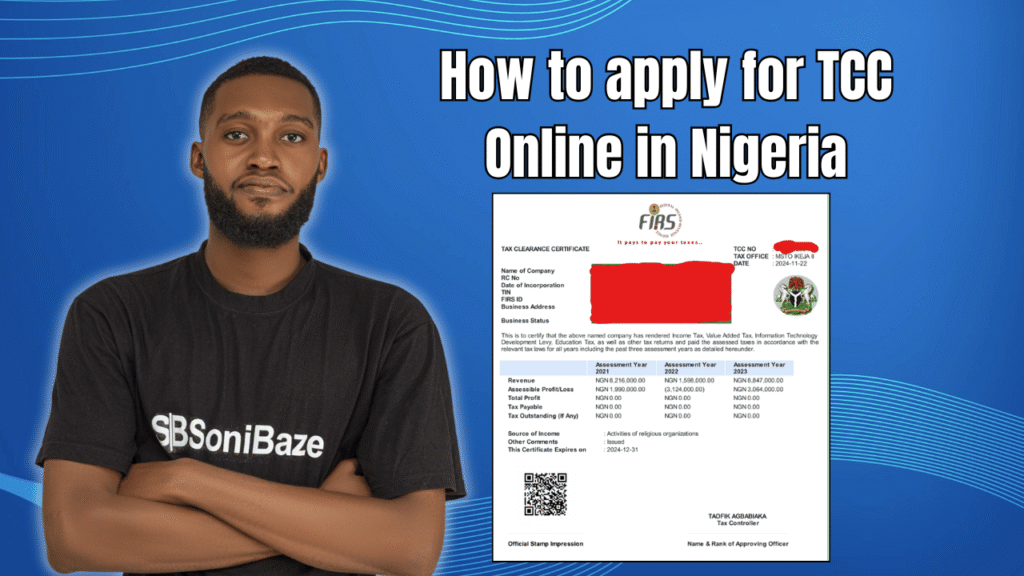
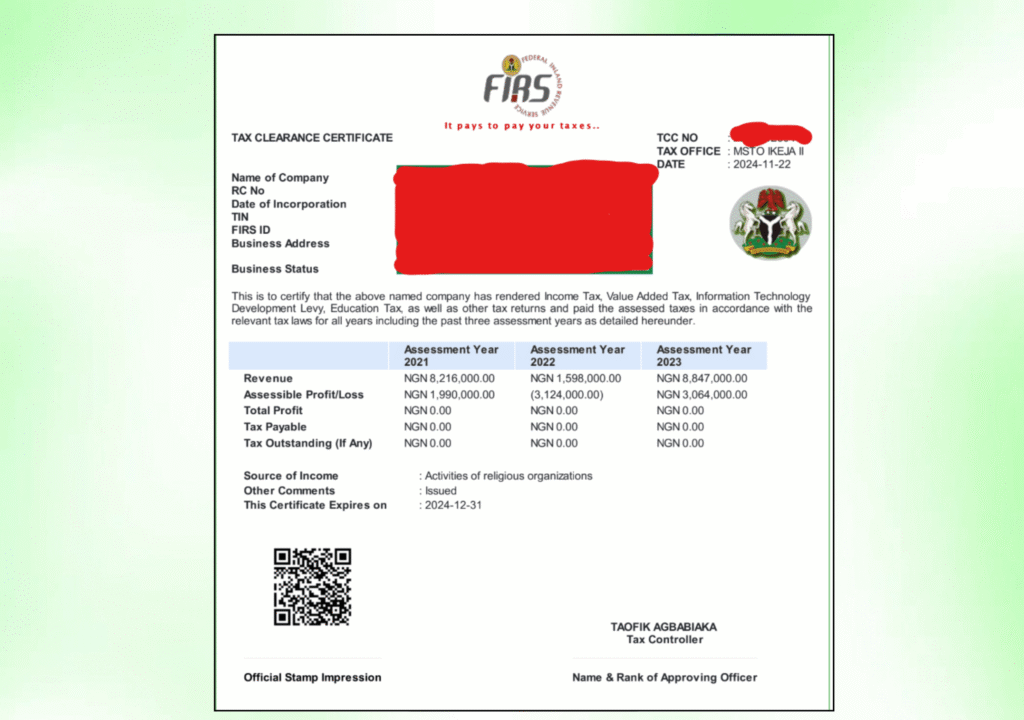
A Tax Clearance Certificate, commonly called a TCC, is an official document issued by a revenue authority confirming that a taxpayer has paid all taxes due up to the date of issuance. In Nigeria, it is issued annually and covers the three years immediately preceding the current year of assessment.
The TCC is issued by two different bodies depending on your tax profile. The Federal Inland Revenue Service issues it for companies and certain categories of individuals, including those whose income comes from the federal government. State Internal Revenue Services issue it for individuals whose income tax is managed at the state level.
The document itself contains the taxpayer’s name, Tax Identification Number, nature of business or name of employer, and a year-by-year breakdown of chargeable income, tax payable, and tax paid for the three preceding years.
Who Needs a TCC in Nigeria?
Most businesses and many individuals will need a TCC at some point. The specific situations where it is required include bidding for government contracts at the federal or state level, opening certain types of corporate bank accounts, obtaining or renewing business permits and licences, processing expatriate quota applications, applying for government loans or grants, and completing certain real estate transactions.
Individuals applying for immigration documents, contract employment in the public sector, and some professional registrations also need a TCC. Expatriates and non-citizens conducting business in Nigeria are not exempt.

Before You Apply: Getting Your Tax House in Order
The TCC is the end product of a tax compliance process. You cannot get one if your underlying obligations are outstanding. Before applying, confirm the following are in place.
Your company must be registered with FIRS and have an active Tax Identification Number. All tax returns must be filed accurately and completely for at least the preceding two years. This includes Company Income Tax annual returns, Value Added Tax, Withholding Tax, and Pay As You Earn returns where applicable. All outstanding taxes must be paid in full, since FIRS will not issue a TCC while any liability remains unpaid.
If you are unsure whether all returns have been filed and taxes settled, contact your FIRS office or check your compliance status through the e-Services portal before attempting to generate the certificate.
Online vs Manual Application
There are two ways to apply for a TCC in Nigeria. Online through the FIRS TCC portal, and manually by visiting a FIRS office in person.
The online route is available to existing companies, meaning companies that have registered for taxes with FIRS and have filed corporate tax returns for two or more years. For this category, the online process is fully automated. If your compliance record is clean, the certificate can be generated almost instantly without visiting any office.
New companies, meaning those that have filed returns for fewer than two years, cannot use the automated online system and must go through the manual process at a FIRS office.
Obtain Your Tax Clearance Certificate (TCC)
Let us help you obtain your Tax Clearance Certificate (TCC) quickly and hassle-free. Our experts provide reliable support throughout the application process, ensuring your business meets all tax compliance requirements.
How to Apply for TCC Online: Step by Step
Step 1: Visit the FIRS TCC Portal
Go to tcc.firs.gov.ng. This is the official FIRS portal for e-TCC generation. Do not use any third-party site or agent portal for this process.
Step 2: Log In with Your Company’s Tax ID
If you have not previously created an account on the portal, you will need to register first using your company’s Tax Identification Number. Once registered, log in using your credentials. The system is linked to your company’s compliance history on the FIRS database.
Step 3: Click on Generate TCC
Once logged in, locate and click the option to generate a TCC. The system will automatically check your compliance status, including whether all required returns have been filed and all taxes paid for the three preceding years of assessment.
Step 4: Receive and Download Your Certificate
If your compliance record is clean and no issues are flagged, the TCC is generated immediately. A copy is displayed on screen and also sent to your registered email address. Download the PDF and print it for use.
The e-TCC includes a QR code that allows third parties such as procurement officers, banks, and licence-issuing agencies to verify its authenticity online without calling FIRS directly.
What to Do If the System Cannot Generate Your TCC
This is where many applicants get stuck. The portal generates the certificate automatically if everything is in order, but if there is a problem, it returns an error message instead of a certificate.
The most common reasons the system fails to generate a TCC are unfiled returns for one or more years, outstanding tax liabilities that have not been paid, pending tax reconciliation where there is a discrepancy between what FIRS shows and what your records show, or a mismatch between your company’s registered details and the information on the portal.
When this happens, do not keep retrying. Read the error message carefully to identify what is flagged, resolve the specific issue, and then attempt to generate the certificate again. For outstanding liabilities, you will need to make payment and allow the system time to update before retrying. For reconciliation issues, visiting the FIRS office directly with supporting documents is often the fastest resolution path.
Manual TCC Application: When and How
If your company is newly registered and has filed returns for less than two years, or if the online portal cannot process your application for reasons that cannot be resolved remotely, you will need to apply manually.
The manual process involves visiting your nearest FIRS office and submitting a written application for the TCC. You will need to bring your Tax Identification Number certificate, your tax returns for the last three years where available, proof of tax payments including receipts and certificates of payment, a detailed brief about the taxpayer, and two passport photographs if you are an individual applicant.
FIRS reviews the submission, verifies compliance, and issues the TCC if everything checks out. The manual process typically takes up to two weeks from the date of a complete and accurate submission.
State TCC vs Federal TCC: Which Do You Need?
Individual taxpayers whose income tax is managed by a state government, which covers most employees in the private sector, need to obtain their TCC from the relevant State Internal Revenue Service rather than FIRS.
For Lagos-based individuals, the process goes through the Lagos Inland Revenue Service portal at etax.lirs.net. Other states have their own portals. The steps are broadly similar: file Personal Income Tax returns for the three preceding years, settle any outstanding taxes, and apply through the state portal or at the physical tax office.
Companies and federal government employees, as well as individuals with income sources that fall under federal tax jurisdiction, obtain their TCC from FIRS.
TCC Requirements at a Glance
| Requirement | Detail |
|---|---|
| Active TIN | Must be registered with FIRS or the relevant State IRS |
| Filed tax returns | Returns filed for at least 2 to 3 preceding years |
| Outstanding taxes paid | No unpaid liabilities at the time of application |
| e-TCC portal login | Account created at tcc.firs.gov.ng |
| Manual application documents | TIN certificate, tax returns, payment receipts, taxpayer brief |
| Validity | Covers the three years preceding the current year of assessment, issued annually |
Frequently Asked Questions
How long does it take to get a TCC online in Nigeria?
For existing companies with a clean compliance record, the e-TCC is generated almost immediately after clicking generate on the portal. For manual applications or cases requiring reconciliation, the process takes up to two weeks from the date of a complete and accurate submission.
Can an individual apply for a TCC online in Nigeria?
Yes, but the process depends on which tax authority manages your income tax. Individuals whose income tax falls under FIRS can use the FIRS e-Services portal. Individuals taxed at the state level, which covers most private sector employees, apply through their State Internal Revenue Service portal. Lagos residents use etax.lirs.net, for example.
What happens if I apply for a TCC but have outstanding taxes?
FIRS will not issue a TCC while any tax liability remains outstanding. The application will either fail at the automated portal stage or be held pending at the manual review stage until payment is confirmed. Settle all outstanding taxes and allow FIRS time to update your compliance record before applying.
Is the e-TCC accepted the same way as a physical certificate?
Yes. The e-TCC carries the same legal weight as a physically issued certificate. It includes a QR code for third-party verification, which procurement officers and banks can scan to confirm authenticity without calling FIRS.
Can a new company get a TCC?
A new company that has only been filing returns for one year or less cannot use the automated e-TCC system. It must apply manually at a FIRS office. As the company builds a two-year filing history, it becomes eligible for the online process.
Do I need a TCC every year?
Yes. The TCC is issued annually and expires. If your business regularly bids for government contracts, renews licences, or uses the certificate for banking purposes, you will need to generate a fresh one each year once the previous one expires.
Conclusion: Get It Done Before You Need It
The TCC is not a document to apply for on the day a contract requires it. The two-week processing window for manual applications and the requirement to first resolve any outstanding compliance issues means the certificate can take longer than many deadlines allow.
For companies with a clean FIRS record, the online route at tcc.firs.gov.ng is fast and requires no physical visit. For those with outstanding returns or liabilities, the priority is resolving those first. Waiting until a tender or a bank request makes the certificate urgent turns a straightforward compliance task into a scramble.
Obtain Your Tax Clearance Certificate (TCC)
Let us help you obtain your Tax Clearance Certificate (TCC) quickly and hassle-free. Our experts provide reliable support throughout the application process, ensuring your business meets all tax compliance requirements.