Most salary earners in Nigeria assume that once their employer deducts PAYE from their monthly pay, their tax obligation ends there. It does not. The deduction is only part of the picture. The other part is filing your own annual return and, when required, obtaining a personal Tax Clearance Certificate.
This article explains what the TCC means for salary earners specifically, who issues it, what triggers the need for one, what documents you need, and how the process actually works.
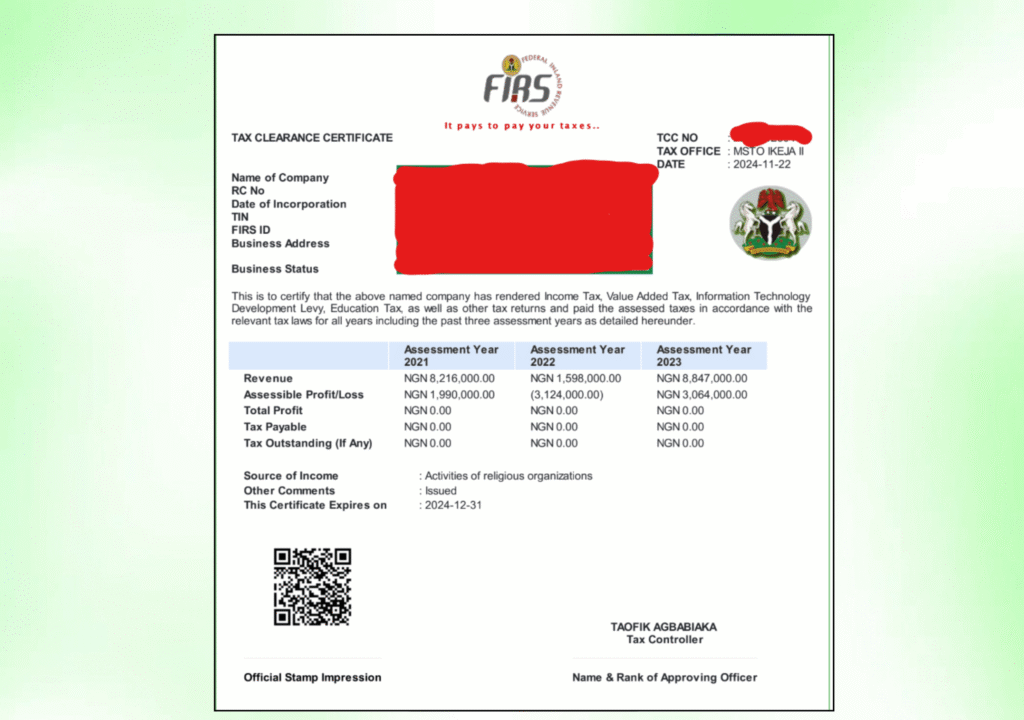
Obtain Your Tax Clearance Certificate (TCC)
Let us help you obtain your Tax Clearance Certificate (TCC) quickly and hassle-free. Our experts provide reliable support throughout the application process, ensuring your business meets all tax compliance requirements.
What Is a Tax Clearance Certificate?
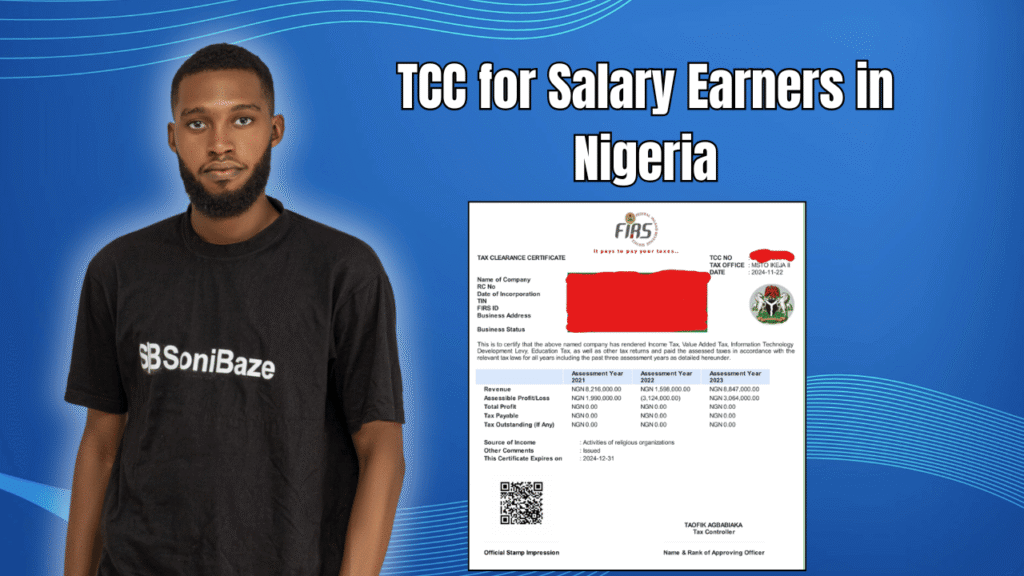
A Tax Clearance Certificate, commonly shortened to TCC, is an official document issued by a tax authority confirming that an individual has declared their income, filed the required tax returns, and settled all applicable taxes for the three preceding years of assessment. It is not a reward for paying taxes. It is proof that you have complied.
For salary earners in Nigeria, the TCC is issued by the State Internal Revenue Service of the state where you reside, not the state where you work or originate from. Lagos residents apply through the Lagos State Internal Revenue Service. Abuja residents apply through the FCT Internal Revenue Service. The process varies slightly from state to state, but the underlying requirements are largely the same.
Does PAYE Mean You Already Have Tax Clearance?
This is the most common misconception. PAYE, which stands for Pay As You Earn, is the system through which your employer deducts income tax from your salary each month and remits it to the relevant state internal revenue service on your behalf. It handles the payment side of your tax obligation.
What it does not do is file your personal income tax return for you. Your employer files a return covering what they paid to you, but that return does not substitute for your own individual filing. Under the Nigeria Tax Administration Act 2025, both employers and individual employees are now required to file annual returns separately.
In plain terms: your employer’s PAYE return and your personal annual return are two different things. Without filing your own return, you cannot obtain a valid TCC regardless of how consistently your employer has been remitting on your behalf.

When Does a Salary Earner Need a TCC?
Not every salary earner needs a TCC at the same time or for the same reason. The certificate becomes necessary in specific situations.
| Situation | Why TCC Is Required |
|---|---|
| Applying for a government job | Many federal and state agencies require evidence of tax compliance |
| Processing a visa application | Embassies may request TCC as proof of financial and tax standing |
| Bidding for government contracts as a director | NRS now requires individual TCC before issuing company TCC |
| Opening certain bank accounts or obtaining large loans | Some financial institutions request TCC for high-value transactions |
| Applying for government permits, licences, or approvals | TCC is part of the compliance documentation package |
| Processing a salary advance or mortgage with certain lenders | Proof of tax standing may be requested |
| Annual HR compliance requirements in some organisations | Some employers require staff to present current TCC during appraisals |
The annual March 31 filing deadline is relevant here. The Nigeria Tax Administration Act 2025 requires every income-earning individual to file annual returns by this date, covering income from the previous year. Missing the deadline can result in penalties and can delay TCC processing when you eventually need the certificate.
Obtain Your Tax Clearance Certificate (TCC)
Let us help you obtain your Tax Clearance Certificate (TCC) quickly and hassle-free. Our experts provide reliable support throughout the application process, ensuring your business meets all tax compliance requirements.
Who Issues the TCC for Salary Earners?
Salary earners obtain their TCC from the State Internal Revenue Service of their state of residence. The issuing body depends entirely on where you live, not where your employer is registered.
| State of Residence | Issuing Authority |
|---|---|
| Lagos | Lagos State Internal Revenue Service (LIRS) via etax.lirs.net |
| FCT, Abuja | FCT Internal Revenue Service (FCT-IRS) |
| Rivers | Rivers State Internal Revenue Service (RIRS) |
| Kano | Kano State Internal Revenue Service |
| Ogun, Oyo, and other states | Respective State Internal Revenue Services |
For salary earners in Abuja specifically, the FCT-IRS handles all individual TCC applications. The employer’s role in Abuja is to file Form H1, which is the annual schedule of employee earnings, and Form G, which documents the PAYE remittances made. If an employer fails to submit either of these forms, every employee on their payroll loses the ability to access a TCC until the employer complies.
What Documents Does a Salary Earner Need?
The documents required for a salary earner’s TCC vary by state but generally cover the same core items.
| Document | Purpose |
|---|---|
| Tax Identification Number (TIN) | Links your tax records to your identity |
| National Identity Number (NIN) | Required for TIN-NIN linkage under current digital processes |
| Evidence of PAYE remittances | Confirms your employer has been remitting the tax deducted from your salary |
| Filed annual income tax returns for the last three years | The primary basis on which TCC is assessed and issued |
| Recent passport photograph | Required for identification purposes on the application |
| Employment letter or payslip | Confirms your income and employer details |
| Form H1 (Abuja and some states) | Annual employee earnings schedule filed by the employer |
| Form G (Abuja and some states) | Employer’s PAYE remittance documentation |
For states with online portals, some of these documents are uploaded digitally. For states where the process is still partly manual, physical submission at the state revenue office is required.
Step-by-Step Process for Getting a Salary Earner TCC
The exact steps differ by state, but the general flow is consistent.
Step 1: Confirm your TIN is active and linked to your NIN. Under current requirements, your Tax Identification Number must be connected to your National Identity Number before a TCC application can proceed. If this linkage has not been done, it is the first thing to resolve.
Step 2: File your personal income tax returns for the last three years. Even if PAYE has been deducted throughout, you need to file individual returns for each of the three preceding assessment years. For Lagos, this is done through the LIRS eTax portal. For Abuja, through the FCT-IRS platform. Some states still require in-person filing.
Step 3: Confirm your employer’s PAYE remittances. Obtain confirmation that your employer has remitted all PAYE deductions to the state revenue authority. If your employer has defaulted on remittances, your TCC application will be delayed until this is resolved, regardless of the fact that deductions were made from your salary.
Step 4: Settle any outstanding tax liabilities. If the assessment after filing reveals any additional tax owed beyond what PAYE has covered, this must be paid before the TCC can be issued. This commonly applies to salary earners with additional income streams such as rent, freelance work, or investment returns.
Step 5: Submit the TCC application. On states with functional online portals, this is done digitally, with documents uploaded in PDF format. On states without full digital capability, a completed Tax Form A is submitted at the relevant state revenue office.
Step 6: Await review and collection. Processing typically takes between five and fifteen working days depending on the state, compliance status, and workload at the revenue office. Some states with advanced portals allow electronic TCC generation that can be downloaded once approved.
What Causes Delays in Processing?
Most TCC delays for salary earners trace back to one of four causes.
The most common is unfiled returns. Many employees have never personally filed a return because they assumed PAYE covered it. Going back to file returns for three prior years takes time, particularly if records are incomplete.
The second is employer non-compliance. If your employer has been deducting PAYE but not remitting it to the revenue authority, your application will be flagged. This is entirely outside your control but directly affects your ability to get a TCC.
The third is TIN-NIN linkage issues. If your TIN has not been linked to your NIN, the digital portal blocks the application at the first step.
The fourth is additional undeclared income. Salary earners who earn rent, run side businesses, or receive freelance income have a broader filing obligation. If these income sources have not been declared, the revenue authority may raise an assessment before issuing the certificate.
Frequently Asked Questions
Do salary earners need to file tax returns if PAYE is already being deducted?
Yes. Under the Nigeria Tax Administration Act 2025, individual filing is mandatory for all income earners regardless of whether PAYE is being deducted by an employer. Your employer’s return covers what was paid to you from that employment. Your personal return covers your total income from all sources, including any income outside that employment.
What is the annual deadline for filing personal income tax returns in Nigeria?
The deadline is March 31 of each year, covering income earned in the preceding calendar year. Missing this deadline does not immediately cancel your ability to get a TCC, but it can result in late filing penalties and can complicate TCC processing when you need the certificate.
Can I get a TCC if my employer has not remitted my PAYE?
Not immediately. If your employer deducted PAYE from your salary but failed to remit it to the state revenue authority, your TCC application will be blocked until the employer resolves the outstanding remittance. Your recourse in this situation is to formally report the default to the relevant state internal revenue service.
How long is a TCC valid?
A TCC covers the three preceding years of assessment from the date of issuance. It does not have a fixed expiry date in the way a passport would, but it reflects a specific period. When you apply for a new TCC in the following year, the certificate is updated to include the most recent assessment year.
Is getting a TCC free for salary earners?
The certificate itself does not carry a statutory fee for individuals in most states. However, outstanding tax liabilities must be settled before the certificate can be issued. If you engage a tax consultant to handle the filing and application on your behalf, their professional fee is separate from the certificate process itself.
What happens if I have never filed a personal return?
You will need to back-file returns for the three years preceding your TCC application. This is possible but takes longer than a standard application. The revenue authority will assess your liability for those years based on your income records, and any tax found to be outstanding must be settled before the certificate is issued.
Conclusion: PAYE Is Not Enough on Its Own
Being a salary earner does not exempt you from personal tax filing in Nigeria. PAYE handles the monthly deduction and remittance side, but your annual personal return is a separate obligation that sits with you, not your employer. Without it, a TCC is not available to you when you need one.
The earlier you regularise your filing position, the simpler the TCC process becomes. Waiting until you actually need the certificate to start filing three years of returns creates unnecessary pressure and delays. Treat annual filing as a routine maintenance task, not a crisis response.
Obtain Your Tax Clearance Certificate (TCC)
Let us help you obtain your Tax Clearance Certificate (TCC) quickly and hassle-free. Our experts provide reliable support throughout the application process, ensuring your business meets all tax compliance requirements.