If you are preparing documents for a government tender or trying to complete your BPP registration, there is a good chance NSITF is on the checklist. One of the first questions employers ask once they have the certificate in hand is how long it actually lasts before they need to go through the process again.
The answer is straightforward. This article covers validity, renewal timing, what happens when the certificate lapses, and everything else tied to keeping your NSITF compliance current.
Obtain Your NSITF Certificate
Let us help you obtain your Nigeria Social Insurance Trust Fund (NSITF) Compliance Certificate quickly and hassle-free. Our experts provide reliable support throughout the application process, ensuring your business meets all statutory compliance requirements.
What Is the NSITF Compliance Certificate?
The Nigeria Social Insurance Trust Fund, commonly known as NSITF, administers the Employees Compensation Scheme in Nigeria. This scheme provides compensation to employees who suffer workplace injuries, diseases, or death. Employers fund it by remitting 1% of their total monthly payroll to the Fund.
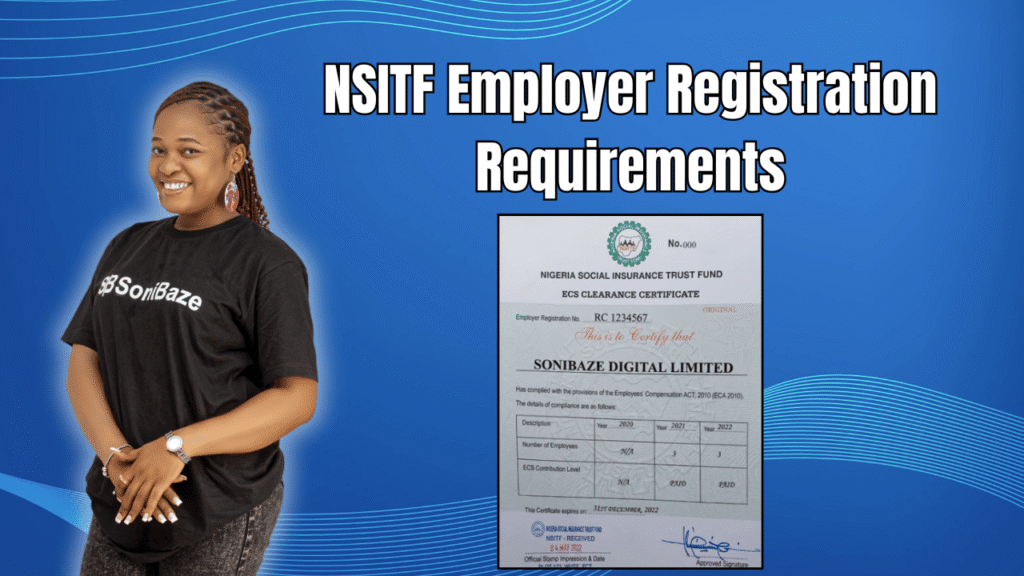
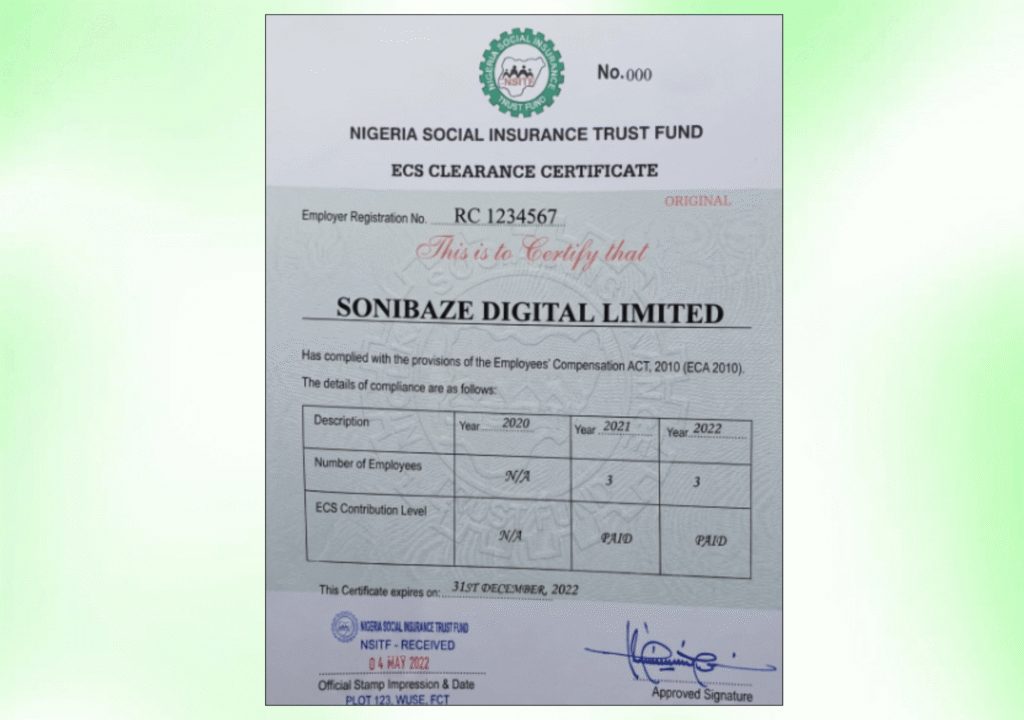
The NSITF Compliance Certificate is the document issued to an employer as proof that they have met this obligation. It confirms that the company is registered with NSITF and has been making the required contributions. Without it, bidding for Federal Government contracts is not possible, and BPP registration cannot be completed.
How Long Is the NSITF Compliance Certificate Valid?
The NSITF Compliance Certificate is valid for one year. It must be renewed annually to remain current. There is no multi-year validity option, and the certificate issued covers only the year in which contributions were made and verified.
| Certificate Detail | Information |
|---|---|
| Validity period | One year |
| Renewal frequency | Annual |
| Format | Digitally signed PDF, downloadable from the NSITF portal |
| Who issues it | Nigeria Social Insurance Trust Fund |
| When renewal opens | At the start of each new year, upon remittance of contributions |

When Does the Certificate Expire?
The certificate covers the calendar year and expires at the end of December of the year it was issued. This means a certificate issued in March 2025 does not last until March 2026. It expires on 31 December 2025, along with any certificate issued at any other point in the same year.
This is an important detail for companies bidding on government contracts. A certificate that expired even one day before the bid submission date will disqualify the bid. Procurement evaluators check the validity dates closely, and there is no grace period at the point of tender submission.
When Should You Renew?
The practical advice from compliance professionals is to renew at least 30 days before the current certificate expires. This gives enough time to process contributions, handle any portal issues, and receive the new certificate before the old one lapses.
Waiting until January of the new year to start the renewal process is a common mistake. Processing typically takes 5 to 15 working days, which means a company that starts renewal in the first week of January may be without a valid certificate for part of the month, or longer if delays occur.
| Renewal Timing | Risk Level |
|---|---|
| 30 or more days before expiry | Low risk, recommended approach |
| 15 to 30 days before expiry | Moderate risk, tight but manageable |
| Less than 15 days before expiry | High risk, could result in a gap |
| After expiry | Certificate lapsed, not valid for tender use |
Obtain Your NSITF Certificate
Let us help you obtain your Nigeria Social Insurance Trust Fund (NSITF) Compliance Certificate quickly and hassle-free. Our experts provide reliable support throughout the application process, ensuring your business meets all statutory compliance requirements.
How to Renew the NSITF Compliance Certificate
Renewal follows the same basic steps as the initial compliance process, with the employer confirming continued contribution payments for the year.
The employer remits 1% of the total monthly payroll to NSITF through the Remita platform. Once contributions are confirmed and up to date, a request for the compliance certificate is made. The certificate fee is paid through Remita as well, and the current fee should be verified on the NSITF portal since the amount is subject to periodic review. After payment and verification, the certificate is processed and issued as a digitally signed PDF that can be downloaded from the employer’s portal account.
Renewal documentation generally mirrors the initial registration requirements, including the CAC Certificate of Incorporation, completed NSITF forms, the 10-digit registration number issued at the time of original registration, and evidence of remittance for the relevant period.
What Happens If Your Certificate Lapses?
A lapsed NSITF certificate creates two immediate problems. The first is disqualification from government contract bids. NSITF compliance is listed as a mandatory requirement by most Federal Ministries, Departments, and Agencies, and the Bureau of Public Procurement specifically requires it. No valid certificate means no eligible bid.
The second problem is potential regulatory exposure. Employers are required under the Employees Compensation Act to maintain their contributions. Operating without compliance leaves the company open to sanctions from NSITF.
The practical solution is simple: build NSITF renewal into the company’s annual compliance calendar as a fixed fourth-quarter task, so it never becomes an emergency.
NSITF Certificate Validity Compared to Related Compliance Documents
Many businesses obtain the NSITF certificate alongside other compliance documents required for government contracting. All of these follow a similar annual cycle.
| Compliance Certificate | Validity Period | Renewal Frequency |
|---|---|---|
| NSITF Compliance Certificate | 1 year | Annual |
| ITF Compliance Certificate | 1 year (valid to 31 December of bidding year) | Annual |
| PENCOM Compliance Certificate | 1 year | Annual |
| Tax Clearance Certificate (TCC) | 3 years | As applicable |
| BPP Interim Registration Report | Ongoing, but annual update required | Annual update |
All of these certificates expire on the same calendar cycle, which makes it efficient to manage them together rather than tracking separate renewal dates.
Frequently Asked Questions
Does the NSITF certificate expire mid-year if I get it in January?
No. The certificate covers the full calendar year in which it is issued, regardless of the month you receive it. A certificate issued in January and one issued in October of the same year both expire on 31 December of that year. Getting it earlier in the year simply gives you more time before renewal is due.
Can I use an NSITF certificate from last year to bid for a contract this year?
No. An NSITF certificate from the previous year is expired and will not be accepted for tender submissions in the current year. Only a certificate showing valid coverage for the current calendar year qualifies.
How long does NSITF certificate processing take?
Processing typically takes 5 to 15 working days from the point where contributions are confirmed and the certificate fee is paid. This range varies depending on portal processing times and whether any documentation queries arise. Planning for the upper end of this range is the safer approach.
Who needs to get an NSITF compliance certificate?
Every employer with at least five employees is required to register with NSITF and obtain the compliance certificate. The certificate is particularly critical for companies bidding on Federal Government contracts, but the registration obligation itself applies broadly to employers across all sectors.
Is the NSITF certificate free?
No. There is a certificate fee payable through Remita. The initial registration with NSITF when the company first joins the scheme also attracts a one-time cost. The current certificate fee should be confirmed on the NSITF portal since it is subject to change.
What is the contribution rate for NSITF?
Employers contribute 1% of their total monthly payroll to the Fund. This is calculated on the gross salary of all employees on payroll, including casual and contract staff who appear on the company’s payroll records.
Conclusion: One Year, No Exceptions
The NSITF Compliance Certificate lasts for exactly one year and expires on 31 December regardless of when it was issued. Annual renewal is not optional for companies that want to remain eligible for government contracts or avoid regulatory exposure.
The best approach is to treat renewal as a calendar event rather than a reactive task. Start the process in November, get contributions up to date, and have the new certificate ready before the end of December. That removes the risk of a gap and keeps every compliance document current for the year ahead.
Obtain Your NSITF Certificate
Let us help you obtain your Nigeria Social Insurance Trust Fund (NSITF) Compliance Certificate quickly and hassle-free. Our experts provide reliable support throughout the application process, ensuring your business meets all statutory compliance requirements.