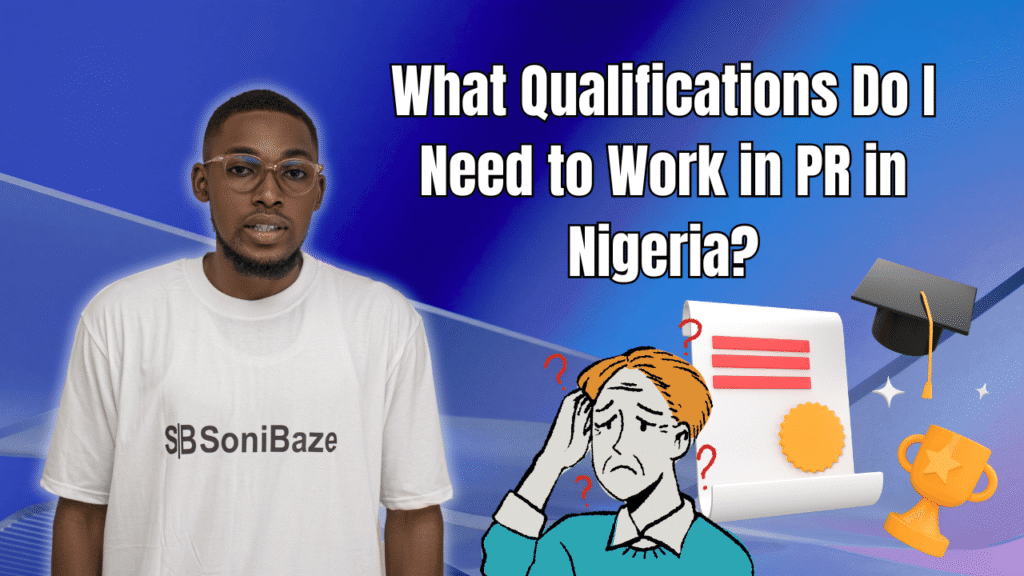
Public relations is one of the more misunderstood careers in Nigeria. People often assume it is just about writing press releases or knowing the right journalists, but the field covers reputation management, crisis communications, brand strategy, media relations, and a lot more. If you are considering a PR career in Nigeria, the question of qualifications deserves a proper answer.
This article breaks down the academic degrees, professional certifications, and practical skills that PR employers and clients in Nigeria actually look for.
Ready to get your brand noticed? Let’s plan your PR strategy today.
What Does PR Work Actually Involve in Nigeria?
Before getting into qualifications, it helps to know what the job entails. PR professionals in Nigeria work across corporate organisations, government agencies, NGOs, political campaigns, entertainment, and agencies that serve multiple clients.
The core responsibilities include media relations, press release writing, crisis communications, event management, and increasingly, digital PR. Digital PR now covers online reputation management, press release distribution across digital news platforms, social media strategy, and influencer engagement. If you are only trained in traditional PR, you will find yourself outpaced quickly.
Formal Degree Requirements for PR in Nigeria
A Bachelor’s Degree Is the Standard Entry Point
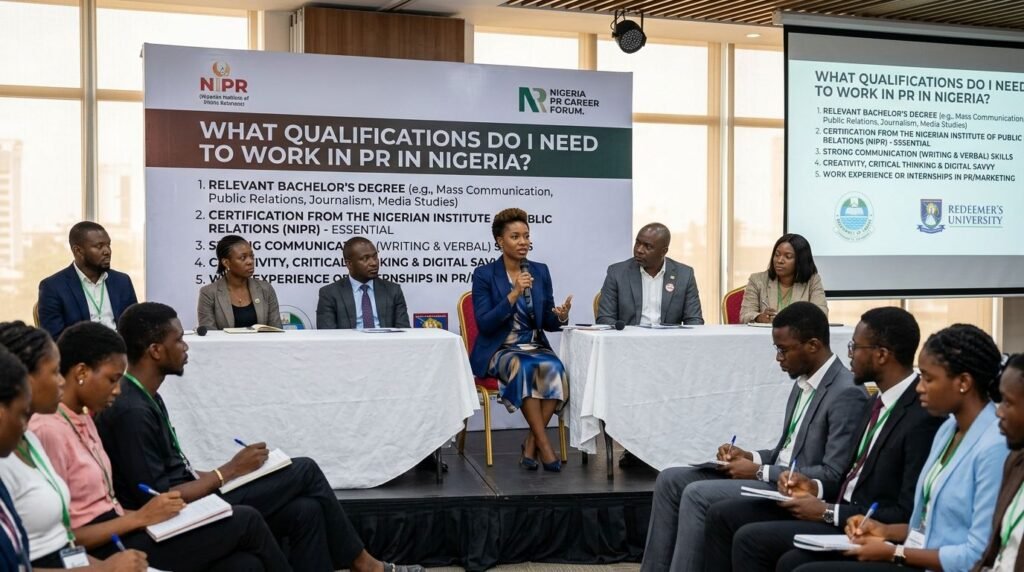
Most PR roles in Nigeria, whether in-house or at agencies, require at minimum an undergraduate degree. The most relevant disciplines are Mass Communication, Public Relations and Advertising, English Language, Journalism, and Political Science.
Mass Communication remains the most common academic route. Several universities in Nigeria run it, including the University of Lagos, University of Nigeria Nsukka, Bayero University Kano, and Ahmadu Bello University. Graduates from this programme are considered directly trained for PR, advertising, and journalism roles.
If your degree is in a different field, that is not a disqualifier. Many PR practitioners in Nigeria studied Business Administration, Law, International Relations, or even Economics. What matters more, at the hiring stage, is what you know and what you have done.
Postgraduate Degrees
A master’s degree is not required to enter the PR field in Nigeria, but it gives you a clear advantage for senior roles. An MBA, an MSc in Communications, or a postgraduate diploma in Public Relations can position you for managerial and strategic positions faster.
For those interested in working with government ministries, regulatory agencies, or multinational companies, a postgraduate qualification in Communications or Corporate Affairs is increasingly common among shortlisted candidates.
Professional Certifications That Matter in Nigeria
NIPR Membership
The Nigerian Institute of Public Relations (NIPR) is the statutory body that regulates the practice of PR in Nigeria. Operating under the Nigerian Institute of Public Relations Act, NIPR sets the standards for who is qualified to practice PR professionally in the country.
To practice PR as a profession in Nigeria, particularly in corporate, government, or agency settings, you are expected to be registered with NIPR. Membership involves passing the NIPR qualifying examinations and meeting relevant work experience criteria. There are different membership grades including student membership, associate membership, and full membership.
This is not always enforced at entry level, but as you grow in your career, NIPR membership becomes more or less essential for credibility, job applications, and career advancement.
International Certifications
Beyond NIPR, certifications from international bodies carry weight when applying to multinationals, foreign NGOs, or large agencies. Recognised bodies include the Chartered Institute of Public Relations (CIPR) based in the UK, the Public Relations Society of America (PRSA), and the Global Communication Certification Council (GCCC).
These are not required to get started, but they distinguish you in a competitive market and signal that your skills meet global standards.
Digital and Technical Skills That Are Now Expected
The PR industry in Nigeria has shifted considerably in the past few years. Traditional media knowledge is still valuable, but you now need to pair it with digital competencies.
| Skill Area | What Employers Expect |
|---|---|
| Press Release Writing | Clear, structured, newsworthy copy for both print and digital outlets |
| SEO and Content Strategy | Understanding how online PR content ranks and drives traffic |
| Media Monitoring Tools | Familiarity with tools like Google Alerts, Meltwater, or similar platforms |
| Social Media Management | Ability to manage brand presence and respond to crises in real time |
| Email and Pitch Writing | Professional outreach skills for media and influencer relations |
| Crisis Communications | Planning and execution under pressure, including on digital channels |
| Data and Analytics | Measuring coverage, reach, sentiment, and campaign impact |
If you cannot produce a media list, draft a press release, manage a brand’s Twitter or LinkedIn during a crisis, or pull a basic report showing PR ROI, you will struggle to compete, regardless of your degree.
Ready to get your brand noticed? Let’s plan your PR strategy today.
Work Experience and Portfolio
Qualifications on paper only take you so far. Nigerian PR employers, especially agencies, want to see what you have actually worked on. Internship experience at a PR firm, a media organisation, or a corporate communications department gives you a significant advantage when applying for your first role.
Freelance work also counts. If you have managed social media for a small business, written press releases for an NGO, or run a local event, document it and present it professionally. A portfolio of real work is often more convincing than a certificate from a training programme.
What a Typical PR Career Path Looks Like in Nigeria
Most practitioners start as PR assistants or executive trainees before progressing. Here is what the path generally looks like:
| Level | Title | Typical Experience Required |
|---|---|---|
| Entry | PR Assistant / Communications Intern | 0 to 1 year, degree or in view |
| Junior | PR Executive | 1 to 3 years, NIPR student membership |
| Mid-level | Senior PR Executive / Account Manager | 3 to 6 years, NIPR associate member |
| Senior | PR Manager / Head of Communications | 6+ years, NIPR full member |
| Expert | Director, VP Communications, Consultant | 10+ years, strong portfolio |
Frequently Asked Questions
Can I work in PR in Nigeria without a Mass Communication degree?
Yes. A Mass Communication degree is common but not the only route. Many PR professionals in Nigeria hold degrees in English, Law, Business, or Social Sciences. What employers want is strong communication skills, media knowledge, and relevant experience. If your degree is unrelated, you can supplement it with NIPR certification and practical experience.
Is NIPR registration compulsory to practice PR in Nigeria?
Technically, the NIPR Act makes it a requirement to be registered with NIPR to practice PR professionally in Nigeria. In practice, not all employers check this at entry level, but it becomes increasingly important as your career advances. If you are serious about building a long-term PR career in Nigeria, starting the NIPR membership process early is worth it.
How much do PR professionals earn in Nigeria?
Entry-level PR executives in Nigeria typically earn between ₦80,000 and ₦200,000 per month depending on the employer and sector. Mid-level professionals can earn ₦300,000 to ₦700,000, while senior PR managers and directors at large corporates or agencies may earn ₦1,000,000 or more monthly. PR consultants working independently tend to charge per project or retainer.
What is digital PR and do I need to learn it?
Digital PR is the practice of building a brand’s reputation and visibility through online channels. It includes distributing press releases to online news platforms, building backlinks through media coverage, managing online reputation, and coordinating with bloggers and digital influencers. In Nigeria’s current media environment, most PR roles now expect some understanding of digital PR, even in organisations that still rely heavily on traditional media.
Is a PR master’s degree worth doing in Nigeria?
For most people entering the field, a master’s degree is not the first priority. Getting certified with NIPR, building relevant experience, and developing digital skills will serve you better in the short term. A master’s degree becomes more valuable if you are targeting director-level roles, academic PR positions, or international organisations where it is a listed requirement.
What soft skills matter most in PR?
Writing is the most important skill in PR, and it needs to be clean, fast, and adaptable. Beyond that, employers in Nigeria value strong verbal communication, the ability to stay composed under pressure, relationship management, attention to detail, and the judgment to know when and how to respond publicly on behalf of a brand. Technical skills can be taught. Poor communication instincts are harder to fix.
Conclusion: Build Your Qualifications Deliberately
Working in PR in Nigeria requires a combination of academic preparation, professional registration, and real-world skills. A relevant degree gets you in the door. NIPR membership builds your professional credibility. Digital skills keep you competitive in a media landscape that changes every few years.
There is no single route, but the practitioners who advance consistently are those who combine formal training with hands-on experience, stay updated on how PR and media are evolving in Nigeria, and invest in continued professional development.
SoniBaze Digital runs a tech academy in Karu, Abuja offering certified training in Digital Marketing, SEO, and related communications skills. Training is available physically, online, and as corporate programmes. Visit sonibaze.ng to find out more and register for the next cohort.
Ready to get your brand noticed? Let’s plan your PR strategy today.