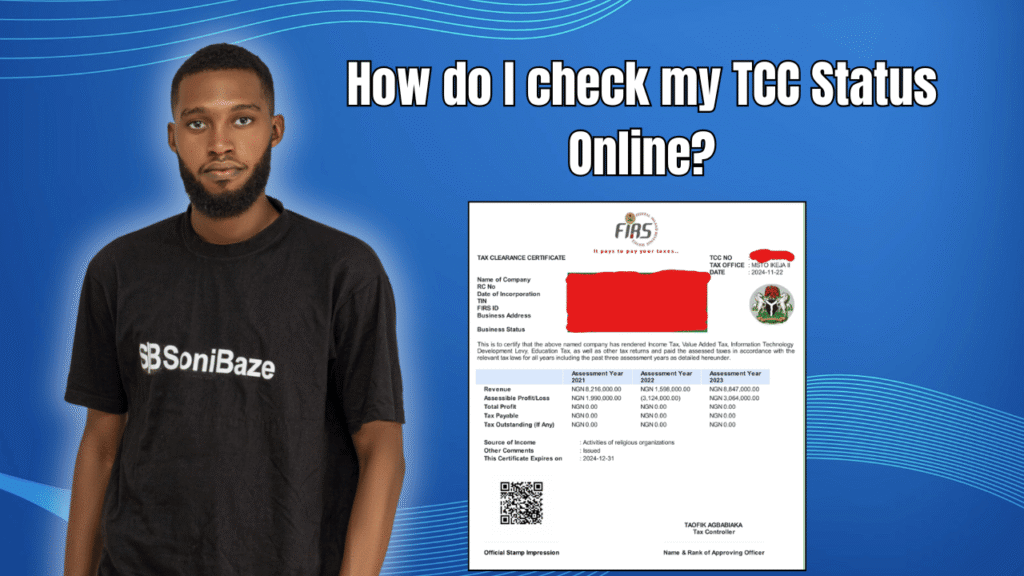
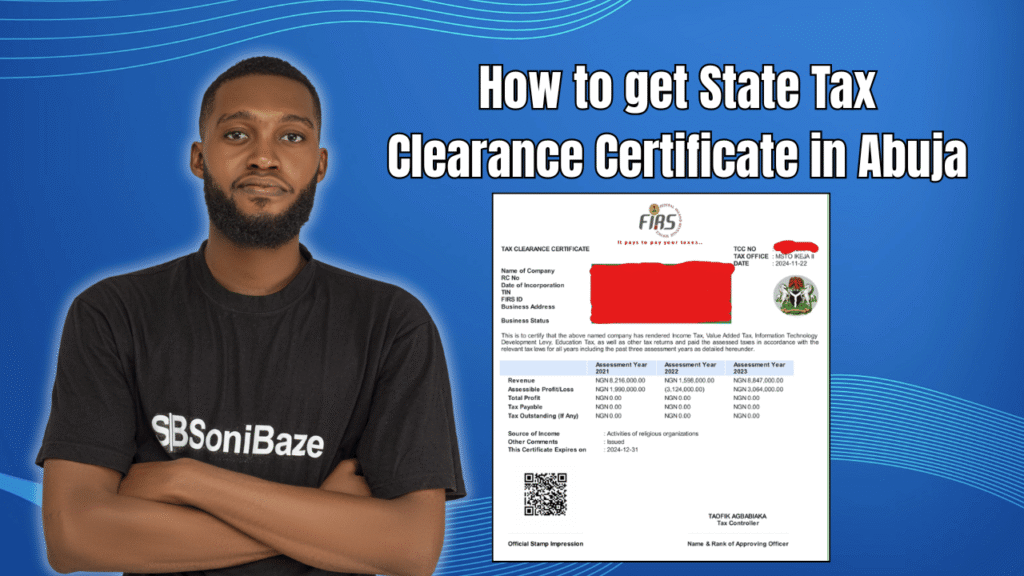
The state tax clearance certificate in Abuja is not the same as the one issued by the Federal Inland Revenue Service. That distinction trips up a lot of applicants, particularly business owners and employed individuals who assume one TCC covers all purposes. It does not.
In Abuja, state-level tax clearance is issued by the Federal Capital Territory Internal Revenue Service, commonly known as FCT-IRS. This is the only “state” internal revenue service in Nigeria established by the National Assembly rather than a state government, and it handles all personal income tax matters for residents and employees in the FCT. This article explains exactly how to obtain a state TCC from FCT-IRS, who needs it, and what documents are required.
Obtain Your Tax Clearance Certificate (TCC)
Let us help you obtain your Tax Clearance Certificate (TCC) quickly and hassle-free. Our experts provide reliable support throughout the application process, ensuring your business meets all tax compliance requirements.
What Is the FCT-IRS State Tax Clearance Certificate?
The Tax Clearance Certificate issued by FCT-IRS is an official document certifying that a taxpayer has settled all tax obligations due to the FCT-IRS for a specific period, typically the three preceding years. It confirms that outstanding PAYE liabilities, personal income tax, and other relevant obligations under the Personal Income Tax Act have been met.
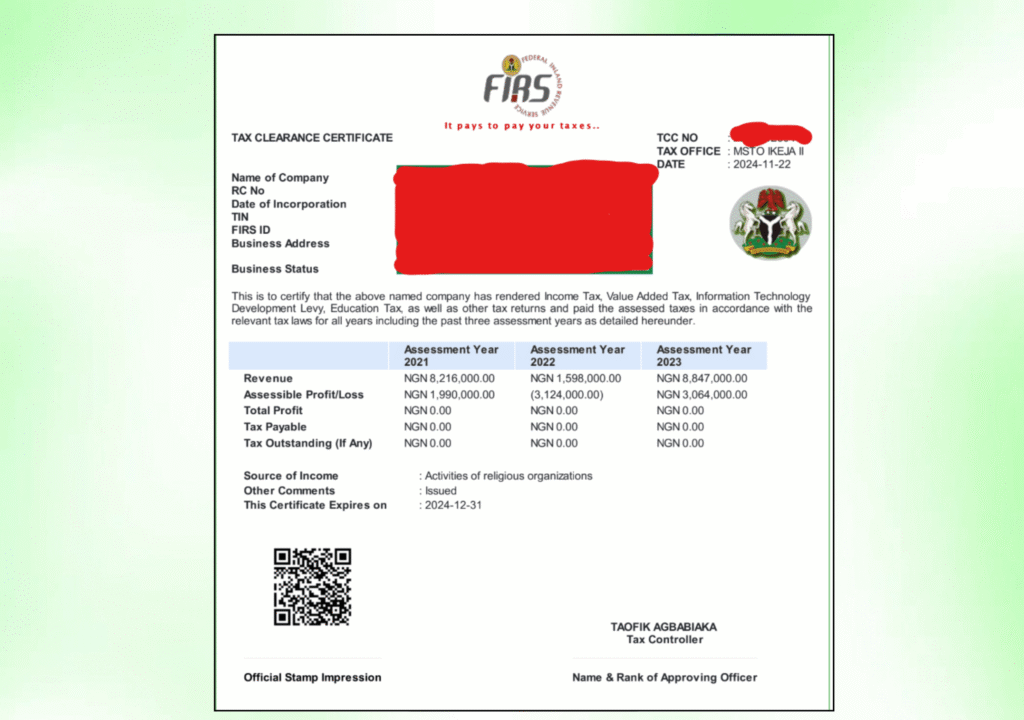
The FCT-IRS now issues this certificate electronically. The e-TCC carries a QR code that allows third parties to verify its authenticity online, making forgery significantly harder than it was with paper certificates.
Who Issues State Tax Clearance in Abuja?
FCT-IRS, headquartered at 3 Abriba Close, Area 7, Garki, Abuja, is the issuing authority. The service can be contacted at contactus@fctirs.gov.ng and through the official website at fctirs.gov.ng.
Unlike other states where the State Board of Internal Revenue handles this function, FCT-IRS was established by the FCT Internal Revenue Service Act of 2015, which gives it a legislative foundation distinct from every other state revenue authority in Nigeria.
Who Needs This Certificate?
| Category | Why They Need It |
|---|---|
| Employed individuals in Abuja | Required for government applications, travel documents, and financial transactions |
| Self-employed individuals resident in the FCT | Proof of personal income tax compliance |
| Business owners with PAYE obligations in Abuja | Needed for procurement, tenders, and banking purposes |
| Companies with employees based in the FCT | Applied for on behalf of employees for specific transactions |
It is important to note that companies incorporated in Nigeria apply for their corporate Tax Clearance Certificate through FIRS, not FCT-IRS. FCT-IRS handles personal income tax, PAYE, and withholding tax for FCT residents and employers. If you are an individual or an employer dealing with PAYE in Abuja, FCT-IRS is your relevant authority.
Requirements for Getting a State TCC in Abuja
The requirements differ depending on whether the applicant is an individual taxpayer or applying as an employer on behalf of employees.
For Individual Applicants
| Document | Details |
|---|---|
| FCT-IRS TIN | Must be domiciled under an FCT-IRS tax office, not another state |
| Completed TCC Application Form (Form 802) | Available for download at fctirs.gov.ng/downloads or from any FCT-IRS office |
| Completed Personal Income Tax Annual Returns (Form A) | Covers income declaration for each year being applied for, including Benefits in Kind where applicable |
| Valid means of identification | Staff ID card, national ID, driver’s licence, or international passport |
| Payslips for the previous three years | January, April, September and December payslips for each year |
| Bank statement | Required where payslips are not available |
| Copy of previous TCC | For renewals only |
| Application letter to the Tax Controller | Optional but recommended, addressed to the Tax Controller of the relevant FCT-IRS office |
Obtain Your Tax Clearance Certificate (TCC)
Let us help you obtain your Tax Clearance Certificate (TCC) quickly and hassle-free. Our experts provide reliable support throughout the application process, ensuring your business meets all tax compliance requirements.
For Employers Applying on Behalf of Employees
Before FCT-IRS will process individual TCC requests for any employee, the employer must have met its own compliance obligations. An employee cannot get a state TCC in Abuja if their employer has not filed properly.
| Employer Requirement | Details |
|---|---|
| Form H1 (Employers’ Annual Declaration) | Declares the full list of employees and their earnings for the previous year. Must be submitted annually. Failure to file disqualifies all listed employees |
| Form G (Employers’ Remittance Card) | Shows monthly PAYE remittances made to FCT-IRS. Confirms taxes deducted from salaries were actually paid to the government |
| PAYE Schedule | Monthly schedule of staff salaries and taxes deducted, submitted alongside remittances |
| Up-to-date PAYE remittances | All monthly PAYE taxes must be fully remitted before employee TCC applications can proceed |
Step-by-Step Process for Getting the FCT-IRS State TCC
Step 1: Confirm Your TIN Is Registered With FCT-IRS
Your Tax Identification Number must be domiciled under FCT-IRS specifically. A TIN registered in Lagos, Rivers State, or any other state will not be accepted for Abuja state tax clearance. If your TIN was registered elsewhere and you are now based in Abuja, you need to have it migrated to the FCT-IRS jurisdiction before applying. This is handled at the nearest FCT-IRS office.
Step 2: File All Outstanding Tax Returns
FCT-IRS will not issue a TCC where tax returns are outstanding. File your Personal Income Tax Annual Returns (Form A) for all three preceding years you are applying for. The annual return deadline for each year is March 31st of the following year. Filing late is still possible but may attract interest or penalties on any outstanding tax identified.
For employers, Form H1 must be filed annually. If it has not been filed, submit it before attempting TCC applications for any employee.
Step 3: Clear Any Outstanding Tax Liabilities
If your tax assessment reveals any unpaid taxes, those must be settled before the TCC will be issued. Payment to FCT-IRS can be made through Remita, Quickteller, or eTranzact using the payment references generated by the FCT-IRS system. Keep all payment receipts.
Step 4: Complete the TCC Application Form
Download Form 802 (Individual TCC Application Form) or the Non-Individual TCC Application Form from fctirs.gov.ng/downloads, or collect one from any FCT-IRS office. Complete all sections accurately. Errors or mismatches with your filed returns will cause delays.
Step 5: Assemble All Supporting Documents
Gather your completed Form A, Form 802, valid ID, payslips or bank statement, and previous TCC if this is a renewal. Employers should also have Form H1, Form G, and PAYE remittance records ready.
Step 6: Submit at Your FCT-IRS Tax Office
Submit the application and supporting documents at the FCT-IRS tax office where your TIN is domiciled. You can also submit tax returns online through the FCT-IRS Self Service Portal at fcttaxportal.fctirs.gov.ng before completing the physical submission for the TCC itself.
Step 7: Receive Your E-TCC
Once the application is reviewed, returns verified, and any outstanding liabilities confirmed settled, FCT-IRS issues the electronic TCC. The certificate carries a QR code for online verification. Third parties can confirm its authenticity directly through the FCT-IRS website without needing to contact the service manually.
Processing Timeline and Fees
| Detail | Information |
|---|---|
| Processing time | Varies. Typically a few working days to a few weeks depending on volume and whether returns are already filed |
| Cost | Free. No government fee is charged for the TCC itself |
| Validity period | One year. Must be renewed annually |
| Certificate format | Electronic (e-TCC) with QR code |
FCT-IRS Office and Contact Details
| Detail | Information |
|---|---|
| Head office | 3 Abriba Close, Area 7, Garki, Abuja |
| contactus@fctirs.gov.ng | |
| Website | fctirs.gov.ng |
| Self Service Portal | fcttaxportal.fctirs.gov.ng |
| Forms download | fctirs.gov.ng/downloads |
| Payment platforms | Remita, Quickteller, eTranzact |
FCT-IRS also has multiple tax offices across the FCT. The office where your TIN is domiciled is the one where you must submit your application. Check the FCT-IRS website for the full list of branch offices and their locations.
Frequently Asked Questions
Is the FCT-IRS TCC the same as the FIRS TCC?
No. FCT-IRS issues state-level tax clearance covering personal income tax and PAYE for individuals and employers in the FCT. FIRS issues corporate Tax Clearance Certificates for companies registered in Nigeria. Both are often required together for government procurement, with the FIRS TCC covering the company and the FCT-IRS TCC covering the individuals involved.
Can I apply online?
Tax returns and filings can be submitted through the FCT-IRS Self Service Portal. The physical TCC application itself typically requires in-person submission of supporting documents at the relevant FCT-IRS office, though processes may have been updated. Check fctirs.gov.ng for the most current procedure before visiting.
What if I have never filed tax returns before?
You will need to file outstanding returns for all applicable years before FCT-IRS can assess and issue your TCC. The service will review your income declarations and may raise a tax assessment. If taxes are found to be due, they must be paid in full before the certificate is released.
What does “Benefits in Kind” mean on Form A?
Benefits in Kind refers to non-cash compensation received from an employer, such as a company car, official housing, domestic staff provided by the employer, or similar perquisites. These must be declared on Form A and are taxable. FCT-IRS verifies BIK declarations as part of the TCC review process.
How long is the certificate valid?
The state TCC issued by FCT-IRS is valid for one year from the date of issue. It must be renewed annually. For businesses and individuals involved in regular procurement or banking transactions, it is practical to initiate renewal before the current certificate expires rather than waiting until it lapses.
What happens if my employer has not filed Form H1?
You cannot obtain a state TCC from FCT-IRS as an individual if your employer has not submitted Form H1 (the annual employer declaration) for the relevant years. FCT-IRS links individual TCC eligibility to employer compliance. If your employer is in arrears, the resolution starts with the employer correcting their filings first.
Conclusion: Employer Compliance Is the Hidden Bottleneck
For most employed individuals in Abuja, the biggest obstacle to getting a state TCC is not their own paperwork. It is their employer’s compliance record. If Form H1 has not been filed or PAYE remittances are behind, the individual’s application stalls regardless of how clean their personal records are.
For self-employed individuals and business owners applying independently, the process is more straightforward once returns are filed and liabilities are settled. File early, keep your TIN domiciled correctly with FCT-IRS, and treat annual renewal as a standing task rather than an emergency to handle when a tender deadline arrives.
Obtain Your Tax Clearance Certificate (TCC)
Let us help you obtain your Tax Clearance Certificate (TCC) quickly and hassle-free. Our experts provide reliable support throughout the application process, ensuring your business meets all tax compliance requirements.