A construction company in Lagos won a Federal Government contract worth NGN 48 million in early 2025. They had the staff, the equipment, and the track record. What they did not have was a valid NSITF Compliance Certificate. The contract was withdrawn at the procurement stage, and by the time they completed registration and obtained the certificate, the client had moved to the next bidder.
That story is not unusual. Many Nigerian businesses only discover the NSITF certificate matters when it is too late to get one in time.
This article explains what the certificate is, what it is used for, and why it matters more than most employers realise.
Obtain Your NSITF Certificate
Let us help you obtain your Nigeria Social Insurance Trust Fund (NSITF) Compliance Certificate quickly and hassle-free. Our experts provide reliable support throughout the application process, ensuring your business meets all statutory compliance requirements.
What Is the NSITF Compliance Certificate?
NSITF stands for the Nigeria Social Insurance Trust Fund, a Federal Government parastatal under the Federal Ministry of Labour and Employment. It administers the Employees’ Compensation Scheme under the Employees’ Compensation Act 2010, which replaced the older Workmen’s Compensation Act.
The scheme exists to financially protect employees who suffer work-related injury, disease, disability, or death during the course of employment. Employers fund it by contributing 1 percent of their total monthly payroll. No deduction comes from employees. The employer bears the full cost.
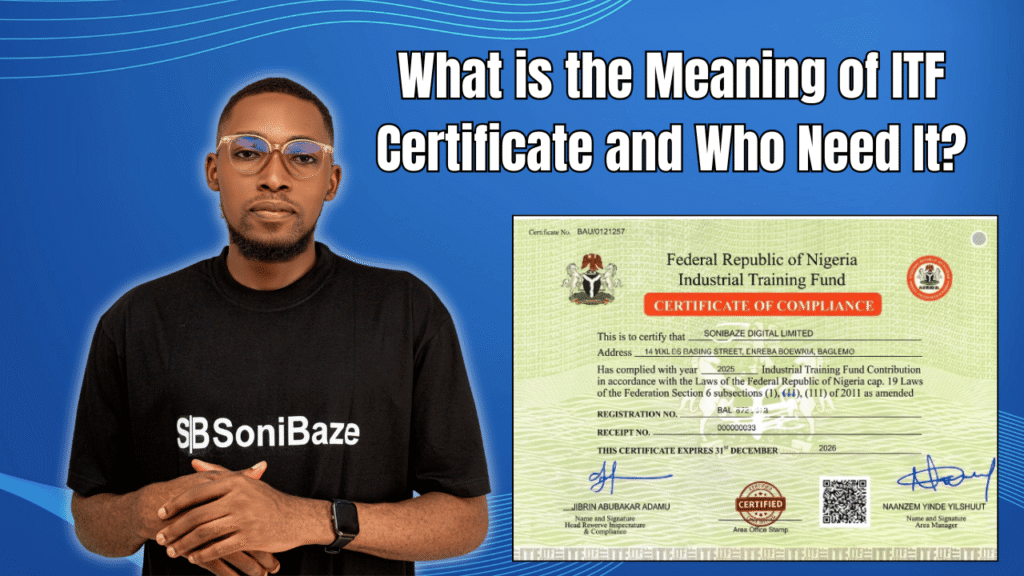
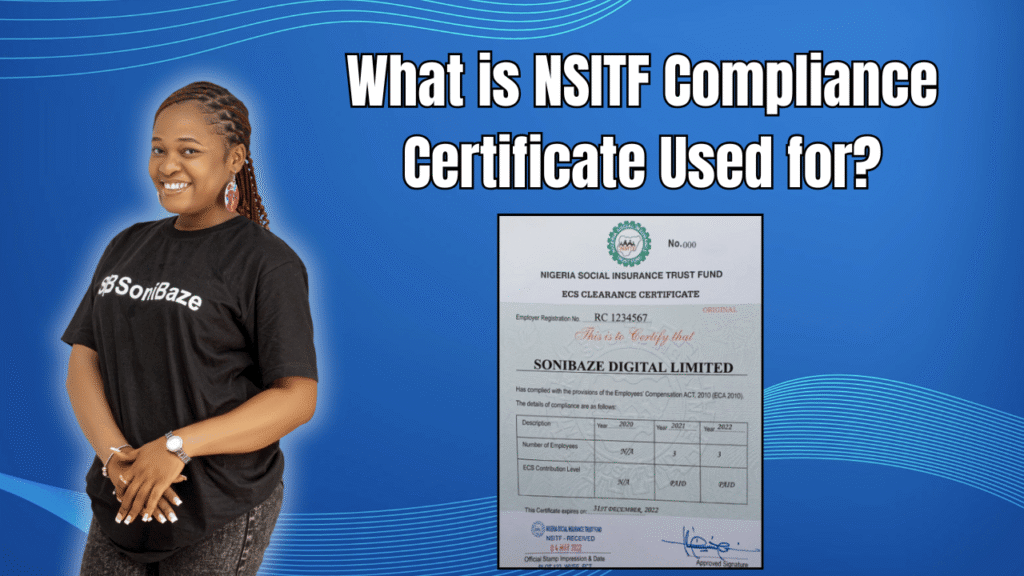
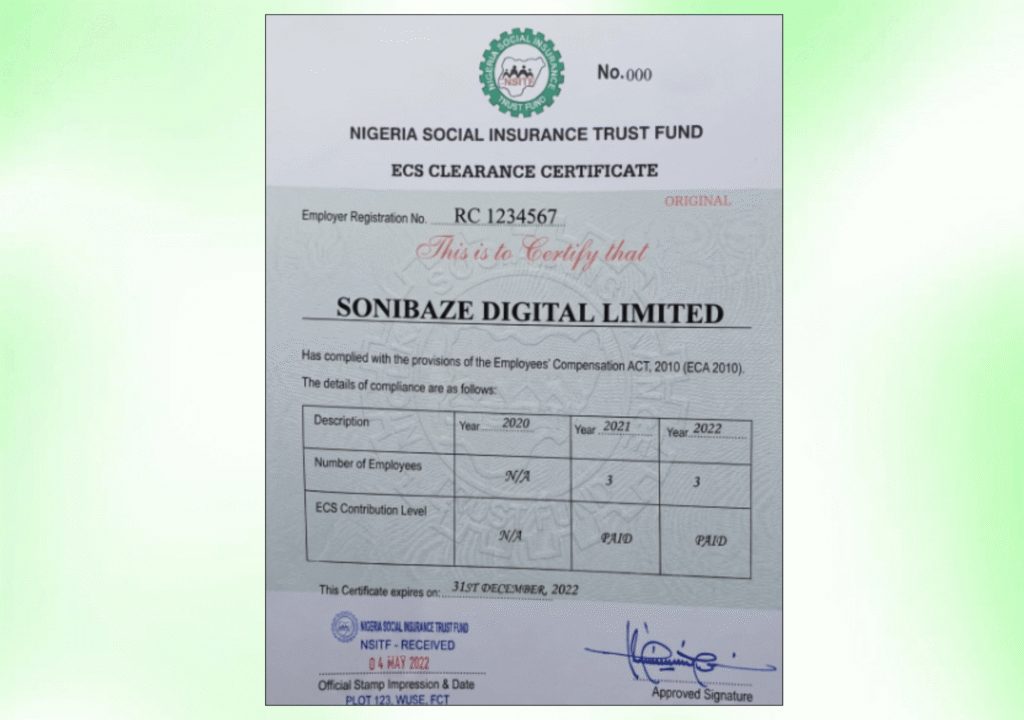
The NSITF Compliance Certificate is the document issued to an employer that confirms active registration with the scheme and proof of up-to-date contributions. It is issued yearly and must be renewed annually to remain valid.
What Is the NSITF Compliance Certificate Used for?
1. Mandatory Requirement for Government Contracts
This is the most immediate use that pushes most businesses to get the certificate. The NSITF Compliance Certificate is required by most Federal Ministries, Departments, and Agencies for the award of public contracts. Any supplier, contractor, or consultant bidding for Federal Government work must produce a valid certificate as part of the mandatory documentation checklist.
The Bureau of Public Procurement has specifically listed NSITF compliance as a procurement requirement. A certificate that expired even one day before the bid submission date will disqualify an application. There is no grace period and no workaround once the bid window has closed.

2. BPP Database Registration
As covered in the BPP registration requirements, the NSITF Compliance Certificate is one of the core documents required to register on the National Database of Federal Contractors, Consultants and Service Providers. Without it, a company cannot complete BPP registration, which means it cannot access Federal Government tenders at all. The two requirements are linked.
3. Legal Proof of Employee Welfare Compliance
Beyond procurement, the certificate serves as formal proof that an employer has met its legal obligations under the Employees’ Compensation Act 2010. This matters in disputes involving workplace injuries or employee claims. An employer who cannot produce a valid certificate is not just exposed to administrative penalties but also to direct financial liability for any work-related harm suffered by an employee during the period of non-compliance.
4. Protection Against Financial Exposure From Workplace Incidents
When a registered employer’s employee suffers a work-related injury or dies on the job, NSITF covers the compensation, medical treatment, rehabilitation, and death benefits. An unregistered employer carries those costs alone. For companies in construction, manufacturing, oil and gas, or any field where workplace incidents are a realistic risk, that exposure can be significant.
5. Business Credibility and Compliance Standing
Beyond regulatory requirements, holding a valid NSITF certificate signals to clients, partners, and procuring agencies that a business takes its legal obligations seriously. In competitive tender situations where multiple vendors meet the technical criteria, compliance standing becomes a differentiator. Companies with all statutory certificates in order move through procurement processes faster than those scrambling to obtain documents at the last minute.
Who Is Required to Register With NSITF?
Registration is mandatory for every employer in Nigeria, whether in the public or private sector. The Employee Compensation Act makes no distinction based on company size. Any business with at least one employee on its payroll is required to register and contribute.
| Employer Type | Obligation |
|---|---|
| Private companies | Mandatory registration and monthly 1% payroll contribution |
| Public sector organisations | Mandatory, government contributes as an employer of labour |
| Sole proprietorships with staff | Mandatory where employees are on payroll |
| NGOs and non-profits with employees | Mandatory regardless of non-profit status |
| Foreign companies operating in Nigeria | Mandatory if employing Nigerian staff |
The only exemptions relate to specific categories of workers, including non-Nigerian employees on short-term assignments of less than six years who are already covered by a social security scheme in their home country, and ministers of religion engaged in the propagation of their faith.
Obtain Your NSITF Certificate
Let us help you obtain your Nigeria Social Insurance Trust Fund (NSITF) Compliance Certificate quickly and hassle-free. Our experts provide reliable support throughout the application process, ensuring your business meets all statutory compliance requirements.
What the Certificate Covers
The Employees’ Compensation Scheme funded through NSITF contributions provides the following to registered employees:
| Benefit Type | Coverage |
|---|---|
| Medical treatment | Hospital stays, surgery, medication, and rehabilitation costs |
| Temporary disability | Income replacement while an employee is unable to work |
| Permanent disability | Long-term compensation where injury permanently affects earning capacity |
| Death benefits | Compensation and survivor benefits for dependants of employees who die from work-related causes |
| Vocational rehabilitation | Support for retraining workers who cannot return to their previous role |
How Much Does It Cost to Get the Certificate?
The initial registration and certification fee is approximately N50,000. Beyond this, employers are required to remit 1 percent of total monthly payroll every month, due on the last working day of that month. Late payment attracts a penalty of 5 percent of the unpaid amount for each month or part of a month the payment is overdue.
If you engage a consultant to assist with registration and documentation, professional fees are charged separately and vary by firm. The N50,000 registration fee goes directly to NSITF and is not a consultant charge.
How Long Does It Take to Get the Certificate?
Processing typically takes around 5 working days from the date all required documents are submitted and payment is verified. NSITF’s official timeline states that the compliance certificate is processed within 5 working days upon successful submission and payment confirmation.
What Happens If You Do Not Have One?
The consequences of operating without a valid NSITF Compliance Certificate are specific and enforceable.
| Consequence | Detail |
|---|---|
| Disqualification from government contracts | Any bid submitted without a valid certificate is automatically disqualified |
| BPP registration blockage | Companies cannot complete BPP database registration without it |
| Financial penalties | 5 percent monthly penalty on unpaid or unremitted contributions |
| Direct liability for workplace incidents | Employer becomes fully liable for compensation costs normally covered by NSITF |
| Legal sanctions | Enforcement action under the Employees’ Compensation Act 2010 |
Frequently Asked Questions
Is the NSITF certificate the same as a PENCOM certificate?
No. They are separate obligations. NSITF covers compensation for work-related injuries, disease, and death during employment. PENCOM relates to pension contributions for retirement. Both are required for BPP registration and Federal Government contract bids, but they serve entirely different purposes under different legislation.
How often does the NSITF certificate need to be renewed?
The compliance certificate is valid for one year and must be renewed annually. Renewal requires evidence of continuous monthly contributions throughout the year. Allowing the certificate to lapse, even briefly, can disqualify a bid if the expiry date falls before the bid submission date.
Can a company get the certificate if it has employees but has never registered?
Yes. Late registration is possible and advisable. Companies that have been operating without NSITF registration can regularise their status, but this typically involves settling arrears and penalties covering the period of non-compliance. The sooner the registration is done, the lower the arrears.
Does the certificate cover accidents that happen outside the workplace?
Yes. The Employees’ Compensation Scheme covers work-related injuries whether they occur at the workplace or outside it, provided the injury arises out of or in the course of employment. An employee injured while travelling on official assignment, for example, falls within the scheme’s scope.
Where can the NSITF certificate be verified?
NSITF compliance certificates can be verified directly on the NSITF official website at nsitf.gov.ng using the certificate number. Procuring agencies routinely verify certificates during the bid evaluation process, so ensuring the details on the certificate match the company’s registered information is important.
Where is NSITF headquartered in Abuja?
The NSITF headquarters is located at Plot 794, Mohammadu Buhari Way, Central Business Area, PMB 446, Garki, Abuja. The agency also operates 13 regional offices and 62 branch offices across Nigeria, making it accessible from most states.
Conclusion: Do Not Wait for a Contract to Find Out You Need It
The NSITF Compliance Certificate is not a document you should be chasing after a tender notice arrives. Registration takes around 5 working days under normal conditions, but collecting all required documents, making the initial payment, and resolving any queries can extend that timeline. The businesses that consistently win government contracts have these certificates renewed and ready before any specific opportunity comes up.
The 1 percent monthly payroll contribution is a legally mandated cost of employing people in Nigeria. The certificate that confirms you are meeting that obligation unlocks procurement access, limits your liability, and protects the people working for you.
Obtain Your NSITF Certificate
Let us help you obtain your Nigeria Social Insurance Trust Fund (NSITF) Compliance Certificate quickly and hassle-free. Our experts provide reliable support throughout the application process, ensuring your business meets all statutory compliance requirements.