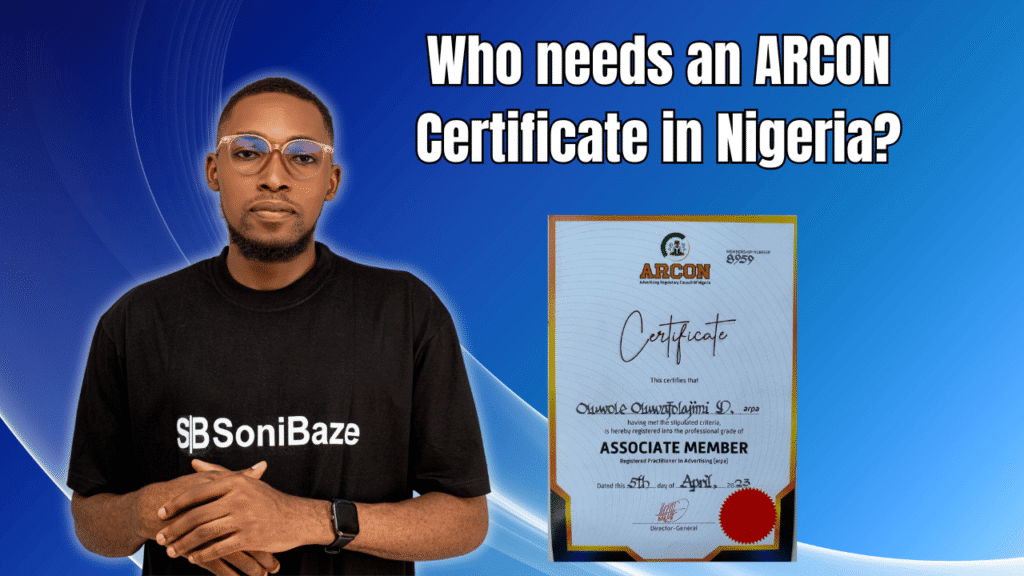
If you run any kind of advertising or marketing activity in Nigeria, ARCON probably applies to you. The Advertising Regulatory Council of Nigeria has been tightening enforcement, and a recent Federal High Court ruling confirmed that the certificate of approval is a mandatory pre-exposure clearance for all advertisements before they are published or aired in Nigeria. That ruling extended ARCON’s reach beyond registered agencies to cover individuals and platforms that many businesses assumed were exempt.
This article breaks down exactly who needs ARCON registration, who needs the Certificate of Approval for individual ads, and what happens if you skip it.
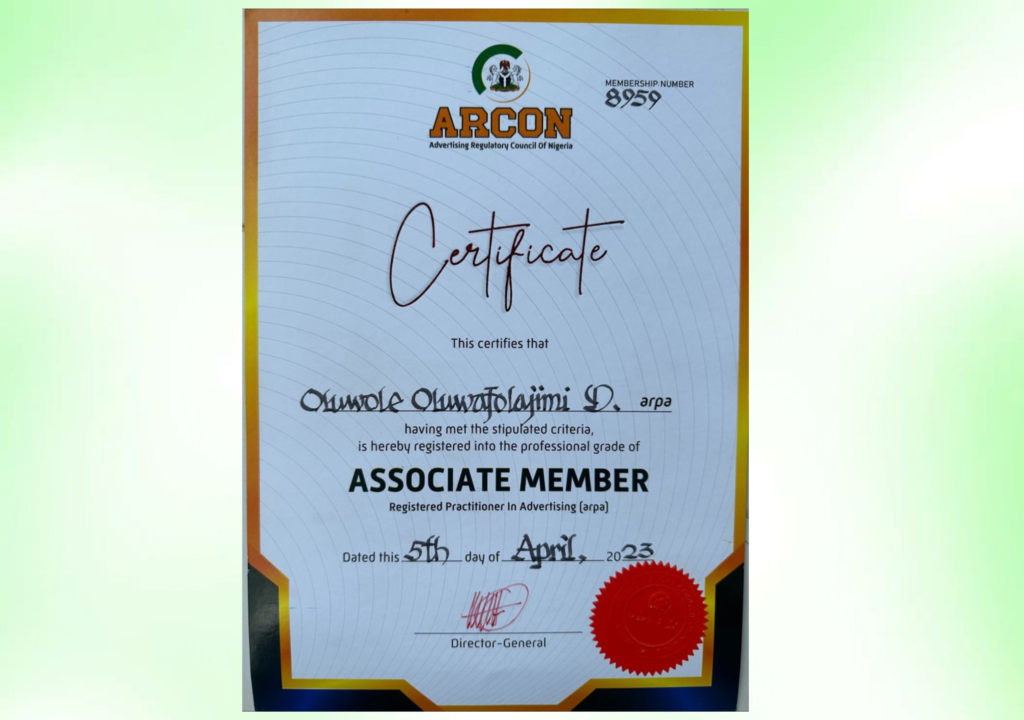
Obtain Your ARCON certificate
Let us help you obtain your Advertising Regulatory Council of Nigeria (ARCON) Certificate quickly and hassle-free. Our experts provide professional guidance throughout the registration and certification process, ensuring compliance with industry regulations.
What ARCON Actually Is
ARCON stands for the Advertising Regulatory Council of Nigeria. It oversees everything related to advertising, marketing, and promotions in Nigeria, replacing the old Advertising Practitioners Council of Nigeria (APCON). The Council was established under the Advertising Regulatory Council of Nigeria Act, 2022, which replaced the Advertising Practitioners Council of Nigeria Act.
There are two separate things ARCON deals with, and people often mix them up. The first is practitioner registration: who is legally allowed to operate as an advertising professional or agency. The second is the Certificate of Approval: pre-clearance for a specific ad before it goes live. Most of the confusion businesses have comes from not realising these are two different requirements that can both apply at once.
Who Needs to Register as an ARCON Practitioner
The ARCON Act mandates that every person or organization intending to engage in advertising or marketing communications in the Nigerian market must register with the Council. This applies to anyone starting or continuing an advertising business or profession.
This is not limited to traditional ad agencies. Registration is compulsory for both individuals and corporate bodies operating within the industry, including those who provide advertising services, manage marketing campaigns, or work as media platforms disseminating advertisements.
In practical terms, that covers a wide range of people working in Nigeria’s marketing space.
| Who Falls Under This | Examples |
|---|---|
| Advertising agencies | Full-service agencies, media buying agencies, creative studios |
| Marketing consultants | Freelancers managing campaigns or strategy for clients |
| Digital marketing professionals | SEO specialists, paid ads managers, social media managers running paid campaigns |
| Media platforms | TV stations, radio stations, billboard companies, websites that run ads |
| In-house marketing teams | Corporate brand and marketing departments running their own campaigns |
| Influencers running sponsored content | Anyone receiving payment to promote a brand |
| Production companies | Jingle producers, commercial video production houses |
If your work touches the creation, placement, or distribution of advertising in Nigeria, ARCON considers you part of the industry it regulates, regardless of whether you call yourself an “advertiser” or something else.

Who Needs the Certificate of Approval for an Ad
This is the part that catches most businesses off guard. The Certificate of Approval to Advertise, issued by ARCON, is a mandatory pre-exposure clearance for all advertisements, with limited exceptions, before they are published or aired in Nigeria.
It does not matter if you are a registered practitioner or not. A recent Federal High Court ruling reaffirmed ARCON’s authority to regulate all forms of advertising, including those on social media and by private individuals, not just registered practitioners. Every advertisement intended for public exposure in Nigeria must be vetted and approved by ARCON, regardless of the platform or the advertiser’s status.
This includes all paid ads targeted at Nigerian audiences, such as social ads, search ads, and display. Influencer and sponsored content also falls under this, with ARCON requiring disclosure, transparency, and contractual clarity for paid collaborations.
So in plain terms, if any of the following describes your situation, the Certificate of Approval applies to you.
| Situation | Does It Apply? |
|---|---|
| Running a Facebook or Instagram ad targeting Nigerians | Yes |
| Posting sponsored content as an influencer | Yes |
| Running a Google Ads campaign for a Nigerian audience | Yes |
| Booking a radio or TV commercial | Yes |
| Putting up a billboard | Yes |
| Posting an organic, unpaid product photo with no sponsorship | Generally not classed as an advertisement under the Act |
| A small business posting a personal status update about their shop | Grey area, but increasingly scrutinised |
Who Submits the Application
The application itself is not something just anyone can file. The Standards Panel Form 001 must be filled and signed by a registered advertising practitioner not below the rank of Associate Member, ARPA, including their registration number. This is one of the reasons businesses without an in-house registered practitioner usually go through an agency.
A complete application also requires a formal application letter to the Director General, an advertiser’s authorisation letter, and a copy of the actual advertisement material, since links are not acceptable and physical or digital files must be submitted. For products like food, beverages, or drugs, evidence of approval from relevant agencies such as NAFDAC must also be attached.
Penalties for Skipping It
The financial risk here is not theoretical. Any media house that publishes or exposes an advertisement without the Standards Panel Certificate of Approval is liable to a minimum penalty of ₦500,000. An agency that creates or places such an advertisement faces the same minimum penalty.
That penalty applies per violation, not per campaign. A brand running an unapproved ad across multiple platforms could be looking at multiple penalties stacking up quickly.
| Party | Risk |
|---|---|
| Business or brand owner | Penalty exposure, possible ad takedown |
| Agency that created the ad | Minimum ₦500,000 fine |
| Media house or platform that ran it | Minimum ₦500,000 fine |
| Influencer running undisclosed sponsored content | Compliance action, possible fine |
Foreign Companies and Agencies
ARCON’s reach is not limited to Nigerian-owned businesses. Foreign and national agencies can apply for licenses to conduct advertising and marketing, provided they comply with the requirements outlined in the Nigerian Code of Advertising and other compulsory guidelines. Under the Act, ARCON also looks at the extent of foreign participation in an agency or organisation incorporated in Nigeria to determine the proposed business form for agencies targeting the Nigerian market.
If you are an international brand entering the Nigerian market, or a foreign agency setting up operations to serve Nigerian clients, this applies to you before you launch your first campaign.
Obtain Your ARCON certificate
Let us help you obtain your Advertising Regulatory Council of Nigeria (ARCON) Certificate quickly and hassle-free. Our experts provide professional guidance throughout the registration and certification process, ensuring compliance with industry regulations.
A Note on Local Content
One requirement that surprises a lot of businesses is the local content rule. ARCON registration is mandated to promote and preserve local Nigerian content in advertising and marketing communications, prioritising indigenous skills such as local production of commercials, talent, and material, especially for adverts exposed to the Nigerian public.
This matters if you are producing ads with foreign voice talent, foreign-shot footage, or fully outsourced creative from outside Nigeria. ARCON can flag this during the approval process.
AI-Generated Content and Newer Rules
ARCON’s scope has expanded to keep pace with how brands actually advertise now. For AI-generated or deepfake advertising, businesses are required to avoid misleading or fraudulent claims and to immediately remove fake ads when identified. If your business uses AI-generated visuals, voiceovers, or video for ads targeting Nigerians, the same approval and accuracy standards apply as they would for any other ad format.
Summary: Do You Need ARCON?
| Your Role | Practitioner Registration | Certificate of Approval Per Ad |
|---|---|---|
| Advertising or marketing agency | Required | Required for each ad placed |
| Freelance marketer or consultant | Required | Required for ads you manage |
| In-house brand marketing team | Required | Required |
| Influencer doing paid promotions | Required if operating commercially | Required for sponsored posts |
| Radio, TV, or outdoor media owner | Required | Required before airing client ads |
| Foreign agency targeting Nigeria | Required | Required |
| Individual posting unpaid personal content | Not required | Generally not applicable |
Frequently Asked Questions
Does ARCON apply to small businesses running their own social media ads?
Yes. The court ruling specifically extended coverage to private individuals and social media advertising, not just registered agencies. A small business running a paid Instagram or Facebook ad targeting Nigerian customers falls under the Certificate of Approval requirement, even if the business has never registered as an advertising practitioner.
What happens if I run an ad without ARCON approval?
The minimum penalty is ₦500,000, and this can apply to the brand, the agency that created the ad, and the media platform that ran it separately. Beyond the financial penalty, ARCON can also order the ad to be pulled down.
Do influencers need to register with ARCON?
Influencers running sponsored content as part of paid brand collaborations fall under ARCON’s disclosure and approval requirements. The Council requires transparency in paid partnerships, meaning sponsored posts need to be clearly marked and may require Certificate of Approval before going live.
Can my agency apply for the Certificate of Approval on my behalf?
Yes, and for most businesses this is the practical route. The application form must be signed by a registered advertising practitioner, so working with an agency that already has this registration in place removes that hurdle. The business owner still needs to provide an authorisation letter and the final ad material.
Does this apply to organic social media posts that aren’t paid ads?
Organic, unpaid content that simply shows your products or services without being a structured advertisement generally falls outside the Certificate of Approval requirement. The moment money changes hands for promotion, whether through paid ads or influencer partnerships, ARCON’s rules come into play.
Are foreign brands entering Nigeria exempt from ARCON?
No. Foreign and national agencies can apply for licenses to operate, but they still need to comply with the Nigerian Code of Advertising. International brands launching campaigns in Nigeria, or foreign agencies handling Nigerian accounts, need to go through the same registration and approval process as local businesses.
Conclusion: Check Before You Launch, Not After
The cost of checking ARCON requirements before a campaign goes live is small compared to a ₦500,000 penalty after the fact, especially when that penalty can apply separately to the brand, the agency, and the platform. If your business runs any kind of paid promotion in Nigeria, whether through social media, radio, TV, billboards, or influencer partnerships, assume ARCON applies until you’ve confirmed otherwise.
For most small and medium businesses, the simplest path is working with an agency that already holds practitioner registration and can handle the Certificate of Approval process as part of the campaign setup.
Obtain Your ARCON certificate
Let us help you obtain your Advertising Regulatory Council of Nigeria (ARCON) Certificate quickly and hassle-free. Our experts provide professional guidance throughout the registration and certification process, ensuring compliance with industry regulations.