If you run an advertising agency, work as a marketing practitioner, or place ads for clients in Nigeria, ARCON registration is not optional. The Advertising Regulatory Council of Nigeria, formerly known as APCON, requires every individual and firm engaged in advertising for profit to be licensed. Operating without this license puts your business at risk of fines and forced closure.
The challenge is that ARCON does not publish one simple price list. Costs depend on whether you are registering as an individual practitioner or a corporate agency, your category of specialization, and whether your business has foreign equity involvement. This article breaks down the cost structure, what each registration type involves, and what to budget for in 2026.
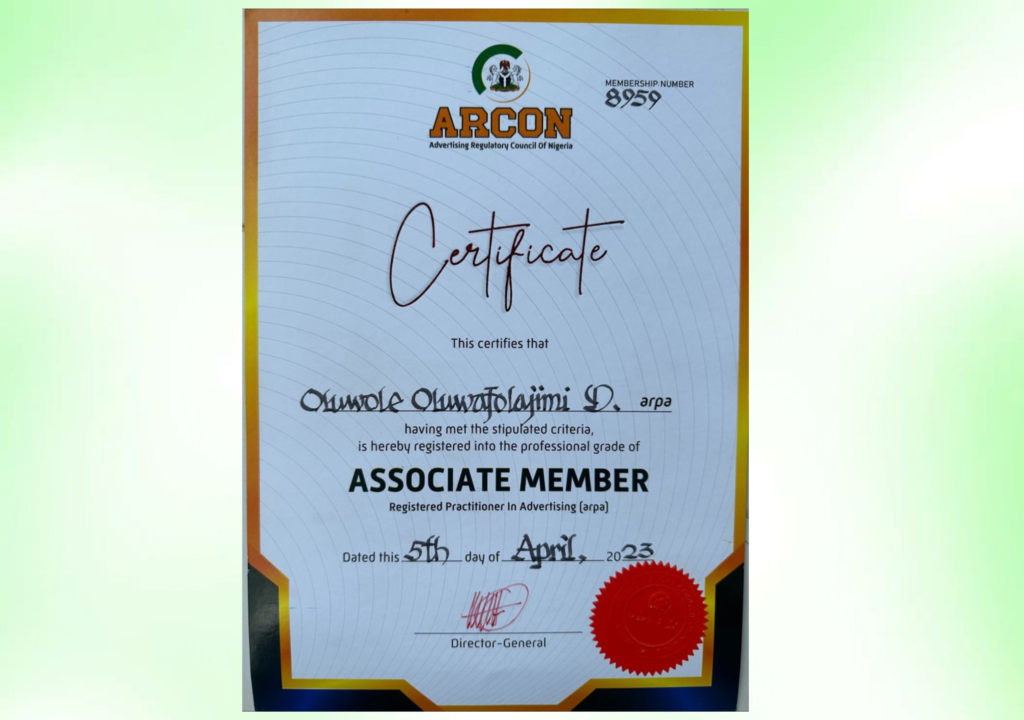
Obtain Your ARCON certificate
Let us help you obtain your Advertising Regulatory Council of Nigeria (ARCON) Certificate quickly and hassle-free. Our experts provide professional guidance throughout the registration and certification process, ensuring compliance with industry regulations.
What ARCON Actually Regulates
ARCON was established under the Advertising Regulatory Council of Nigeria Act, 2022, replacing the older APCON Act. Its job covers two separate things. First, it regulates advertising content itself, meaning ads must be approved before they run across TV, radio, billboards, print, and digital channels. Second, it regulates the people and companies that produce and place those ads.
This second part is where registration comes in. Anyone practicing advertising for commercial gain, including agencies, freelance practitioners, and media buyers, is required to be registered and licensed. Advertisers themselves (the brands paying for ads) are generally exempt from this licensing requirement, though they are still expected to work with licensed agencies.
Individual Practitioner Registration
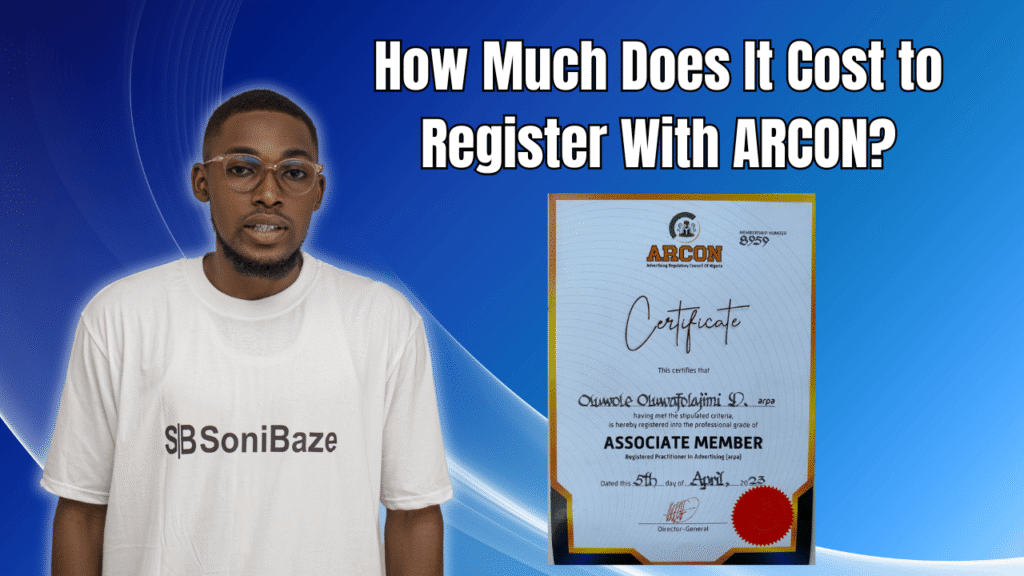
If you work in advertising as an individual, whether as a copywriter, account manager, media planner, or any other advertising role, you fall under individual registration. New practitioners are registered initially as Associate members before progressing to Full member status after meeting experience requirements.
| Registration Stage | What It Involves |
|---|---|
| Associate Membership (entry level) | Initial application, supporting documents, application fee, induction |
| Full Membership (after 5 years) | Upgrade application, evidence of continued practice, additional fee |
| Fellowship (after 15 years) | Considered on merit, application open to long-serving full members |
| Annual Practice Fee | Paid yearly, due on or before March 31st |
Application requires a completed form submitted through the ARCON self-service portal, along with a passport photograph, copies of relevant certificates, and three completed referee forms. After approval, you must attend an induction ceremony and take the Oath of Practice before you are formally recognised. Skipping induction means you are not considered a registered practitioner regardless of payment status.
The annual practice fee is the recurring cost every individual practitioner needs to plan for. Missing the March 31st deadline is treated as an offence and can lead to delisting, so this is not a one-time cost you pay and forget.

Corporate Licensing for Agencies
Agencies and firms that engage in advertising for profit must obtain a corporate license, separate from the individual registration of their staff. This license must be renewed every three years, and the firm’s area of specialization defines the scope of what it is permitted to do.
ARCON operates two registration windows for corporate licensing.
| Window | Who It’s For |
|---|---|
| Window One | Firms that fall under another regulatory body (NBC, NCC, NFC, NPC, etc.) and can provide a formal letter from that body |
| Window Two | Firms belonging to a sectoral association recognised by ARCON, requiring a reference letter confirming suitability |
Both windows require payment of the licensing fee stipulated in ARCON’s published fee schedule. The exact figure depends on your specialization category, since a media buying agency, a creative agency, and an outdoor advertising firm fall under different scopes even though all three need a license.
Additional Costs for Foreign-Owned Agencies
If your agency has foreign equity participation, the cost structure changes significantly. ARCON classifies agencies based on their Nigerian ownership percentage.
| Equity Structure | Classification |
|---|---|
| Nigerian equity ≥ 74.9% (foreign equity ≤ 25.1%) | National agency |
| Foreign equity ≥ 74.9% (Nigerian equity ≤ 25.1%) | Foreign agency |
National and foreign agencies are required to provide additional financial guarantees beyond the standard licensing fee. These include a banker’s credit guarantee from a Nigerian bank acceptable to ARCON, set at ₦200 million for a national agency and ₦500 million for a foreign agency. A separate agency business insurance policy is also required at the same thresholds, sourced from a Nigerian insurance company.
These figures are substantial and are not part of the standard registration cost most small and medium agencies will encounter. They apply specifically to agencies with foreign ownership stakes, not to wholly Nigerian-owned firms.
Obtain Your ARCON certificate
Let us help you obtain your Advertising Regulatory Council of Nigeria (ARCON) Certificate quickly and hassle-free. Our experts provide professional guidance throughout the registration and certification process, ensuring compliance with industry regulations.
Cost Components at a Glance
Putting the pieces together, here is what contributes to your total ARCON registration cost depending on your category.
| Cost Component | Applies To | Frequency |
|---|---|---|
| Application fee | Individual practitioners | One-time at registration |
| Annual practice fee | Individual practitioners | Yearly, due March 31 |
| Upgrade application fee | Practitioners moving from Associate to Full member | One-time at upgrade |
| Corporate licensing fee | Agencies and firms | Every 3 years |
| Bankers’ credit guarantee | Agencies with foreign equity | Held continuously |
| Agency business insurance | Agencies with foreign equity | Held continuously, renewed |
Because ARCON’s fee schedule is reviewed periodically and varies by specialization category, the actual figures for application fees, annual practice fees, and corporate licensing fees should be confirmed directly through the ARCON self-service portal at the time of application. Treat any third-party figure you find online with caution unless it references the current official schedule.
Why This Matters for Your Business
Working with an unregistered practitioner or an unlicensed agency is not just a compliance issue for the agency itself. ARCON has previously stated its mandate covers all forms of advertising, including digital and social media placements, and brands have been contacted directly when their agencies were not properly registered. If you are a business owner hiring an agency, asking for their ARCON registration number before signing a contract protects you as much as it protects them.
For practitioners, the bigger risk is not the registration cost itself but the consequence of operating without it. Penalties for non-compliance with the broader advertising code include fines that run into hundreds of thousands of Naira for unapproved advertisements, separate from any registration-related sanctions.
Frequently Asked Questions
Is ARCON the same as APCON?
Yes. ARCON, the Advertising Regulatory Council of Nigeria, replaced APCON, the Advertising Practitioners Council of Nigeria, following the ARCON Act of 2022. Practitioners and agencies previously registered under APCON fall under ARCON’s continued regulation, and the registration self-service portal that practitioners use has carried over from the APCON system.
Do I need to register if I only do social media marketing?
ARCON’s stated position is that its mandate covers advertising in all its forms, including online and social media advertising. If you place paid ads or manage advertising campaigns for clients, even purely on digital platforms, you fall within scope. Businesses managing their own in-house social media without acting as an agency for other clients are in a different position, but if there is any doubt, it is worth confirming your status directly with ARCON.
How often do I need to renew my registration?
Individual practitioners pay an annual practice fee due by March 31st each year. Corporate licenses for agencies are renewed every three years. Missing either deadline can result in delisting, which means you are no longer recognised as a registered practitioner or licensed agency until the issue is resolved.
What happens if my agency operates without an ARCON license?
Operating without a license means your agency’s advertising activities are considered illegal under the ARCON Act. Beyond registration enforcement, the broader Nigerian Code of Advertising Practice imposes penalties of at least ₦200,000 on agencies that place advertisements that were not properly approved, with similar penalties applying to media houses that publish them.
Can a foreign national register as an advertising practitioner in Nigeria?
Yes, but with additional requirements. Foreign practitioners must be certified and licensed by ARCON and must provide evidence of a valid work permit and visa from the Nigerian Immigration Service, along with a letter from their employer confirming that their remuneration is comparable to what a Nigerian in the same role would receive.
Where do I apply for ARCON registration?
Applications for both individual and corporate registration are submitted through the online self-service portal. Supporting documents, including certificates, passport photographs, and referee forms, are uploaded as part of the application before any induction or licensing is finalised.
Conclusion: Budget for the Process, Not Just the Fee
ARCON registration is not a single payment you make once and forget. For individuals, it is an annual obligation tied to a hard deadline. For agencies, it is a three-year licensing cycle with category-specific fees, and for foreign-owned firms, it includes financial guarantees that run into hundreds of millions of Naira. The actual application and practice fee figures change periodically, so the safest approach is to check the current schedule on the ARCON portal before budgeting your exact numbers, then build the renewal cycle into your business calendar so it never becomes an emergency.
Obtain Your ARCON certificate
Let us help you obtain your Advertising Regulatory Council of Nigeria (ARCON) Certificate quickly and hassle-free. Our experts provide professional guidance throughout the registration and certification process, ensuring compliance with industry regulations.