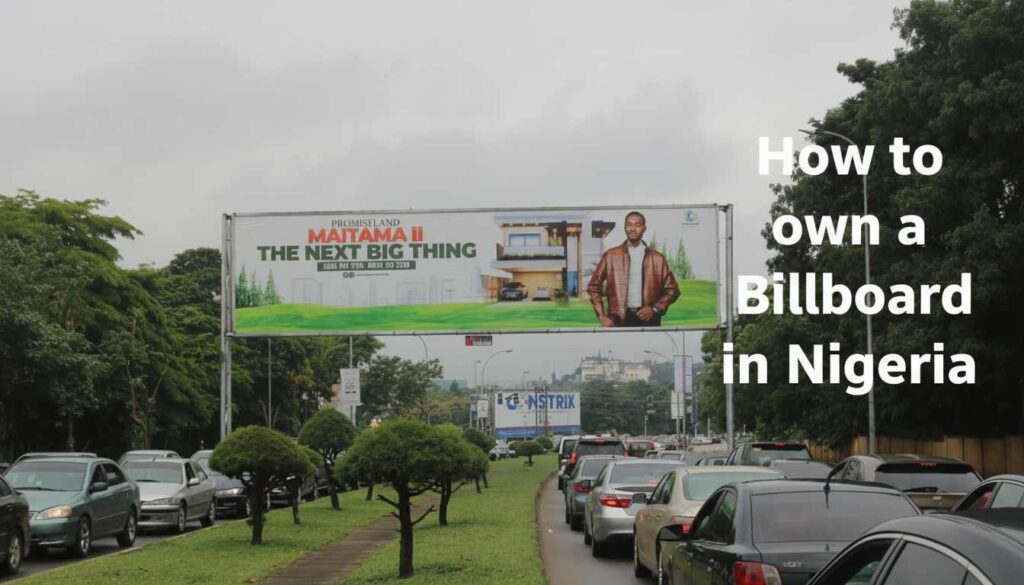
Outdoor advertising is one of the oldest and most effective forms of marketing in Nigeria, and billboards remain at the heart of it. From the expressways of Lagos to the government districts of Abuja, large-format signage continues to command attention in ways digital ads simply cannot replicate. If you have ever driven past a roadside billboard and wondered who owns it and how much it earns, this guide is for you.
Whether you are an entrepreneur looking to diversify income, a property owner sitting on a prime location, or a business owner exploring advertising assets, this article breaks down everything you need to know about owning a billboard in Nigeria, from costs and permits to realistic profit expectations.
Let’s get your brand on billboards around Abuja and seen by the right audience.
What Does It Mean to Own a Billboard in Nigeria?
Owning a billboard in Nigeria generally works in one of two ways. You either own the physical structure and lease the advertising space to brands and businesses, or you lease land from a property owner and erect your own structure to sublet.
Either way, the billboard owner earns revenue by renting out the face of the structure to advertisers for fixed periods, typically 30 days, 90 days, or 12 months at a time. The more visible and high-traffic your location, the more you can charge.
This is a legitimate, scalable business. Many outdoor advertising companies in Nigeria started with a single structure and grew into full agencies managing dozens of sites across multiple states.
Types of Billboards in Nigeria
Before investing, it is important to understand what type of structure you want to own. Each comes with different costs, permit requirements, and income potential.
| Billboard Type | Size Range | Best For | Estimated Monthly Rent |
|---|---|---|---|
| Static Unipole | 12m x 4m to 18m x 6m | Highways, major roads | ₦150,000 – ₦800,000 |
| Gantry Billboard | Spans road width | Expressways, toll areas | ₦500,000 – ₦2,000,000 |
| LED/Digital Billboard | Varies | High-traffic urban areas | ₦800,000 – ₦5,000,000+ |
| Rooftop Billboard | Varies | City centres, commercial areas | ₦200,000 – ₦1,500,000 |
| Street Furniture | Small format | Pedestrian zones, bus stops | ₦50,000 – ₦200,000 |
For first-time investors, the static unipole is the most practical entry point. It is less expensive to construct, easier to get approved, and has a healthy market of advertisers across every industry.
How Much Does It Cost to Own a Billboard in Nigeria?
This is the question most people start with, and the honest answer is that costs vary significantly based on location, size, and billboard type. Here is a realistic breakdown.
Construction Costs
| Item | Estimated Cost |
|---|---|
| Steel fabrication and structure | ₦1,500,000 – ₦4,000,000 |
| Foundation and civil works | ₦500,000 – ₦1,500,000 |
| Printing and face installation | ₦150,000 – ₦500,000 |
| Electrical (for illuminated boards) | ₦200,000 – ₦800,000 |
| Total (Static Unipole) | ₦2,350,000 – ₦6,800,000 |
LED and digital billboards are significantly more expensive, with construction and hardware costs ranging from ₦15,000,000 to over ₦50,000,000 depending on screen size and brand.
Land and Location Costs
If you do not own the land, you will need to enter a lease agreement with the landowner. In Abuja, for example, a roadside plot in a high-traffic area like Airport Road, Kubwa Expressway, or Nnamdi Azikiwe Expressway can cost anywhere from ₦300,000 to ₦2,000,000 per year in ground rent, depending on how close the site is to a major intersection or commercial node.
Let’s get your brand on billboards around Abuja and seen by the right audience.
Permits and Approvals: What You Need
This is where many first-time billboard owners get tripped up. Erecting a billboard in Nigeria without the proper approvals is illegal and can result in demolition, fines, or prosecution. Each state and territory has its own regulatory body.
Federal Capital Territory (Abuja)
In Abuja, outdoor advertising is regulated by the Abuja Enterprise Agency and the Abuja Metropolitan Management Council (AMMC). You will need:
- A site approval letter from the AMMC
- Environmental Impact Assessment (where required)
- Structural safety certification
- Annual display permit (renewed yearly)
- Tax clearance certificate
Annual permit fees in Abuja typically range from ₦200,000 to ₦1,500,000 per structure depending on size, location, and billboard type.
Lagos State
The Lagos State Signage and Advertisement Agency (LASAA) regulates all outdoor advertising in Lagos. LASAA is one of the most structured regulatory bodies in the country and has a tiered permit system based on billboard size and zone.
Other States
In states like Rivers, Kano, and Oyo, you deal with the State Ministry of Information or a dedicated outdoor advertising agency. Some local government areas also levy their own fees on top of state permits.
Important: Always confirm the current fee schedule directly with the relevant agency before construction. Permit fees change regularly and unofficial sources can be outdated.
How to Get Started: Step-by-Step
Step 1: Identify a High-Traffic Location
Site selection is the most critical factor in billboard profitability. Look for locations with high daily vehicular traffic, minimal visual obstruction, and proximity to commercial activity. Intersections, expressways, and routes leading to markets, airports, and government areas are ideal.
In Abuja, locations like Mabushi, Wuse Zone 4, Garki, and the Airport Road corridor are among the most sought-after billboard sites.
Step 2: Secure the Land
Approach the landowner and negotiate a lease agreement. Ensure the agreement is documented and covers duration, renewal terms, and who bears responsibility for structural maintenance.
Step 3: Apply for Permits Before Construction
Submit your application to the relevant regulatory body before a single steel beam goes up. Agencies like AMMC in Abuja require pre-construction approval. Building without approval risks demolition and loss of your entire investment.
Step 4: Engage a Structural Engineer and Fabricator
Work with a certified structural engineer to design a structure that meets safety standards. Engage a reputable fabricator for the steel works. Do not cut corners here as a structural failure is both dangerous and legally catastrophic.
Step 5: Install and Market Your Billboard
Once construction is complete, you need to fill the space with paying advertisers. This is where many billboard owners struggle if they do not have an advertising background. Options include marketing directly to businesses, listing on outdoor advertising marketplaces, or partnering with a media agency that manages placements on your behalf.
How Much Profit Can You Make from a Billboard?
Let us look at a realistic scenario for a static unipole in a mid-tier location in Abuja.
| Revenue/Cost Item | Annual Estimate |
|---|---|
| Monthly rental income (2 advertisers) | ₦400,000/month |
| Annual gross income | ₦4,800,000 |
| Annual permit fees | ₦400,000 |
| Land lease | ₦600,000 |
| Maintenance and printing | ₦300,000 |
| Total Annual Expenses | ₦1,300,000 |
| Net Annual Profit | ₦3,500,000 |
At this rate, a billboard with a total setup cost of ₦5,000,000 breaks even in approximately 18 months and returns a healthy profit from year two onward. A premium location on a major expressway can yield significantly more.
Billboard Advertising in Abuja: Why Location Is Everything
If you are based in the FCT or looking to invest in Abuja specifically, the billboard market here is active and growing. Government agencies, telecoms, banks, FMCG brands, and political campaigns are consistent advertisers. The demand is steady throughout the year, with notable spikes during electioneering periods.
SoniBaze Digital, a Abuja-based digital marketing and media agency, offers billboard placement services across the FCT. If you are a business looking to advertise on billboards in Abuja or a billboard owner seeking to fill your inventory, their team manages the full placement process, from site selection to campaign execution.
Common Mistakes to Avoid
Getting into outdoor advertising without adequate preparation is a costly error. Here are the mistakes that sink most first-time billboard owners.
Skipping regulatory approvals is the single biggest risk. Abuja and Lagos authorities regularly demolish unauthorized structures, and there is no compensation when that happens. Choosing the wrong location is the second most common mistake. A billboard on a low-traffic road with no commercial activity nearby will struggle to attract advertisers regardless of how good the structure looks. Underpricing the space to fill it quickly might seem smart short-term but sets a bad market precedent and attracts low-quality clients. Neglecting maintenance leads to damaged faces, structural deterioration, and advertisers who do not renew. Finally, relying on a single advertiser creates income instability. Always aim to keep two advertisers per face cycling through.
Frequently Asked Questions
Can anyone own a billboard in Nigeria?
Yes. There are no restrictions on who can own a billboard structure in Nigeria as long as you obtain the required permits from the relevant state or FCT authority. Individuals, companies, and sole proprietors all operate in this space.
How long does it take to get billboard permits in Abuja?
The approval process with AMMC typically takes between 4 and 12 weeks depending on the completeness of your application and the current processing load at the agency. Some applicants use consultants to speed up the process.
Do I need to own land to own a billboard?
No. Most billboard owners in Nigeria lease the land from a third party and erect their structure on it. The lease agreement is what gives you the right to use the space.
How do I find advertisers for my billboard?
Start by approaching businesses in your immediate area and industries that rely heavily on outdoor advertising, such as telecoms, banks, real estate companies, and consumer goods brands. You can also partner with a media buying agency that already has relationships with brands and advertisers.
Is a billboard business profitable in Nigeria?
Yes, particularly in high-traffic cities like Abuja, Lagos, Port Harcourt, and Kano. A well-located static billboard typically recoups its investment within 12 to 24 months and generates passive income thereafter with minimal running costs.
What happens if my billboard is demolished by authorities?
If you erected the billboard without approval, you have no legal recourse. If you had proper permits and the demolition was carried out without due process, you can file a formal complaint and seek compensation through the courts. This underscores why legal compliance is non-negotiable.
Conclusion
Owning a billboard in Nigeria is a viable and profitable business when approached correctly. The combination of construction costs, permit fees, and land leases requires upfront capital, but the passive income potential more than justifies the investment for well-positioned structures.
The key pillars are simple: choose the right location, get your permits before you build, construct a safe and durable structure, and market your space aggressively to the right advertisers.
If you are in Abuja and need support with billboard placement, outdoor advertising strategy, or digital marketing to complement your campaigns, SoniBaze Digital is positioned to help.
Let’s get your brand on billboards around Abuja and seen by the right audience.