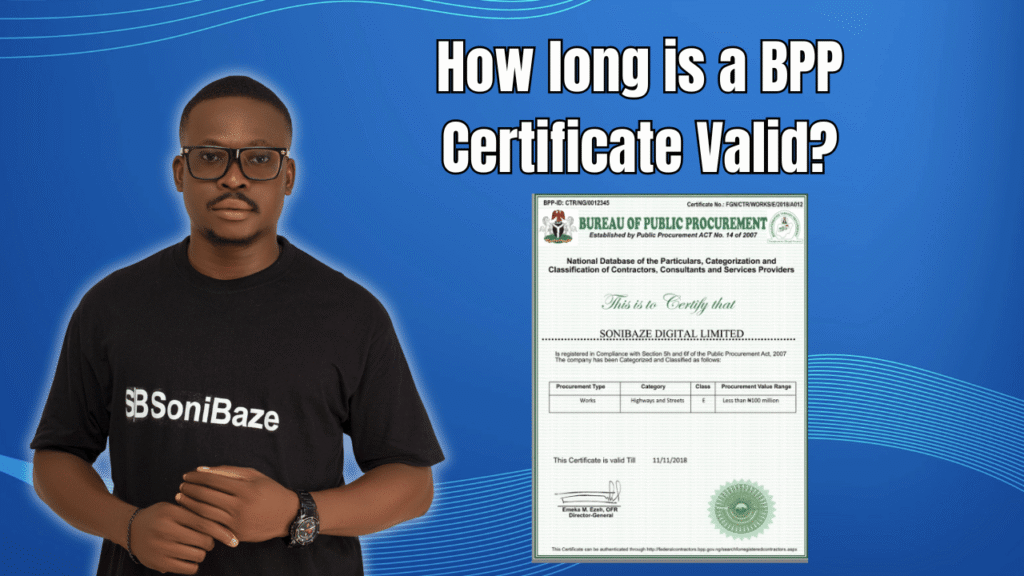
One question that comes up regularly among Nigerian contractors and service providers is whether the BPP certificate expires and, if so, how often it needs to be renewed. The short answer is yes, it expires. The longer answer involves understanding what exactly gets renewed, when to do it, and what happens if you miss the window.
This article covers BPP certificate validity, the renewal process, and the practical steps to stay current on the National Database.
Obtain Your BPP Certificate
Let us help you obtain your Bureau of Public Procurement (BPP) Registration Certificate quickly and hassle-free. Our experts provide reliable support throughout the registration process, ensuring your business is ready to participate in public procurement opportunities.
The BPP Certificate Is Valid for One Year
The BPP registration certificate is renewed annually. Once your company completes registration and is listed on the National Database of Federal Contractors, Consultants and Service Providers, that listing needs to be updated every year to remain active and valid.
BPP has confirmed this in its published FAQs: the database is updated after one year. This means companies cannot register once and rely on that certificate indefinitely. The registration reflects a snapshot of your company’s compliance status at the time of submission, and since compliance certificates like NSITF, ITF, PENCOM, and tax clearance all expire, it follows that your BPP registration also needs annual refreshing.
What Happens When Your BPP Registration Expires?
When a company’s registration lapses without renewal, BPP flags the account as dormant. A dormant status means your company is no longer active on the database as a verified vendor. Procurement officers running checks on registered contractors will see this status and your bid can be disqualified on that basis alone.
This matters most when government contract opportunities come around. If your BPP registration expired three months ago and a tender opens today, you cannot simply submit old documents. The procurement MDA will check the database, find a dormant listing, and your bid falls at the first hurdle.

What Is the IRR and Why Does It Matter?
The Interim Registration Report, known as the IRR, is closely tied to the annual renewal process. After a company’s initial registration on the BPP database, the IRR is the document generated from the portal that confirms the company’s current registration details and status.
To renew, registered companies log in to the BPP Contractor Database at federalcontractors.bpp.gov.ng using their Temporary Contractor ID and password, click the button labelled “Generate Interim Registration Report,” and follow the steps to generate and print the current, valid IRR. This document is what companies present alongside bid submissions to confirm their BPP status is active for the current period.
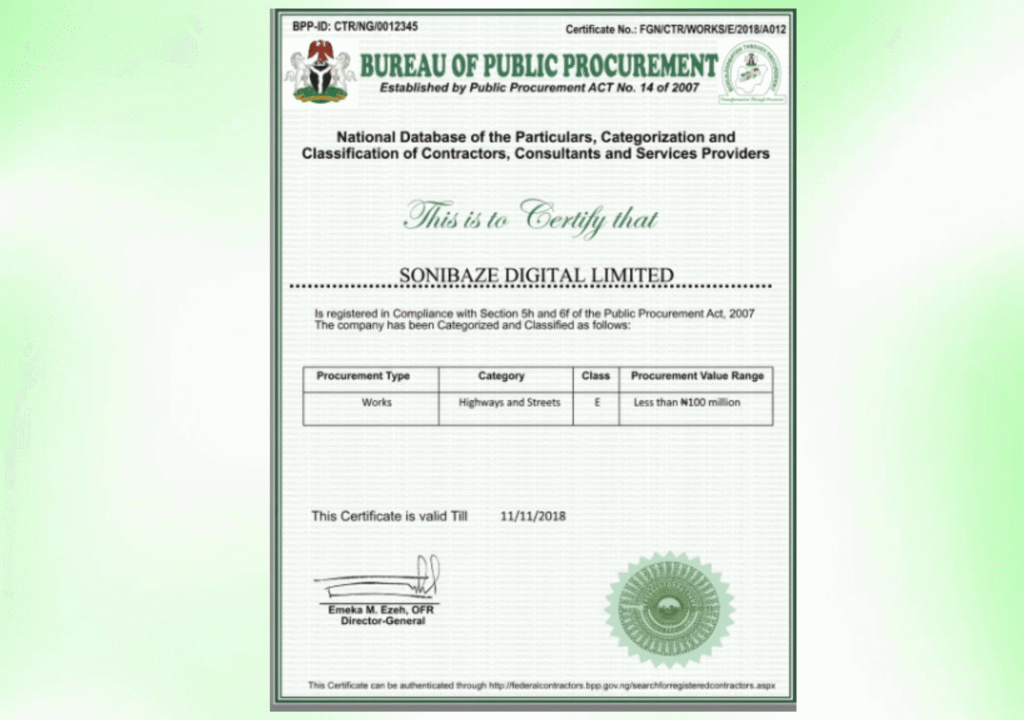
The IRR is not the same as the permanent registration certificate. Think of the certificate as the original entry into the database and the IRR as the annual confirmation that the entry is still current and the company’s compliance information has been updated.
When to Renew Your BPP Registration
BPP’s guidelines specify that registered companies seeking renewal should do so starting from the first month of the new year by submitting updated information on company performance in the preceding year.
In practice, this means January is the right time to initiate renewal. Companies that wait until they need the certificate for a specific contract, particularly if that contract closes in March or April, often find themselves cutting it close, especially if any of their underlying compliance documents need updating first.
The supporting certificates that feed into a BPP renewal, including your NSITF compliance certificate, ITF compliance certificate, PENCOM remittance evidence, and tax clearance certificate covering the most recent three years of assessment, all need to be current. If any of them have lapsed, they need to be renewed before a BPP renewal can go through cleanly.
Is There a Fee for Renewal?
For Nigerian companies, renewal is free. BPP’s policy confirms that no fees are charged for initial registration or subsequent annual renewal for local companies. The cost you will incur is indirect, specifically the time and effort of gathering updated compliance certificates and the professional fees if you engage a consultant to manage the process.
Foreign companies registered on the database are subject to a fee determined by BPP to cover the cost of verifying the information they submit. This fee structure applies at renewal as well as initial registration.
Obtain Your BPP Certificate
Let us help you obtain your Bureau of Public Procurement (BPP) Registration Certificate quickly and hassle-free. Our experts provide reliable support throughout the registration process, ensuring your business is ready to participate in public procurement opportunities.
What Happens If You Registered Before May 2018?
Companies that registered on the BPP database before May 2018, when BPP upgraded its system, do not need to create a new account. They simply log in with their existing account details and their information is migrated to the upgraded database. If you registered before that period and have not logged in since, this is worth checking before you try to renew, since the login credentials and portal interface changed with the upgrade.
Renewal at a Glance
| Item | Detail |
|---|---|
| Validity period | One year, renewed annually |
| When to renew | From January of the new year |
| What gets renewed | Company compliance data and the Interim Registration Report (IRR) |
| Cost of renewal | Free for Nigerian companies |
| Cost for foreign companies | Fee determined by BPP |
| Status if not renewed | Account flagged as dormant |
| Renewal portal | federalcontractors.bpp.gov.ng |
What Documents Are Needed for Renewal?
The renewal process requires updated versions of the same compliance certificates used during initial registration. At the point of renewal, you will typically need:
A current tax clearance certificate from FIRS covering the three most recent assessment years. An active NSITF compliance certificate. An ITF compliance certificate, unless your company has fewer than five employees and an annual turnover below fifty million naira, in which case ITF is not required. A PENCOM remittance certificate if your company has three or more employees. Any other sector-specific compliance documents that were part of your original registration.
The key word is current. Expired compliance certificates will cause your renewal to stall in verification just as they would during an initial registration.
Practical Tips for Staying on Top of Renewal
Most companies that miss their BPP renewal deadline do not do so intentionally. It falls through the gaps because no one is tracking it, the January window gets missed, and the next reminder is a tender they cannot bid for.
A few habits that prevent this: set a calendar reminder in December to begin gathering updated compliance certificates in preparation for a January renewal. Keep a compliance tracker that shows the expiry date of every certificate your company holds, including NSITF, ITF, PENCOM, and tax clearance. Note which ones need to be renewed first before BPP renewal can proceed.
Companies that maintain a clean compliance calendar rarely face scrambles. Those that treat it as a once-a-year crisis tend to pay more in consultant fees and missed opportunities than the effort of staying organised would ever cost.
Frequently Asked Questions
Does the BPP certificate expire at the end of December like PENCOM?
BPP does not publish a fixed December 31 expiry date the way PENCOM does. The renewal is annual and BPP’s guidance is to begin the renewal process from January of the new year. The effective validity runs for one year from the date your last renewal or registration was confirmed.
Can I renew my BPP registration before January?
BPP’s guidance specifies that renewal starts from the first month of the new year. Starting the process in December to have everything ready for a January submission is sensible, but the formal renewal window opens in January.
What if I miss the January renewal window?
There is no published penalty for renewing later than January. The practical consequence is that your certificate may lapse before you complete the renewal, leaving your account dormant in the interim. Any bids submitted while your account is dormant risk disqualification. Renewing as soon as possible after a lapse is the right course of action.
Do I need to re-register from scratch if my account went dormant?
No. A dormant account can be reactivated through the renewal process. You do not lose your registration history or have to start over. Log in with your existing credentials, update your company information and compliance certificates, and generate a new IRR.
How do procurement officers check BPP status?
Procurement officers check the BPP National Database directly using your company’s registration number. The database shows whether a company’s status is active or dormant, when the last update was made, and the category of business the company is registered under. This is why a dormant listing is a visible problem, not a technicality that gets overlooked.
Is the IRR the same as the BPP certificate?
No. The BPP certificate is issued upon initial successful registration and confirms your company’s entry into the National Database. The IRR is the annual document generated from the portal that confirms your registration details are current for the ongoing year. Both documents may be requested by MDAs during procurement, though the IRR is more frequently used for ongoing contract engagements.
Conclusion: Annual Renewal Is Non-Negotiable
A BPP certificate is not a one-time achievement. It is an annual obligation that sits alongside NSITF, ITF, PENCOM, and tax clearance in your compliance calendar. Missing the renewal window does not erase your registration, but it does make your company invisible to procurement officers until the status is restored.
The January renewal window is the right time to act. Starting earlier, in December, to get supporting documents in order is even better. Companies that build this into their annual compliance routine never face the scramble of chasing a certificate the week before a tender deadline.
Obtain Your BPP Certificate
Let us help you obtain your Bureau of Public Procurement (BPP) Registration Certificate quickly and hassle-free. Our experts provide reliable support throughout the registration process, ensuring your business is ready to participate in public procurement opportunities.