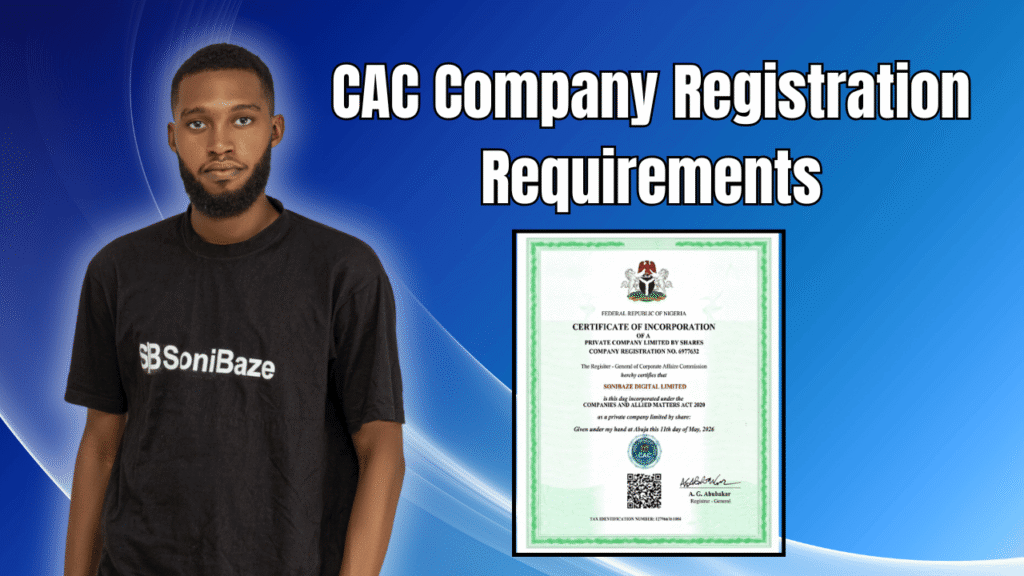
Every business owner in Nigeria reaches the same point. A distributor asks for your CAC certificate. A bank requires it to open a corporate account. A client refuses to sign a contract without it. At that moment, registration stops being optional and becomes urgent.
This guide lists exactly what documents the Corporate Affairs Commission requires for company registration in 2026, what has changed with the digital portal, and the mistakes that cause most applications to get delayed or rejected.
Obtain Your CAC Certificate
Let our team handle your CAC registration and help you obtain your certificate without stress. From business name registration to company incorporation.
Why CAC Registration Matters in 2026
Registering with the CAC gives your business legal recognition under the Corporate Affairs Commission, which is required before you can operate legally, open a business bank account, access funding, or enter into contracts. Without it, your business exists informally. That might work for a while. It stops working the moment you try to scale.
The online Corporate Registration Portal is now central to the process, offering AI-supported name availability checks and paperless submission, which has accelerated incorporation toward potentially same-day issuance in some cases. The process is faster than it was five years ago. But the paperwork requirements have not gotten lighter. If anything, document quality matters more now because the system flags inconsistencies automatically.
Choosing Your Business Structure First
Before gathering documents, decide what you are registering. Most entrepreneurs in Nigeria choose between a Business Name and a Limited Liability Company. A Business Name suits sole proprietors and small operations with simple needs. A Limited Liability Company separates your personal assets from the business and is the structure most banks, investors, and corporate clients expect to see.
This article focuses on the documents needed for Limited Liability Company registration, since that is the structure SoniBaze most often helps clients prepare for. Business Name registration follows a simpler version of the same process.

Documents and Forms Required for CAC Company Registration in 2026
1. Proposed Company Name (with Alternatives)
Your first step is reserving a name. The CAC checks availability and rejects names that are identical or too similar to existing registrations, or that violate naming restrictions. Submit at least two name options in case your first choice is taken.
Avoid vague names. A nature of business description that is too vague, such as simply “Business,” is one of the common pitfalls that delays approval. Be specific about what your company actually does.
2. Valid Means of Identification for All Directors and Shareholders
Every director and shareholder must provide a valid form of identification, such as an international passport, national ID card, or driver’s license. As of 2026, your National Identification Number carries extra weight. NIN is mandatory for directors, and the names provided must match exactly what appears on the NIN record.
This single point causes more delays than almost anything else. The name on your CAC application must exactly match the name on your provided ID, and any inconsistency will result in a query that delays your application. If your ID has a middle name you don’t normally use, or a slightly different spelling, fix that before you apply, not after.
3. Proof of Residential or Office Address
The CAC requires a physical address for the company’s registered office. A P.O. Box cannot be used as your primary head office address. You need a house number, street name, city, local government area, and state. The good news for small business owners is that a home address is acceptable if you are working from home.
Make sure the address is current and matches any utility bill or proof of address you may be asked to provide as supporting documentation.
4. Memorandum and Articles of Association (Form CAC 2.1)
This document is essentially your company’s constitution. It outlines the company’s objectives, share capital structure, and internal regulations. For most small and medium businesses, a standard template covering general commercial activities is sufficient, though the objectives clause should reflect your actual line of business.
5. Statement of Share Capital and Return of Allotment (Form CAC 4)
This form details the company’s authorized and issued share capital. Your share capital affects your registration fees, so this is not just a formality. A Limited Liability Company registration starts from around ₦60,000 for a company with one million naira in share capital, with costs increasing as share capital rises.
6. Particulars of Directors (Form CAC 7)
This form contains detailed information about each director, including full names, addresses, occupations, and any other directorships they hold. Every director listed needs to provide accurate, current information, since this becomes part of the public record.
7. Application Form (Form CAC 1.1)
This is the primary application form, containing company details, directors’ information, and business objectives. It pulls together much of the information from the other forms into a single submission document.
8. Statement of Compliance
This is a declaration confirming that all registration requirements have been met and that the information provided is accurate. It is typically signed off by a legal practitioner involved in the registration, or by an accredited agent handling the process on your behalf.
9. Passport Photographs
Recent passport photographs of all directors and shareholders are required as part of the identification package. These accompany the ID documents submitted through the portal.
10. Professional Email Address
A professional email address using your business name, such as info@yourbusinessname.com, is recommended rather than a personal Gmail or Yahoo account. This is not strictly a CAC requirement, but it reflects how your business will be perceived once registered, particularly when opening a bank account afterward.
Document Quality Standards for 2026
The CAC’s digital system is strict about file quality, and a poorly scanned document can stall your application as effectively as a missing one.
| Requirement | Standard |
|---|---|
| File format | JPEG or PNG for photos and signatures; PDF is often not accepted for these |
| File size | Less than 2MB per file |
| Image clarity | No glares, shadows, or cropped edges on identification documents |
| ID validity | Identification must not be expired |
| Address format | Full physical address required; P.O. Boxes are not accepted |
Keep digital copies of every document organised before you start the application. Going back and forth to re-scan documents is one of the most common causes of delay.

Common Mistakes That Delay Registration
Bad quality scans are the number one reason for registration delays. This is avoidable. Take photos in good lighting, against a plain background, with the entire document visible.
Other common pitfalls include providing a P.O. Box instead of a physical address, submitting an expired ID, having a proprietor under 18 years old without other adult directors, and describing the nature of business too vaguely. Trying to register a Business Name when what you actually need is a company structure also creates problems down the line, particularly if you plan to bring in investors or open accounts that require an LLC.
Underestimating the complexity of post-incorporation compliance and skipping Business Permit and NIPC registration where required are mistakes that surface later, often when a business tries to formalise a partnership or apply for funding.
What Happens After Registration
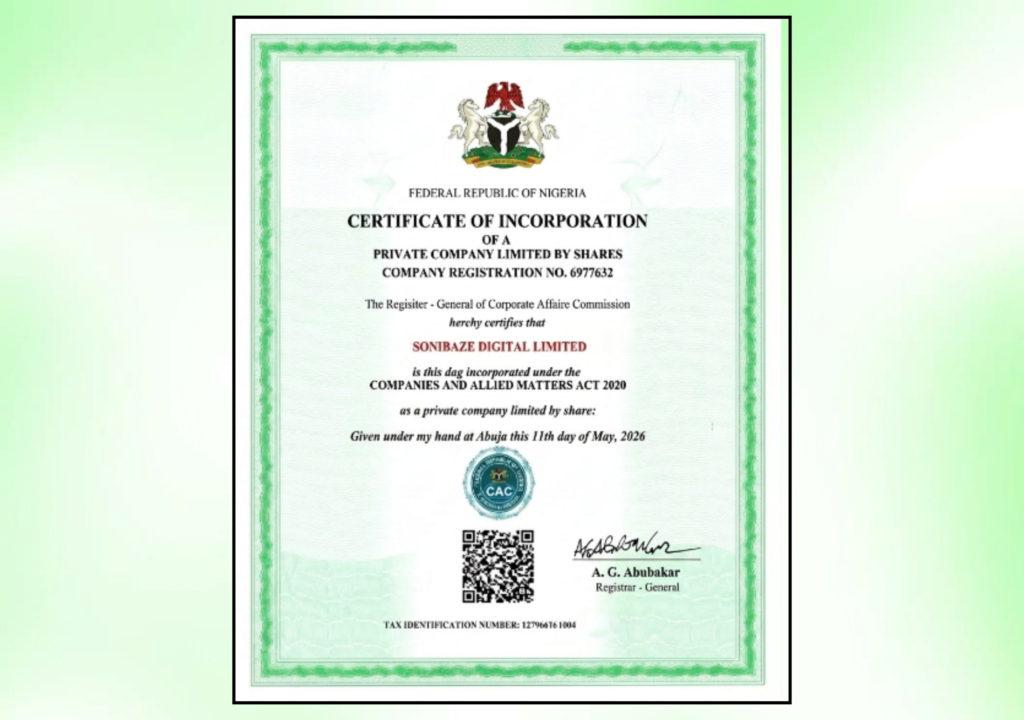
Once your registration is successful, the CAC issues a Certificate of Incorporation along with your Memorandum and Articles of Association. This is your business’s legal proof of existence.
From there, two steps follow quickly. You will need to register with the Federal Inland Revenue Service for a Tax Identification Number, VAT, and other tax obligations. You will also need your CAC documents, business permit, and TIN to open a corporate bank account.
If your business plans to employ foreign staff, you will additionally need to apply for an Expatriate Quota through the Nigeria Immigration Service. For most small and medium Nigerian businesses, the TIN registration and bank account setup are the immediate next steps after incorporation.
Obtain Your CAC Certificate
Let our team handle your CAC registration and help you obtain your certificate without stress. From business name registration to company incorporation.
Registration for Foreign Owners
Nigeria allows significant foreign participation in business ownership. Foreigners can own 100 percent of a Nigerian company, typically needing an international passport, proof of address, and in some cases notarized documents. Only incorporated companies, meaning Private or Public Limited Companies, can be formed by foreigners in Nigeria, and foreign-owned entities must meet specific share capital thresholds and appoint multiple directors.
Certain sectors carry additional restrictions. Sectors such as oil and gas, telecommunications, fintech, and mining require special licenses and local participation under Nigerian Content laws. If your business falls into one of these categories, factor extra time and additional documentation into your planning.
Timeframes and Costs at a Glance
| Registration Type | Typical Processing Time | Starting Cost |
|---|---|---|
| Business Name | 2 to 5 working days | ₦45,000 |
| Limited Liability Company (₦1 million share capital) | 5 to 7 working days | From ₦60,000 |
| Foreign-owned company | Longer, due to additional verification | Higher, based on share capital and sector |
These figures are starting points. Actual costs rise with higher share capital, and processing times can extend if any submitted document fails verification.
Frequently Asked Questions
Is NIN compulsory for CAC registration in 2026?
Yes. National Identification Numbers are now mandatory for directors registering a company in Nigeria. The names and details on your CAC application must match your NIN record exactly, so it is worth checking your NIN details for accuracy before starting the registration process.
Can I register a company in Nigeria without a physical office?
You can use a residential address as your registered office if you are a small business operating from home. What you cannot use is a P.O. Box. The CAC requires a full physical address including house number, street, local government area, and state.
How long does CAC company registration take in 2026?
A Limited Liability Company typically takes five to seven working days when all documents are correct and the digital portal verification goes smoothly. Business Name registration is faster, usually two to five working days. Delays almost always come from document quality issues rather than the system itself.
What is the difference between registering a Business Name and a Limited Liability Company?
A Business Name is simpler and cheaper, suited to sole proprietors and small operations. It does not separate your personal assets from the business. A Limited Liability Company creates a separate legal entity, protects personal assets, allows for shareholders, and is typically required by banks and investors for larger transactions.
Do I need a lawyer to register a company with the CAC?
It is not strictly required, since the CAC portal allows direct submission. However, the Statement of Compliance is typically signed by a legal practitioner, and many business owners use accredited agents or lawyers to reduce the risk of errors that cause delays. Given how much a single mismatched name or expired ID can set you back, professional help is often worth the cost for first-time registrants.
Can foreigners register a company in Nigeria?
Yes, foreigners can fully own a Nigerian company, but only as a Private or Public Limited Company, not as a Business Name. Foreign-owned companies face share capital requirements and must appoint multiple directors. Certain regulated sectors also require additional licenses and a degree of local participation.
Conclusion: Get Your Documents Right the First Time
CAC registration in 2026 is faster than it has ever been, thanks to the digitised Company Registration Portal. But speed only works in your favour if your documents are accurate from the start. A mismatched name, an expired ID, or a P.O. Box address can turn a five-day process into a multi-week back-and-forth.
Gather your identification, confirm your NIN details match exactly, prepare a clear physical address, and decide on your business structure before you begin. Getting these fundamentals right the first time is the difference between holding your Certificate of Incorporation within a week and chasing queries for a month.
Obtain Your CAC Certificate
Let our team handle your CAC registration and help you obtain your certificate without stress. From business name registration to company incorporation.