Many businesses attempting BPP registration hit a wall at the compliance certificate stage. The NSITF certificate is one of the documents that holds up the process the most, mainly because companies either do not know what it is, have never registered with NSITF, or are behind on their monthly remittances and therefore cannot get a valid compliance certificate issued.
This article explains what the NSITF certificate is, why BPP specifically requires it, and exactly what you need to do to get one.

Obtain Your NSITF Certificate
Let us help you obtain your Nigeria Social Insurance Trust Fund (NSITF) Compliance Certificate quickly and hassle-free. Our experts provide reliable support throughout the application process, ensuring your business meets all statutory compliance requirements.
What Is NSITF?
NSITF stands for the Nigeria Social Insurance Trust Fund. It is a Federal Government institution established under the NSITF Act 1993 to provide compensation and financial support to employees who suffer work-related accidents, injuries, disabilities, or death. The fund is financed through a mandatory 1% monthly contribution from every private sector employer in Nigeria, calculated on total payroll.
Think of it as compulsory workplace insurance. When an employee gets injured on the job, NSITF provides the compensation, not the employer directly. The employer’s obligation is to register all employees with the scheme and pay the monthly levy on time.
What Is the NSITF Compliance Certificate?
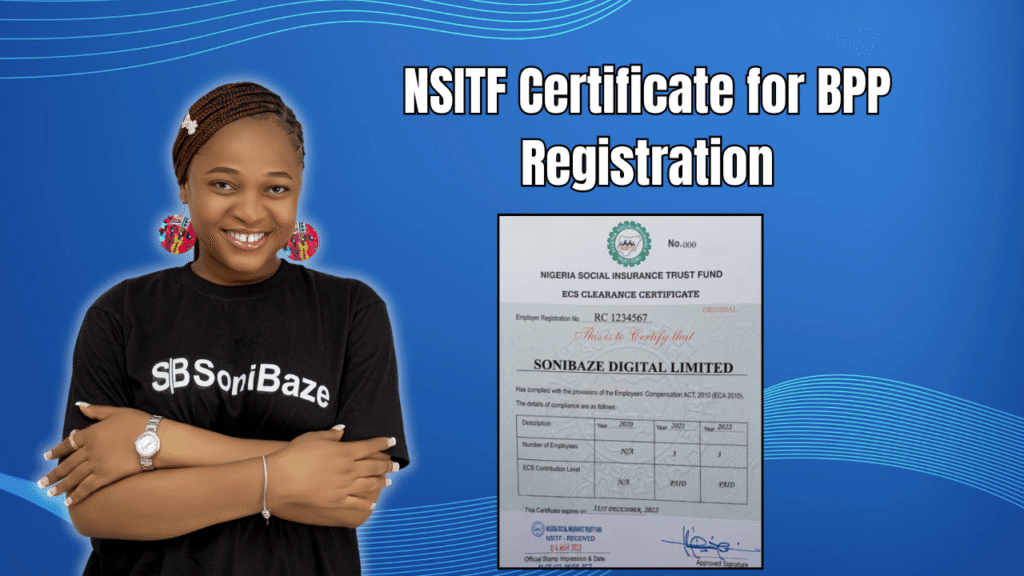
The NSITF Compliance Certificate is an annual document issued to employers who have met their registration and remittance obligations under the scheme. It confirms that a company is current with its NSITF contributions and is in good standing with the fund.
This certificate is what BPP requires during contractor registration. Without a valid, unexpired NSITF compliance certificate, a company cannot complete its BPP registration or participate in Federal Government procurement.

Why BPP Requires the NSITF Certificate
The Bureau of Public Procurement requires NSITF compliance as part of its contractor registration checklist to confirm that prospective government vendors are meeting their statutory obligations to their employees. Federal procurement regulations under the Public Procurement Act 2007 mandate that all contractors, consultants, and service providers bidding for government business must demonstrate compliance with social security, pension, and training levies before they can be listed on the national database.
An expired NSITF certificate, even by a single day, is enough to disqualify a bid submission. This is why many companies treat NSITF renewal as a standing compliance calendar item rather than something to chase at bid time.
Who Is Required to Register With NSITF?
All private sector employers in Nigeria are required to register with NSITF and remit the 1% monthly levy. The obligation applies regardless of company size or industry, as long as the business employs staff.
There are specific categories of workers who are exempt from the scheme itself. These include persons employed in the public service of the Federation, a State, or a local government who are covered by a pension scheme on substantially similar terms. Foreign employees who have been in Nigeria for less than six years and are already covered by the social security scheme of another country are also exempt, as are diplomats and ministers of religion engaged in propagating their faith.
These exemptions relate to individual employees, not to the employer as an entity. If your company employs any private sector workers, the obligation to register and remit applies.
NSITF Registration Requirements
To register a new employer with NSITF and eventually obtain the compliance certificate, the following documents and information are required.
| Requirement | Details |
|---|---|
| CAC Certificate of Incorporation | Proof of the company’s legal registration with the Corporate Affairs Commission |
| Completed Registration Form (ECS RE 01) | The NSITF employer registration form, filled and signed |
| Payroll Schedule Form (RE 03) | A schedule of the company’s employees and salary details used to determine the 1% levy |
| Evidence of fee payment | Proof of payment of prescribed registration fees |
| Company particulars | Employer name, incorporation number, registered address, phone number, and email |
| Particulars of company owners | Details of directors or proprietors as applicable |
Some of this information must be presented physically at an NSITF office rather than submitted entirely online. It is worth confirming current submission requirements with your nearest NSITF office, as the process involves both an online and an in-person component.
Obtain Your NSITF Certificate
Let us help you obtain your Nigeria Social Insurance Trust Fund (NSITF) Compliance Certificate quickly and hassle-free. Our experts provide reliable support throughout the application process, ensuring your business meets all statutory compliance requirements.
How to Get the NSITF Compliance Certificate
The compliance certificate is a separate step from initial registration. Once a company is registered and has been remitting the 1% monthly levy, it applies for the annual compliance certificate by writing a formal request on the company’s letterhead to the Fund.
The letter must be accompanied by the following:
| Document | Purpose |
|---|---|
| Copy of CAC Certificate of Incorporation | Confirms the company’s legal identity |
| Completed ECS RE 01 Registration Form | Confirms employer registration details |
| Payroll Form RE 03 | Updated payroll schedule reflecting current staff and salary levels |
| 10-digit NSITF Registration Number | Issued to the employer at the point of initial registration |
| Evidence of remittance payments | Proof that the monthly 1% levy contributions are up to date |
After submission and review, NSITF conducts a physical assessment of the company’s employee wages to verify the levy calculations are accurate. Once satisfied, the fund issues the compliance certificate for that year.
What Happens After Successful NSITF Registration?
Upon completing the initial registration, NSITF issues a Letter of Notification containing the employer’s 10-digit Registration Number. This number is what identifies the company within the NSITF system going forward and is required on all future correspondence and compliance certificate applications.
The annual compliance certificate is then issued each year upon confirmation that the employer’s remittances are current. This is the document that gets submitted to BPP and included in government tender packages.
NSITF and BPP Registration: How They Connect
When filling out the BPP contractor registration portal at federalcontractors.bpp.gov.ng, the system asks for compliance certificates from statutory bodies including NSITF. The certificate number and validity period are entered into the portal as part of the compliance section of the registration form.
A company that is registered with NSITF but has an expired compliance certificate will face a problem at this stage. The compliance certificate must be valid at the time of BPP registration submission and at the time of any bid submission. Letting the certificate lapse and then trying to rush a renewal when a contract opportunity appears is a common mistake that causes companies to miss tender deadlines.
NSITF, ITF, and PENCOM: The Three Compliance Certificates BPP Needs
NSITF does not stand alone in the BPP registration checklist. The three compliance certificates most commonly required together are as follows.
| Certificate | Issuing Body | What It Confirms | Exemption |
|---|---|---|---|
| NSITF Compliance Certificate | Nigeria Social Insurance Trust Fund | 1% monthly payroll levy contributions are current | No general exemption for private employers |
| ITF Certificate | Industrial Training Fund | 1% annual payroll training levy is current | Exempt if fewer than 5 employees or under N50m annual turnover |
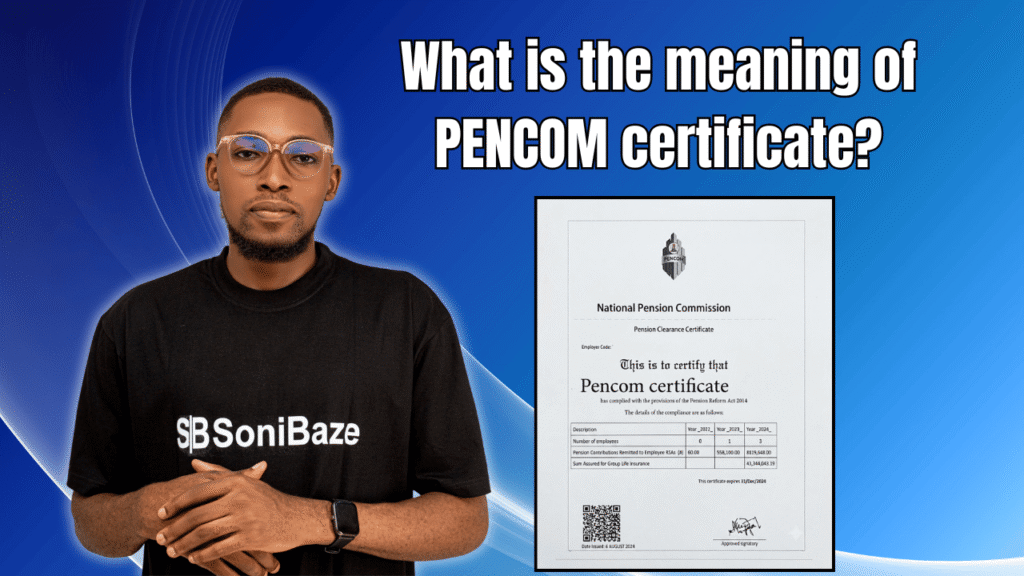
| PENCOM Certificate | National Pension Commission | Pension contributions for employees are current | Exempt if fewer than 3 employees |
Getting all three in order before starting BPP registration is the most efficient approach. Attempting BPP registration while one or more of these is still being processed adds delays that are easily avoided with better preparation.
How Long Does NSITF Registration and Certificate Processing Take?
NSITF registration and processing of the compliance certificate takes an average of five working days once all required documents are correctly submitted. This puts NSITF at a similar timeline to BPP registration itself, and faster than ITF which averages around ten working days.
If the company has arrears from missed monthly remittances, those need to be cleared before the compliance certificate will be issued. Regularising arrears adds time to the process depending on the volume of outstanding payments.
How Much Does NSITF Registration Cost?
NSITF registration itself involves the payment of prescribed fees, though the exact amount is determined during the registration process based on the company’s payroll. The ongoing cost is the 1% monthly payroll levy, which is a recurring operational expense rather than a registration fee. The annual compliance certificate is issued as part of maintaining good standing and does not carry an additional certification fee separate from the levy obligations.
Frequently Asked Questions
Can a sole trader or self-employed person register with NSITF?
NSITF’s mandate covers employers with employees. A sole trader who operates entirely alone without any staff does not have an employer-employee relationship that triggers the levy obligation. However, as soon as the business takes on employees, registration becomes mandatory.
What happens if a company does not register with NSITF?
Operating without NSITF registration exposes a company to regulatory sanctions from the fund. Beyond that, the practical consequence is the inability to obtain a compliance certificate, which blocks BPP registration and disqualifies the company from Federal Government procurement. For any business that depends on or intends to pursue government contracts, this is a significant operational risk.
Can NSITF registration be done online?
Part of the process is handled online but some information must be presented physically at an NSITF office. This is one of the aspects that makes NSITF registration slightly more involved than fully digital compliance processes. Contacting the nearest NSITF state office before starting is the best way to understand the current submission requirements.
What is the 10-digit NSITF Registration Number used for?
The 10-digit number issued upon successful registration is the employer’s unique identifier in the NSITF system. It is required on all future correspondence with the fund, including annual compliance certificate applications and any remittance-related queries. Keep it accessible alongside other statutory registration numbers.
Does the NSITF certificate expire?
Yes. The NSITF compliance certificate is issued annually and expires at the end of the year for which it was issued. Companies must apply for renewal each year by confirming that remittances for the preceding year are complete and up to date.
Is NSITF relevant for small businesses with just a few employees?
Yes. There is no staff count threshold that exempts a private sector employer from NSITF registration. Even a company with two or three employees is required to register and remit the 1% monthly levy. The ITF and PENCOM exemptions have staff count thresholds, but NSITF does not carry the same kind of size-based exemption for private employers.
Conclusion: Sort NSITF Before You Start BPP
NSITF is not the most complex compliance requirement in the BPP checklist, but it is one of the most commonly overlooked. Companies that have been operating for years without registering with the fund sometimes only discover the gap when they are preparing for a government bid. By that point, the timeline for regularising arrears and obtaining a compliance certificate can push them past a submission deadline.
The smarter approach is to treat NSITF registration and annual renewal as standing business obligations, not as something to chase when a contract opportunity appears. Register, remit monthly, renew the certificate every year, and BPP registration becomes one less thing to scramble for.
Obtain Your NSITF Certificate
Let us help you obtain your Nigeria Social Insurance Trust Fund (NSITF) Compliance Certificate quickly and hassle-free. Our experts provide reliable support throughout the application process, ensuring your business meets all statutory compliance requirements.