If you have ever tried to bid for a Federal Government contract in Nigeria and been told your company is not eligible, there is a good chance a missing BPP certificate was part of the problem. It is one of those compliance documents that businesses do not think about until a tender deadline is two days away.
This article explains what the BPP certificate is, what it represents, and which businesses are required to have one.
Obtain Your BPP Certificate
Let us help you obtain your Bureau of Public Procurement (BPP) Registration Certificate quickly and hassle-free. Our experts provide reliable support throughout the registration process, ensuring your business is ready to participate in public procurement opportunities.
What Is the BPP Certificate?
BPP stands for the Bureau of Public Procurement, a Federal Government regulatory body established under the Public Procurement Act 2007. The Bureau is responsible for monitoring and overseeing how public funds are spent on goods, services, and works across Federal Ministries, Departments, and Agencies, commonly referred to as MDAs.
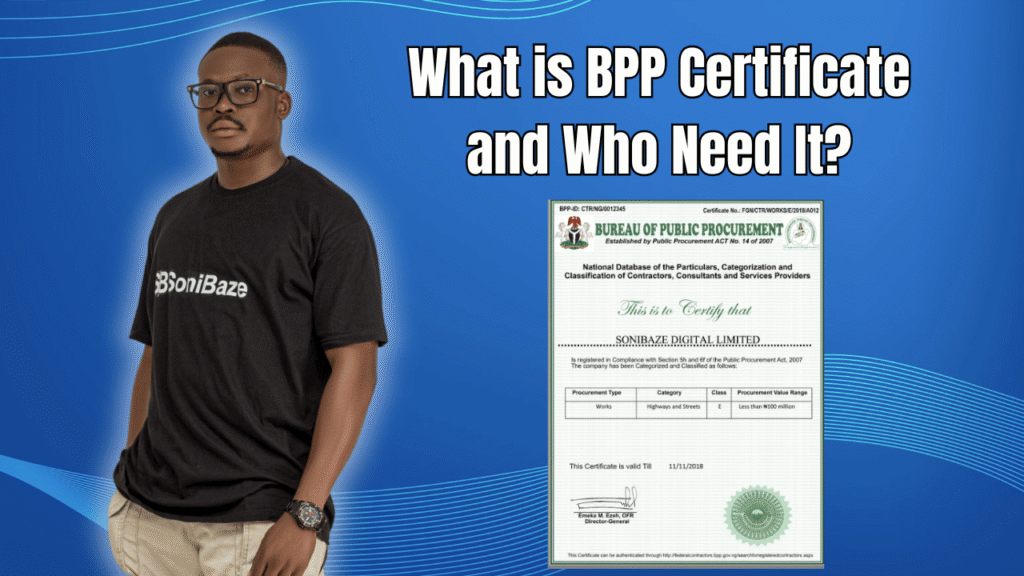
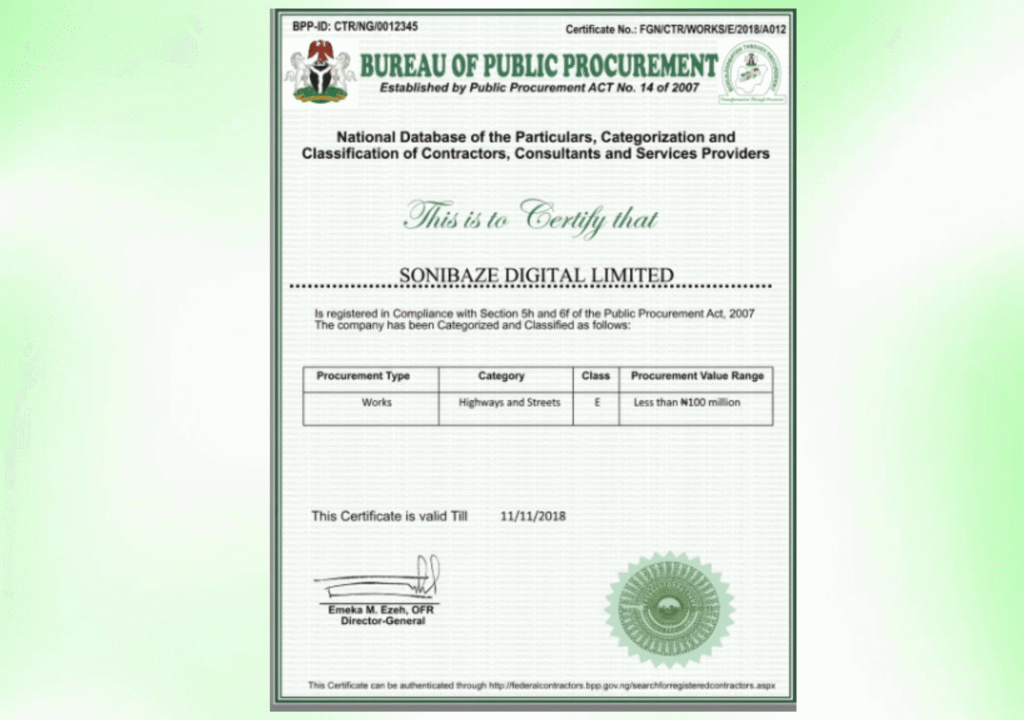
The BPP certificate is the document a company receives after completing registration on the Bureau’s National Database of Federal Contractors, Consultants and Service Providers. This database is maintained online and serves as the official record of every company cleared to do business with the Federal Government of Nigeria.
The certificate itself is technically called the Interim Registration Report, or IRR. It is generated digitally through the BPP contractor portal at federalcontractors.bpp.gov.ng once registration is successfully completed. It confirms that your company exists legally, has met its tax and compliance obligations, and has been categorised within the appropriate service or supply classification.
What Does the BPP Certificate Confirm?
The certificate is not just a formality. It signals to any procuring Federal entity that your company has satisfied a defined set of requirements before being allowed to participate in government procurement. These include legal registration with the Corporate Affairs Commission, tax compliance with the Federal Inland Revenue Service, and payment of contributions to bodies like the Nigeria Social Insurance Trust Fund and the National Pension Commission.
All federal government contracts above NGN 100 million require BPP No Objection certification as a condition for award. For contracts below that threshold, registration on the national database is still expected for most procurement processes. In practice, most Federal MDAs specify BPP registration as a mandatory requirement in their tender documents regardless of contract size.
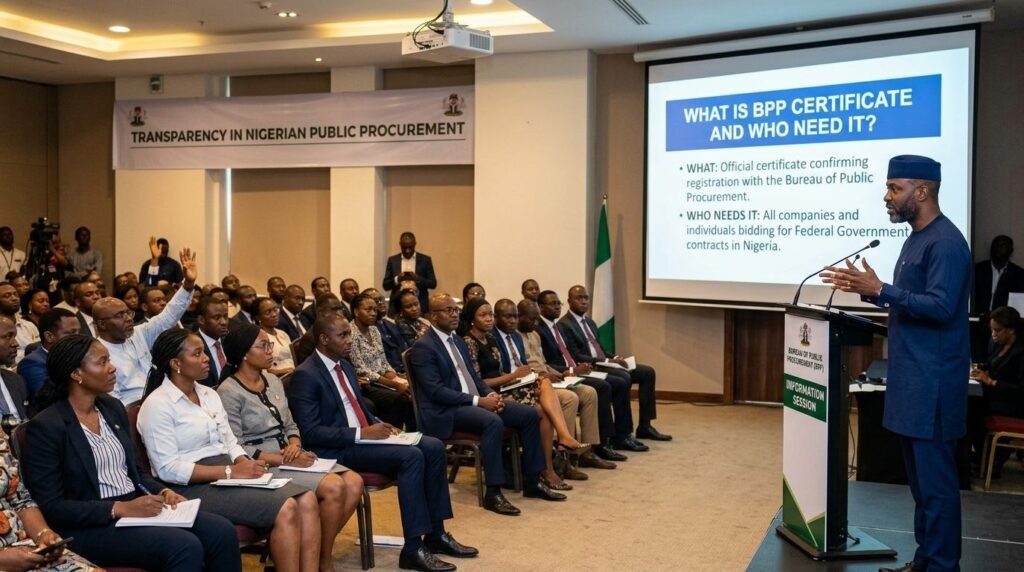
Who Needs a BPP Certificate?
Any company, consultant, or service provider that intends to bid for or execute contracts with the Federal Government of Nigeria needs to be registered on the BPP national database. The certificate applies broadly across sectors and company types.
| Type of Business | Why BPP Registration Applies |
|---|---|
| Construction and civil works companies | Required for all infrastructure and building contracts with Federal MDAs |
| IT and technology service providers | Required for software, hardware, networking, and digital service tenders |
| Consulting firms (management, legal, financial) | Required for advisory and professional service contracts |
| Goods and equipment suppliers | Required for supply chain contracts across Federal agencies |
| Engineering and technical firms | Required for technical services, maintenance, and installation contracts |
| Healthcare and pharmaceutical suppliers | Required to supply goods or services to Federal health institutions |
| Training and education service providers | Required for contracts with Federal educational institutions and training programmes |
| NGOs and development organisations | Required when executing Federal Government-funded programmes |
| Foreign companies | Eligible to register and required to do so before bidding on Federal contracts |
The common thread is intent to transact with the Federal Government. If your business model includes Federal contracts as a revenue channel, registration is not optional.
Companies That Are Not Typically Required to Register
BPP registration is specific to Federal Government procurement. Companies that operate exclusively in the private sector, or that contract only with state and local government bodies, are not covered under the Bureau’s framework. State-level procurement has its own regulations and oversight structures, which vary by state.
Small businesses with no intention of bidding for Federal contracts are also under no obligation to register. However, many register proactively because the certificate is sometimes requested by private sector clients as a credibility marker, particularly in industries where Federal compliance standards carry weight.
Obtain Your BPP Certificate
Let us help you obtain your Bureau of Public Procurement (BPP) Registration Certificate quickly and hassle-free. Our experts provide reliable support throughout the registration process, ensuring your business is ready to participate in public procurement opportunities.
What Happens Without a BPP Certificate?
A company that has not registered on the BPP database cannot be awarded Federal Government contracts. Submitting a bid without the BPP certificate typically results in disqualification at the document screening stage, regardless of how competitive the financial proposal is.
For companies already executing Federal contracts without registration, the Bureau has the authority under Section 58 of the Public Procurement Act 2007 to impose sanctions. These can include debarment from future procurement and, in cases of false declarations, revocation of company registration.
How Long Is the Certificate Valid?
The BPP certificate does not carry a fixed expiry date in the way an annual licence would. However, companies on the database are required to renew their registration at the start of each year by submitting updated information about their performance in the previous year. Failure to renew results in the account being flagged as dormant, which affects eligibility for active tenders.
Renewing at the beginning of January each year is the standard expectation. Companies that miss this window risk having their registration status questioned during procurement screenings.
Is There a Cost Involved?
Registration on the BPP national database is free for Nigerian companies. No payment is required by the Bureau for initial registration or for the certificate itself. Companies that use a consultant or professional firm to assist with document preparation and submission will pay a professional service fee, which typically ranges from ₦20,000 to ₦80,000 depending on the firm handling the work.
Any request for payment specifically in exchange for the certificate should be treated as a red flag.
Frequently Asked Questions
Is the BPP certificate the same as the BPP No Objection certificate?
No. The BPP registration certificate, or IRR, confirms your company’s presence on the national database. The BPP No Objection certificate is a separate document issued by the Bureau to a procuring MDA, indicating that a specific contract above NGN 100 million has been reviewed and cleared for award. Both relate to BPP but serve different purposes in the procurement process.
Can a newly registered company apply for BPP certification?
Yes. There is no minimum operating period required before a company can register on the BPP database. Newly incorporated companies can register immediately after obtaining their CAC documents, TIN, and the relevant compliance certificates. The database asks for completed jobs over the last five years, but this section can reflect private sector work if no government contracts have been executed yet.
How is the BPP certificate different from NAFDAC or SON registration?
BPP registration is specifically about qualifying to do business with the Federal Government across procurement categories. NAFDAC and SON registration are product-specific regulatory requirements for food, drugs, and standardised goods. A company supplying consumables or regulated products to Federal agencies may need all three, as each serves a different compliance function.
Does the certificate cover state government contracts?
No. BPP registration applies to Federal Government procurement only. State government contracts are governed by individual state procurement laws and agencies. Some states have their own contractor databases and registration requirements that are separate from the Federal BPP system.
How long does registration take?
Registration typically takes an average of five working days from the point of submitting a complete application with all required documents. Delays usually occur when documents are incomplete, contain mismatched business details, or when compliance certificates such as NSITF or ITF have not yet been obtained before starting the BPP submission.
Can a company lose its BPP registration?
Yes. The Bureau can revoke registration or debar a company from public procurement if the company provides false information, breaches the provisions of the Public Procurement Act, or fails to meet its obligations during contract execution. Debarred companies are listed publicly on the BPP website.
Conclusion: Know Before You Bid
The BPP certificate is a baseline requirement for any business serious about Federal Government contracts in Nigeria. It is not a guarantee of winning work, but without it, your company cannot even be considered in most Federal procurement processes.
Getting registered before a tender opportunity arises is the smarter move. Waiting until a bid deadline is close and then scrambling for compliance documents is how companies miss contracts they were otherwise qualified for.
Obtain Your BPP Certificate
Let us help you obtain your Bureau of Public Procurement (BPP) Registration Certificate quickly and hassle-free. Our experts provide reliable support throughout the registration process, ensuring your business is ready to participate in public procurement opportunities.