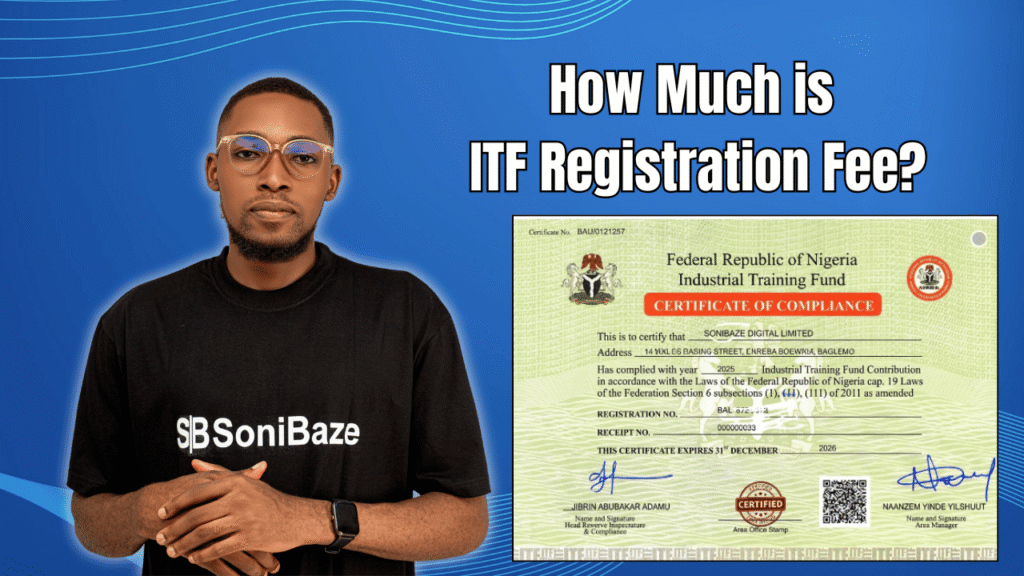
Most business owners asking about ITF registration fees are either preparing to bid for a government contract or trying to understand what their accountant is telling them about compliance obligations. Either way, the answer has two parts: what it costs to register, and what it costs to stay compliant annually. They are not the same thing.
This article covers both.
Obtain Your ITF Certificate
Let us help you obtain your Industrial Training Fund (ITF) Compliance Certificate quickly and hassle-free. Our experts provide reliable support throughout the application process, ensuring your business meets all statutory compliance requirements.
What Is ITF?
The Industrial Training Fund is a Federal Government parastatal established on 8 October 1971 under Decree No. 47 of 1971, now the ITF Act Cap. I9 Laws of the Federation of Nigeria 2004, as amended in 2011. It operates under the Federal Ministry of Industry, Trade and Investment and exists specifically to promote the acquisition of skills in industry and commerce with a view to building a pool of trained Nigerian manpower for both the private and public sectors.
Beyond skills development, the ITF has become one of the key compliance certificates required when doing business with the Federal Government. Along with NSITF, PENCOM, and BPP, an ITF compliance certificate is a standard requirement across government procurement processes.
Who Is Required to Register With ITF?
The ITF Act, as amended in 2011, requires registration and annual contribution from any employer that meets either of these conditions:
| Condition | Threshold |
|---|---|
| Number of employees | Five or more staff |
| Annual turnover | ₦50 million and above, regardless of staff count |
Companies registered in government-approved Free Trade Zones are exempt. Employers with fewer than five staff and annual turnover below ₦50 million are not required to contribute, though they may still choose to register.
It is worth noting that the Act covers all employees regardless of nationality, whether full-time or part-time, and includes temporary staff who have worked for at least 30 days in a year.

How Much Does ITF Registration Cost?
This is where many people get confused because there are two separate costs involved.
Initial Registration Fee
ITF registration itself does not carry a government-prescribed registration fee in the same way that some other compliance processes do. The cost most commonly quoted for initial ITF registration, around ₦300,000, typically refers to the total cost of engaging a compliance consultant to process the registration on your behalf, not a fee payable directly to ITF.
The actual ITF process involves the company completing Form 7A, submitting it alongside required documents to the nearest ITF Area Office, and then being assessed for the training contribution liability based on the company’s payroll. The government does not charge a flat registration fee at the point of enrolment.
If you register through a consultant, their professional fees vary. Most compliance firms in Nigeria charge between ₦50,000 and ₦300,000 for ITF registration assistance, depending on the complexity of the company’s payroll and what other compliance documents need to be gathered.
Annual Training Contribution (The Ongoing Cost)
This is the actual financial obligation under the ITF Act. Every qualifying employer must contribute 1% of their total annual payroll to the Fund. This payment is due not later than 1 April of the following year, meaning the contribution for the 2025 payroll year is due by 1 April 2026.
| Payroll Amount | 1% ITF Contribution |
|---|---|
| ₦5,000,000 annual payroll | ₦50,000 |
| ₦10,000,000 annual payroll | ₦100,000 |
| ₦20,000,000 annual payroll | ₦200,000 |
| ₦50,000,000 annual payroll | ₦500,000 |
| ₦100,000,000 annual payroll | ₦1,000,000 |
The contribution is calculated on total payroll, which includes all salaries, wages, and other monetary consideration paid to all employees during the year.
Penalty for Late Payment
Companies that fail to pay on time face a penalty of 5% of the outstanding contribution for each month or part of a month that the payment remains unpaid. This accumulates fast. A company that misses the April deadline by three months on a ₦200,000 contribution would owe ₦30,000 in penalties alone, on top of the original amount.
Obtain Your ITF Certificate
Let us help you obtain your Industrial Training Fund (ITF) Compliance Certificate quickly and hassle-free. Our experts provide reliable support throughout the application process, ensuring your business meets all statutory compliance requirements.
What Documents Are Needed to Register?
ITF registration requires the following documents submitted alongside the completed Form 7A at your nearest ITF Area Office.
| Document | Details |
|---|---|
| CAC Certificate of Incorporation | Proof of company registration with the Corporate Affairs Commission |
| Audited accounts (certified true copies) | Financial records used to assess payroll and contribution liability |
| Tax Clearance Certificate | Current TCC from the Federal Inland Revenue Service |
| Company profile | Overview of the company’s activities and structure |
| Staff details | Number of employees and their total payroll |
| Business address | Physical address of the company’s registered operations |
| Tax Identification Number (TIN) | Linked to FIRS registration |
How the Registration Process Works
The registration process is not fully online. While an ITF employer registration form can be downloaded from the ITF website, the actual submission and assessment process is handled at the nearest ITF Area Office. There are 42 Area Offices across Nigeria, with a presence in every state including Abuja FCT.
The sequence is as follows. Complete Form 7A and attach all required documents, then submit to the nearest ITF Area Office. ITF Revenue, Inspectorate and Compliance Officers will assess the company’s contribution liability. Once assessed, the company generates a Remita Retrieval Reference through the ITF Pay-portal or the Remita platform. Payment is made at any bank using that reference number. The payment printout and bank teller are returned to the ITF office. A hard copy receipt and acknowledgment letter are issued. The ITF Area Office then forwards the employer details to ITF headquarters for issuance of an ITF National Number.
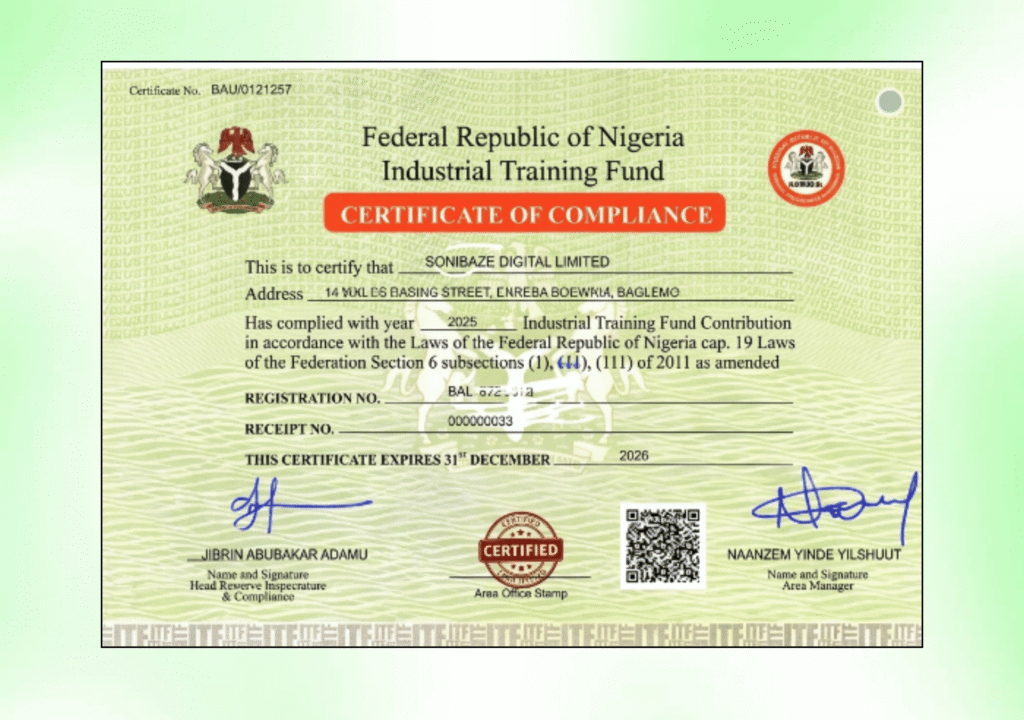
The compliance certificate is issued annually to companies that have paid their contribution for the relevant year. Registration is the first step; the certificate itself is renewed each year based on evidence of payment.
Can Companies Get a Refund?
Yes. Employers who can demonstrate that they have actually trained their staff during the year may be eligible for reimbursement of up to 50% of the contribution paid. The previous limit was 60% before the 2011 amendment reduced it.
To qualify for reimbursement, the company must train at least 15% of its total workforce in the relevant year. Evidence required includes course fee receipts, certificates of attendance, and payment receipts of the contribution itself. ITF requires at least two weeks’ advance notice before any training that will be submitted as part of a reimbursement claim.
How Long Does ITF Registration Take?
Registration with ITF takes an average of 10 working days from the point of complete document submission. This is longer than the five-day average for BPP and NSITF, largely because ITF’s assessment process involves a physical inspection component before the contribution liability is confirmed.
Frequently Asked Questions
Is ITF registration free?
The government does not charge a flat enrolment fee for ITF registration. What you pay is the annual training contribution of 1% of your total payroll. If you use a consultant to assist with the process, the consultant’s professional fee is separate and varies by firm.
What happens if my company does not register for ITF?
Companies that are required to register under the ITF Act but fail to do so are exposed to statutory penalties and may be barred from obtaining an ITF compliance certificate, which is a requirement for government contracts. The 2011 amendment also requires companies bidding for government work to show evidence of ITF compliance.
Does the ITF certificate expire?
The compliance certificate is issued on an annual basis. It reflects payment for a specific contribution year. Companies must pay their 1% contribution each year to receive a current certificate. A certificate from a previous year does not satisfy current procurement requirements.
Can a small business with fewer than five staff register voluntarily?
Yes. The ITF Act exempts companies with fewer than five staff and turnover below ₦50 million from mandatory contributions, but voluntary registration is permitted. Some small businesses register to access ITF training facilities and reimbursement benefits even without being legally required to contribute.
What is Form 7A?
Form 7A is the ITF employer registration form. It captures the company’s details, payroll information, staff count, and other information needed for the contribution assessment. It is available for download on the ITF website and must be submitted in person at the nearest ITF Area Office.
Where can I find the nearest ITF Area Office in Abuja?
ITF’s Abuja Area Office is one of the 42 offices across Nigeria. For the most current address and contact information, the ITF website at itf.gov.ng maintains a directory of all Area Offices. You can also reach ITF through the Federal Ministry of Industry, Trade and Investment for referrals.
Conclusion: The Fee Is Not Fixed, But the Obligation Is
There is no fixed ITF registration fee payable to the government. What exists is a statutory obligation to contribute 1% of your company’s annual payroll to the Fund if you have five or more staff or exceed ₦50 million in annual turnover. That contribution is what the compliance certificate reflects, and that certificate is what government contracts require.
For companies engaging a consultant, budget between ₦50,000 and ₦300,000 for professional fees depending on the firm and the complexity of your situation. The contribution itself is calculated purely on your payroll, so the actual cost to your business depends entirely on what you pay your staff.
Obtain Your ITF Certificate
Let us help you obtain your Industrial Training Fund (ITF) Compliance Certificate quickly and hassle-free. Our experts provide reliable support throughout the application process, ensuring your business meets all statutory compliance requirements.