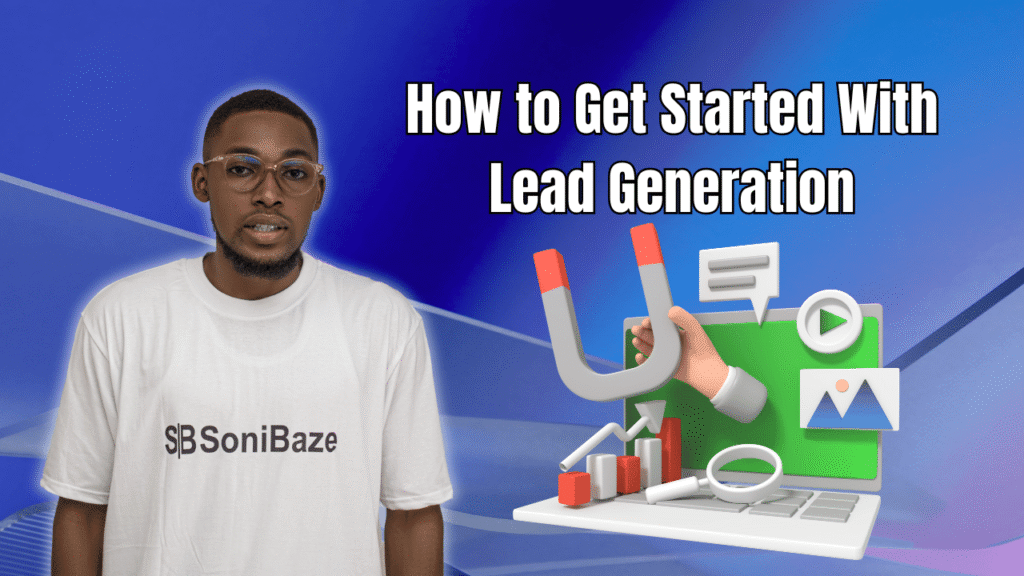
Most businesses in Nigeria have traffic coming in from somewhere, whether through social media, referrals, or word of mouth. The problem is that most of that traffic leaves without converting into paying customers. Lead generation is the process that closes that gap.
This article walks you through exactly how to get started with lead generation, from understanding what it means to setting up your first system that consistently brings in potential buyers.
Let’s generate qualified leads for your business. We’ve got the strategy that converts.
What Lead Generation Actually Means
Lead generation is the process of attracting people who are interested in what you sell and collecting their contact information so you can follow up with them. A lead is not a customer yet. They are someone who has shown interest and is worth pursuing.
There are two types of leads most businesses work with. An inbound lead comes to you, usually through your website, social media, or content. An outbound lead is someone you go after, usually through cold outreach, ads, or direct contact. Both methods work, and most businesses eventually use a mix of the two.
The goal at the start is simple: build a repeatable process that brings in people who could realistically buy from you.
Prerequisites Before You Begin
Before you set up any lead generation strategy, a few things need to be in place.
| Prerequisite | Why It Matters |
|---|---|
| A defined target audience | You cannot attract leads if you do not know who you are targeting |
| A working website or landing page | Leads need somewhere to go when they show interest |
| A contact form or lead capture mechanism | Without this, interested people have no way to reach you |
| A follow-up process (email or calls) | Leads go cold fast without timely follow-up |
| A basic CRM or contact list | You need somewhere to store and track your leads |
Do not skip these. A lead generation campaign without the infrastructure to handle incoming contacts is a waste of budget.

How to Get Started With Lead Generation
Step 1: Define Your Ideal Customer Profile
The first step is getting specific about who you are trying to reach. Your ideal customer profile describes the type of person or business most likely to buy from you. This includes their industry, location, budget range, job title if you are B2B, and the specific problem they need solved.
If you are a real estate company in Abuja, your ideal customer is not “anyone looking for a house.” It is more specific, such as young professionals between 28 and 45, earning above ₦500,000 monthly, who are looking to buy their first property in Gwarinpa or Lifecamp. The more precise your profile, the more targeted your lead generation becomes.
Vague targeting produces low-quality leads. Specific targeting produces people who are ready to buy.
Step 2: Choose Your Lead Generation Channel
Your channel is where you will attract and capture leads. Different businesses perform better on different channels, and your choice should depend on where your audience spends time and what budget you have available.
| Channel | Best For | Typical Cost |
|---|---|---|
| Google Ads (PPC) | High-intent buyers searching for a solution | Medium to high |
| Meta Ads (Facebook/Instagram) | Awareness and interest-stage targeting | Low to medium |
| SEO and Content Marketing | Long-term organic traffic | Time investment |
| LinkedIn Ads | B2B outreach, corporate clients | High |
| Email Marketing | Nurturing existing contacts | Low |
| Referral Programs | Leveraging current customers | Low |
Start with one or two channels and master them before expanding. Spreading across five channels at once with a small budget produces weak results everywhere.
Step 3: Create a Lead Magnet
A lead magnet is something valuable you offer in exchange for a person’s contact details. It could be a free guide, a checklist, a free consultation, a discount code, a webinar, or a free trial. The key is that it must be genuinely useful to your target audience.
For example, a digital marketing agency in Nigeria could offer a free website audit as its lead magnet. A school could offer a free class or a prospectus download. A property developer could offer a brochure of available units with pricing.
Your lead magnet should be specific enough to attract the right people and not so broad that you end up with low-quality contacts who will never buy.
Step 4: Build a Landing Page or Lead Capture Form
Once you have your lead magnet, you need a page where people can claim it. A landing page has one goal: to get the visitor to submit their contact information. It should have a clear headline, a brief explanation of what they are getting, and a simple form asking for name, email, and phone number at most.
Keep the form short. Every extra field you add reduces the number of people who complete it. Name and email is enough to start most email sequences. If you need a phone number for follow-up calls, add it, but do not ask for information you will not use.
The page should load fast. If your page takes more than three seconds to load on mobile, a significant percentage of visitors will leave before they ever see your offer.
Let’s generate qualified leads for your business. We’ve got the strategy that converts.
Step 5: Drive Traffic to Your Lead Capture
A landing page with no traffic produces no leads. This is where your chosen channel comes in. If you are running Meta Ads, your ad creative and copy should speak directly to the problem your lead magnet solves. If you are using SEO, your content should rank for the keywords your target audience is searching.
For businesses in Abuja and across Nigeria looking for faster results, paid advertising on Google or Meta is the most reliable way to start seeing leads within days. Agencies like SoniBaze Digital run targeted PPC campaigns specifically built to drive qualified traffic to lead capture pages, which cuts down the time it takes to see returns.
Organic channels like SEO and content marketing take longer but build momentum over time. Running both in parallel produces the best results.
Step 6: Set Up Your Follow-Up System
A lead who submits their contact details is not yet a customer. They are at the beginning of your sales process. The follow-up system determines whether they convert or go cold.
Set up an automatic email that goes out within five minutes of someone submitting your form. This email should deliver what you promised, introduce your business briefly, and include a clear next step, such as booking a call or visiting a product page. If you have a sales team, they should call new leads within 24 hours wherever possible.
Research consistently shows that leads contacted within the first hour are far more likely to convert than those contacted days later. Speed matters in follow-up.
Step 7: Track, Measure, and Improve
Lead generation is not a set-and-forget activity. You need to track what is working and cut what is not. The key metrics to monitor are cost per lead, lead to customer conversion rate, traffic source performance, and time to follow-up.
| Metric | What It Tells You |
|---|---|
| Cost per lead | How much you are paying to acquire each lead |
| Lead-to-customer rate | How many leads eventually buy |
| Traffic source | Which channel is producing the best leads |
| Form completion rate | Whether your landing page is working |
| Follow-up response rate | Whether your outreach is effective |
Review these numbers weekly at the start. As you identify patterns, you will know exactly where to put more budget and where to stop spending.
Common Mistakes to Avoid
One of the most frequent mistakes is targeting too broadly. When you try to reach everyone, your message resonates with no one, and you end up paying for clicks that never convert.
Another mistake is neglecting follow-up. Businesses often work hard to generate leads and then respond days later with a generic email. By then, the lead has already contacted a competitor. A timely, personal follow-up makes a significant difference.
Many businesses also send leads to their homepage instead of a dedicated landing page. A homepage has too many options and distractions. A landing page keeps the visitor focused on one action, which increases the rate of conversion.
Frequently Asked Questions
How long does it take to start getting leads?
With paid advertising, you can start generating leads within 24 to 72 hours of launching a campaign, assuming your landing page and ad copy are set up correctly. With SEO and organic content, expect three to six months before consistent traffic and leads begin coming in. Most businesses benefit from running both in parallel.
How much does lead generation cost in Nigeria?
Costs vary depending on the channel and industry. A basic Meta Ads campaign can be started with as little as ₦50,000 to ₦100,000 per month. Google Ads campaigns for competitive industries typically require ₦150,000 or more monthly to see meaningful results. Hiring a digital marketing agency adds to the cost but usually produces better returns than managing ads without experience.
What is the difference between a lead and a prospect?
A lead is anyone who has shown interest in your business and provided their contact information. A prospect is a lead who has been qualified, meaning they have the budget, authority, need, and timeline to realistically buy from you. Not every lead becomes a prospect, which is why lead quality matters as much as lead quantity.
Do I need a website to generate leads?
You do not need a full website, but you do need at least a landing page. A single well-designed landing page with a clear offer and a simple form is enough to start capturing leads. A website helps with credibility and SEO over time, but it is not a prerequisite to running your first campaign.
How do I know if my lead generation is working?
Track your cost per lead and your lead-to-sale conversion rate. If your cost per lead is reasonable for your industry and a meaningful percentage of those leads are turning into paying customers, the strategy is working. If you are getting many leads but few conversions, the issue is likely lead quality or your follow-up process.
Can small businesses in Abuja do lead generation effectively?
Yes. Many small businesses in Abuja run successful lead generation campaigns on modest budgets, particularly through Meta Ads and Google search. The key is precise targeting and a strong follow-up process. You do not need a large budget to generate quality leads. You need the right strategy.
Conclusion: Getting Started Is the Hard Part
Lead generation is not complicated once you understand the structure. You need a defined audience, a compelling offer, a page to capture contact details, a channel to drive traffic, and a system to follow up quickly. Those five elements, done consistently, build a pipeline that grows over time.
The biggest barrier is not budget or tools. It is getting started with a clear plan instead of experimenting randomly. A structured approach from day one saves you significant time and money.
SoniBaze Digital helps businesses across Abuja and Nigeria build lead generation systems that actually produce results, from landing page design to paid ad management and follow-up automation.
Let’s generate qualified leads for your business. We’ve got the strategy that converts.