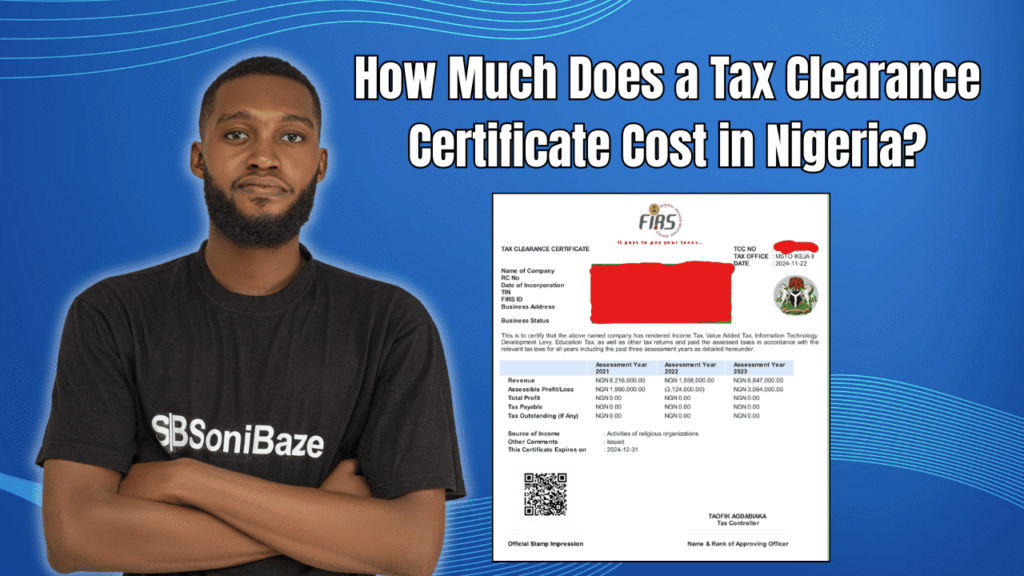
The most common question people ask before starting their TCC application is a simple one: how much does it cost? The answer is not as straightforward as most people expect, and the confusion around it has led to a lot of businesses paying money they did not need to pay.
This article breaks down the actual cost of getting a Tax Clearance Certificate in Nigeria, what you are really paying for, and where the money goes.
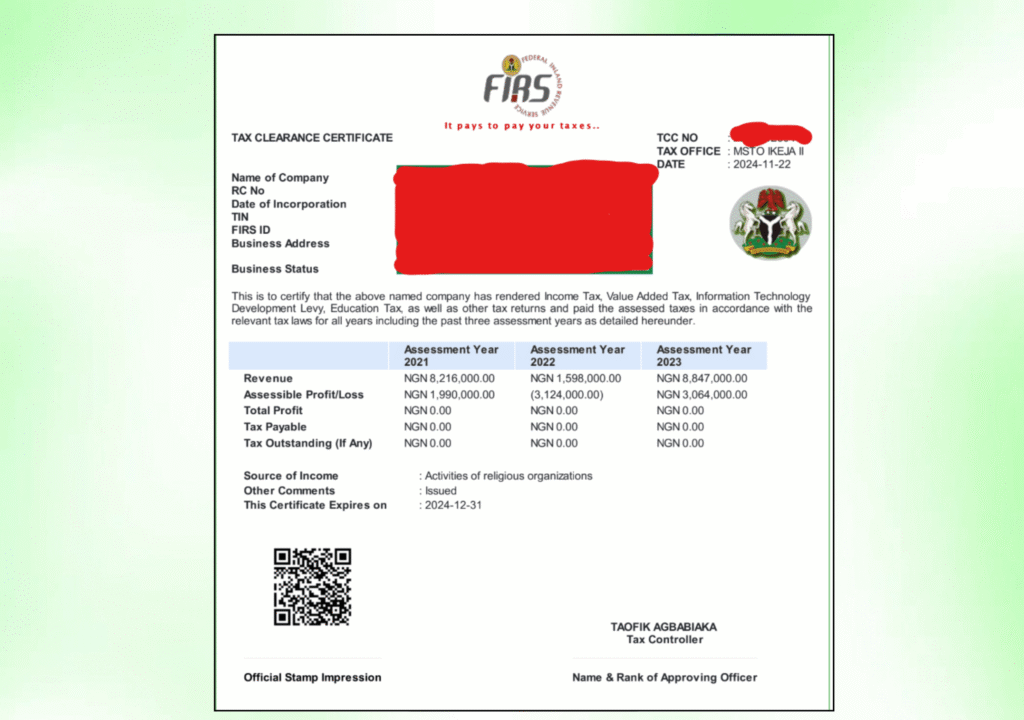
Obtain Your Tax Clearance Certificate (TCC)
Let us help you obtain your Tax Clearance Certificate (TCC) quickly and hassle-free. Our experts provide reliable support throughout the application process, ensuring your business meets all tax compliance requirements.
What Is a Tax Clearance Certificate?
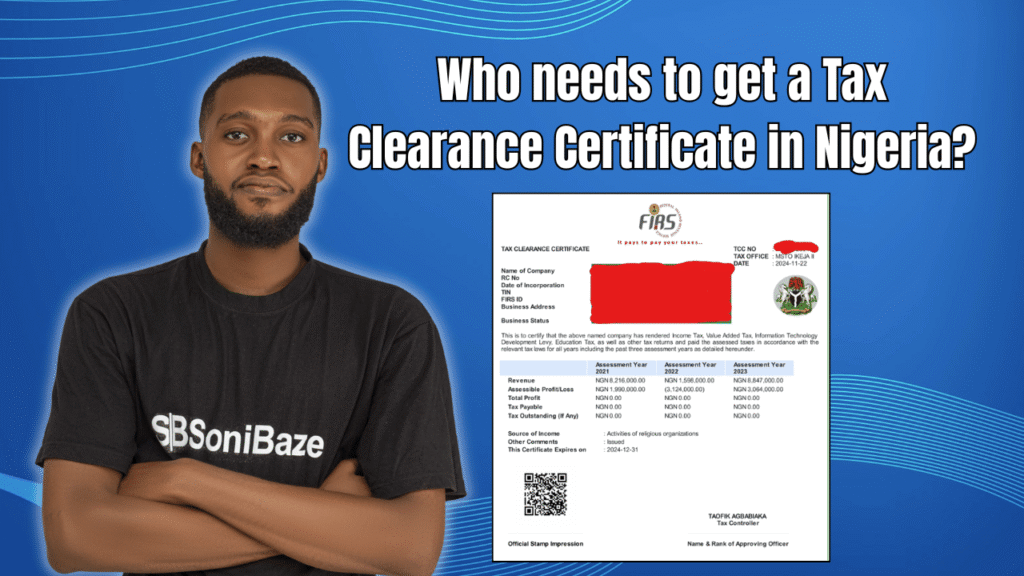
A Tax Clearance Certificate, commonly called a TCC, is an official document confirming that an individual or company has fulfilled its tax obligations for the preceding three years of assessment. It is issued by the Nigeria Revenue Service for companies and by the relevant State Internal Revenue Service for individuals.
Without it, you cannot bid for government contracts, open certain corporate bank accounts, process specific banking transactions, renew business licences, or apply for expatriate permits. It is, in practice, one of the most gatekeeping documents in Nigeria’s business compliance system.
The Direct Cost: Zero
The certificate itself is free. There is no direct fee for issuing a TCC. However, the taxpayer must settle all outstanding tax liabilities, if any, before the certificate is issued.
There is a widespread myth that a TCC has a “flat price.” This is false. The issuance of the certificate itself is technically free, but the cost of compliance is where the money lies.
That distinction matters. You are not paying for the certificate. You are paying to become eligible to receive it.
What You Actually Pay For
The real costs of a TCC fall into three categories: tax liabilities, professional fees, and preparation costs.
1. Outstanding Tax Liabilities
This is the biggest variable. Before a TCC can be issued, all outstanding taxes must be settled. For individuals, this means personal income tax across the three years being assessed. For companies, this covers company income tax, VAT returns, and withholding tax obligations.
There is no fixed statutory fee for obtaining a Tax Clearance Certificate in Nigeria. The cost depends on income level, tax assessment, and applicable tax laws.
A salaried employee whose employer has been remitting PAYE correctly may owe nothing at all. A company with several years of unfiled returns could face significant arrears before the TCC can even be processed. There is no standard number here because every applicant’s tax position is different.
2. Accountant or Tax Consultant Fees
Companies applying for a TCC are required to submit audited financial statements as part of the process. Getting those prepared by a certified accountant comes at a cost, and that cost varies widely depending on the size and complexity of the business.
For individuals and smaller businesses, a tax consultant can assist with filing returns, organising documents, and submitting the application. Consultants typically charge between ₦30,000 and ₦150,000 or more for this service, depending on the scope of work involved. This fee covers their time and expertise, not the certificate itself.
3. Audited Financial Statements (for Companies)
For companies, the first step is preparing audited financial statements. These statements must comply with relevant accounting standards and accurately reflect the company’s financial position.
Audit fees in Nigeria vary significantly based on the size of the business. Small companies may pay between ₦150,000 and ₦500,000 for audited accounts. Larger companies pay more. This is an unavoidable cost for any company applying for a TCC for the first time or after a gap in filing.
Cost Summary by Applicant Type
| Applicant Type | Certificate Fee | Tax Liabilities | Consultant / Audit Fees |
|---|---|---|---|
| PAYE employee (taxes current) | Free | Nil (if PAYE remitted) | Optional: ₦20,000 – ₦60,000 |
| Self-employed individual | Free | Depends on income | ₦30,000 – ₦100,000 |
| Small company (active, filing current) | Free | Nil (if filings current) | Audit: ₦150,000 – ₦500,000+ |
| Company with arrears or unfiled returns | Free | Can run into millions | Audit + back-filing fees |
| Dormant or newly registered company | Free | Minimal or nil | ₦50,000 – ₦200,000 for filing |
These figures are approximate ranges drawn from what consultants across Nigeria typically charge. Actual amounts vary by state, firm, and the complexity of the taxpayer’s situation.
Obtain Your Tax Clearance Certificate (TCC)
Let us help you obtain your Tax Clearance Certificate (TCC) quickly and hassle-free. Our experts provide reliable support throughout the application process, ensuring your business meets all tax compliance requirements.
Why Some People End Up Paying More Than Expected
Two situations catch most applicants off guard.
The first is unfiled returns. If a company has been operating but not filing annual tax returns, those returns need to be filed and assessed before the TCC can be issued. Back-filing for multiple years, combined with any penalties on outstanding liabilities, can add significantly to the total cost.
The second is document rejection. Applications that are submitted with incorrect or mismatched documents get queried, and each round of correction adds time and, if a consultant is involved, additional cost. The NRS and state revenue services now use digital systems that cross-check bank turnover against reported profits. If these do not align, the application gets flagged for an audit before the TCC is released.
A Word on Paying for the Certificate Itself
Some individuals and agents ask for a fee to obtain the TCC certificate directly, sometimes framing it as a “processing fee” or “fast-track” arrangement. The Federal Government of Nigeria discourages the commercialisation of SCUML registration. The same principle applies to the TCC. No payment should be made to any individual or office for the certificate itself. Consultant fees are legitimate. Paying someone for “the certificate” is not.
What Affects the Total Amount You Will Pay
| Factor | Impact on Cost |
|---|---|
| Years of unfiled tax returns | High — back-filing adds significant cost |
| Outstanding tax liabilities | High — must be cleared before TCC is issued |
| Whether you use a consultant | Medium — adds professional fees, reduces errors |
| Company size and turnover | Medium — determines audit fee and tax liability |
| State of filing | Low — if all returns are current, total cost drops sharply |
Frequently Asked Questions
Is there a government fee to apply for a TCC?
No. The application and issuance of the TCC itself carry no government fee. What applicants pay for is settling outstanding tax obligations and, optionally, engaging professional help to prepare and submit the application.
How much do tax consultants charge for TCC processing in Nigeria?
Fees vary depending on the scope of work. For a straightforward individual application with returns already filed, expect to pay between ₦20,000 and ₦60,000. For a company requiring audited financial statements and back-filing of returns, total professional fees can range from ₦200,000 to ₦700,000 or more. These are not fixed rates — they depend on the consultant and the complexity of the case.
Can I get a TCC for free if I have no outstanding taxes?
Yes. If your personal income tax or company tax filings are current and all liabilities have been settled, the certificate is issued at no cost. The only expense is the time spent gathering documents and submitting the application online.
Do dormant companies need to pay to get a TCC?
Dormant companies often have lower or zero tax liabilities, which reduces the tax settlement cost. However, they still need to file returns and may need professional assistance to prepare and submit the necessary documentation. A consultant’s fee for a dormant company TCC typically falls between ₦50,000 and ₦200,000 depending on the company’s filing history.
How long is a TCC valid?
A TCC is valid for one year from the date of issuance.This means annual renewal is required for anyone who needs ongoing compliance, whether for contracts, banking, or regulatory purposes.
What happens if I pay someone who promises to get the TCC without me filing returns?
This is a risk that can backfire significantly. The NRS and state revenue services now run digital checks that cross-reference bank turnover, VAT records, and filed returns. A TCC obtained through unofficial means may not pass the verification checks that banks and procurement offices now run on all submitted certificates.
Conclusion: The Certificate Is Free, Compliance Is Not
Getting a TCC in Nigeria costs nothing in certificate fees. What it costs is the settlement of all outstanding taxes and, in most cases, the fees paid to an accountant or tax consultant to prepare the necessary filings and documentation.
For individuals with current PAYE remittances, the total out-of-pocket cost can be close to zero. For companies with outstanding returns and liabilities, the cost of getting compliant before a TCC can be issued is the real bill to plan for.
The earlier a business starts filing annual returns correctly, the lower the eventual cost of getting a Tax Clearance Certificate when one is actually needed.
Obtain Your Tax Clearance Certificate (TCC)
Let us help you obtain your Tax Clearance Certificate (TCC) quickly and hassle-free. Our experts provide reliable support throughout the application process, ensuring your business meets all tax compliance requirements.