Banks in Nigeria have become stricter about who they let open corporate accounts. If your business falls into a category called a Designated Non-Financial Institution, a bank can ask for a SCUML certificate before they even process your account opening request. Many business owners only discover this requirement at that exact moment, and it can stall everything.
This article explains what SCUML registration is, the common problems people run into during the process, and how certificate verification actually works once you have one.
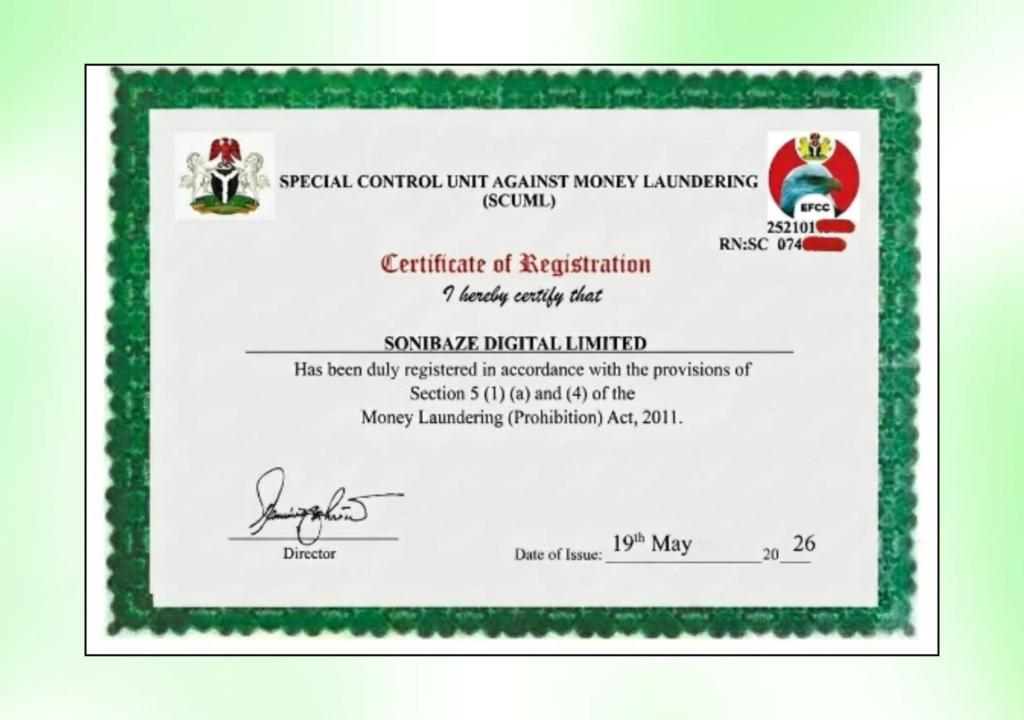
Obtain Your EFCC SCUML Certificate
Let us help you get your EFCC SCUML Certificate quickly and hassle-free. Our team provides fast, reliable support to ensure your SCUML registration is completed accurately and in compliance with regulatory requirements.
What Is SCUML and Why Does It Exist?
SCUML stands for the Special Control Unit Against Money Laundering. It operates under the Economic and Financial Crimes Commission and was established in September 2005 to implement Nigeria’s anti-money laundering framework.
The unit was created in response to recommendations from the Financial Action Task Force, an international body that sets standards for combating money laundering and terrorism financing. SCUML’s job is to monitor a specific group of businesses called Designated Non-Financial Institutions, or DNFIs, and make sure they are not being used as channels for illicit financial flows.
Sitting under the EFCC gives SCUML enforcement teeth that a purely administrative office would not have.
Which Businesses Need SCUML Registration?
Not every business in Nigeria needs to register with SCUML. The requirement applies specifically to Designated Non-Financial Institutions, a list that has grown over the years to cover a wide range of sectors.
This includes real estate firms, car dealerships, supermarkets, hotels and hospitality businesses, law firms, accounting and audit firms, consultants, NGOs, fintech companies, jewellery dealers, construction companies, and betting and gaming operators. If your business sits in any of these categories, registration is not optional.
The law gives businesses a specific window to comply. DNFIs are required to register with SCUML within three months of starting operations. Waiting beyond that window does not exempt you, it just means you are already out of compliance from day one.
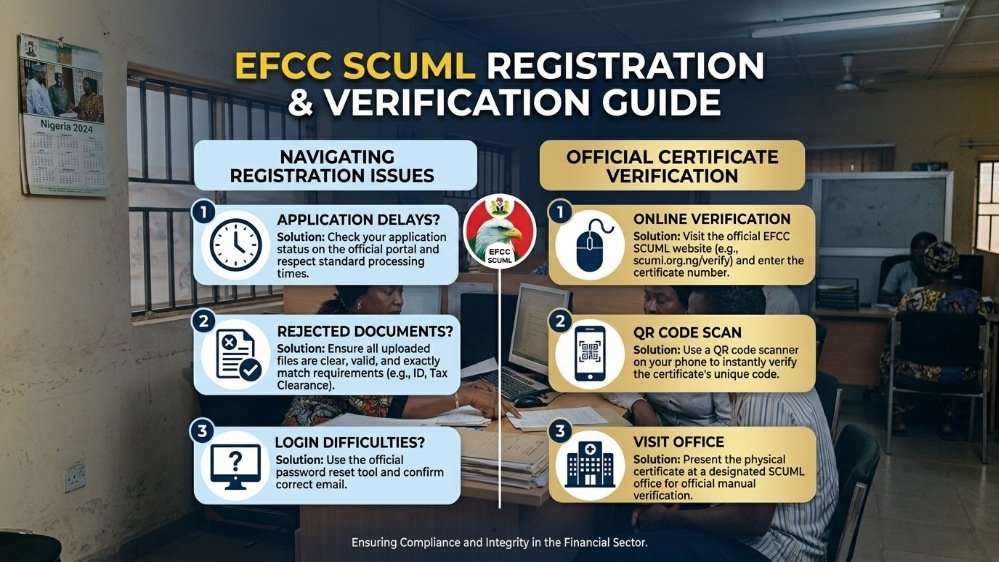
Common Registration Issues Businesses Run Into
Document Mismatches Between CAC and SCUML Records
One of the most frequent hold-ups is a mismatch between what is on your Corporate Affairs Commission documents and what gets submitted to SCUML. If your company’s registered name, address, or director details on your CAC status report do not match exactly what is entered on the SCUML form, the application gets flagged.
This sounds minor, but it is one of the most common reasons applications stall. Always pull a fresh CAC status report before applying, rather than relying on documents from years ago.
Incomplete Beneficial Ownership Information
SCUML requires details of the beneficial owners behind a company, not just the directors listed on paper. For businesses with layered ownership structures, holding companies, or silent partners, gathering this information correctly takes longer than expected.
Each proprietor or director typically needs to provide a Bank Verification Number, a valid means of identification, and personal account details. Missing even one of these for one listed owner can hold up the entire application.
Sector-Specific Requirements Being Overlooked
SCUML’s requirements are not identical across business types. A car dealership, for example, needs evidence of registration with the Association of Motor Dealers of Nigeria in addition to the standard documents. A hotel or hospitality business has its own additional checklist.
Businesses that apply using a generic document set, without checking the specific requirements for their sector, often get sent back for additional submissions. This adds days or weeks to a process that should take under a week.
Submitting Reports Through the Wrong Channel
SCUML has been tightening how registered entities submit ongoing compliance reports, such as Currency Transaction Reports and Cash-Based Transaction Reports. From January 2026, these reports must go through the SCUML portal rather than being emailed in.
Entities that do not have portal login credentials yet are at risk of falling out of compliance simply because their existing reporting habit no longer works. If your business registered some time ago and has been emailing reports, this is worth checking now rather than after the deadline.
Confusion Between SCUML Verification Websites
There is some confusion online about where to verify a SCUML certificate, partly because more than one web address has been associated with the service over the years. Some guides point to a portal address, others to a different domain entirely. Using an outdated or unofficial link can give the impression that a valid certificate is not verifiable, when the real issue is simply the wrong verification page.
How SCUML Registration Works, Step by Step
The registration process itself follows a fairly standard pattern, even though the supporting documents differ by sector.
You start by completing the SCUML registration form, either online through the SCUML portal or in person at an EFCC office. The form asks for your company’s name, registration number, and the names of beneficial owners.
Alongside the form, you submit your CAC certificate of incorporation or business name registration, your memorandum and articles of association where applicable, a current CAC status report, your Tax Identification Number printout, valid identification for each proprietor or director, and their BVN and bank account details. Depending on your sector, additional documents may be required, such as professional certifications or proof of membership in a relevant trade association.
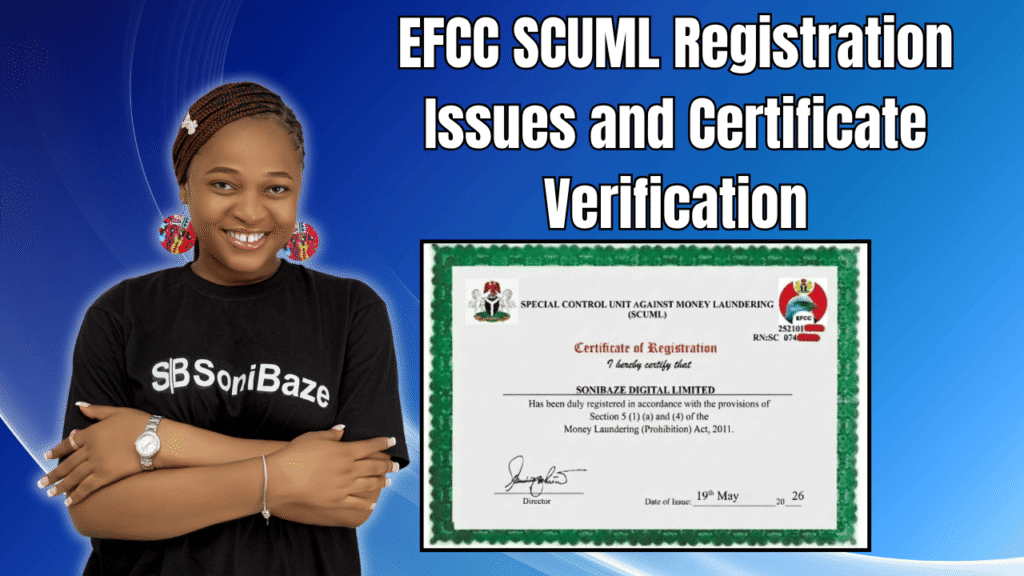
Once everything is submitted and reviewed, SCUML issues a certificate of registration with a unique registration number attached. The whole process, when documents are complete and correct, typically takes between three and five working days.
Obtain Your EFCC SCUML Certificate
Let us help you get your EFCC SCUML Certificate quickly and hassle-free. Our team provides fast, reliable support to ensure your SCUML registration is completed accurately and in compliance with regulatory requirements.
How to Verify a SCUML Certificate
Once you have a certificate, or if you are checking one belonging to another business, verification is done online using the registration number printed on the certificate.
The official verification portal allows you to input either the RC number from your CAC registration or the certificate number itself to confirm authenticity. This is particularly useful for banks and partner organisations that want to confirm a certificate is genuine before relying on it.
If verification fails when you believe your certificate is valid, the first thing to check is whether you are using the correct official portal rather than a third-party site. The second thing to check is whether the registration number was entered exactly as printed, since these numbers often include a mix of letters and digits that are easy to mistype.
If both of those checks come back clean and the certificate still does not verify, the issue is likely on SCUML’s database side, and the right step is to contact SCUML directly with your registration details rather than continuing to retry the portal.
SCUML Issues and Solutions at a Glance
| Issue | Likely Cause | Solution |
|---|---|---|
| Application flagged or rejected | CAC details don’t match SCUML form | Pull a fresh CAC status report before applying |
| Delay over beneficial ownership | Missing BVN, ID, or account details for an owner | Collect documents for every listed proprietor upfront |
| Repeated request for extra documents | Sector-specific requirements not included | Check the checklist for your specific business category |
| Reports rejected after January 2026 | Still submitting via email | Request portal login credentials from SCUML immediately |
| Certificate won’t verify online | Wrong verification website used | Use the official SCUML portal, not a third-party link |
| Certificate won’t verify despite correct site | Possible database-side issue | Contact SCUML directly with registration details |
Frequently Asked Questions
What happens if my business operates without SCUML registration?
A DNFI that fails to register with SCUML can face fines and penalties, and may become ineligible to maintain bank accounts in Nigeria. Since most corporate banking now checks for this certificate during account opening or periodic reviews, the practical effect is that your business banking can be disrupted until registration is completed.
How long does SCUML registration take?
When all required documents are submitted correctly, registration typically takes between three and five working days. Delays usually come from incomplete documentation, mismatched company details, or missing sector-specific requirements rather than from the review process itself.
Is there a fee to register with SCUML?
SCUML registration does not carry an official government fee for the certificate itself. Some businesses choose to pay a consultant or agent to handle the paperwork on their behalf, particularly when ownership structures are complex or when the business wants to avoid back-and-forth over missing documents.
Can a business name, not just a limited company, register with SCUML?
Yes. Both limited liability companies and businesses registered under a business name with the Corporate Affairs Commission can register with SCUML. The required documents differ slightly, with business names submitting a Status Report (Form BN-01) instead of the memorandum and articles of association required for limited companies.
Do NGOs need SCUML registration?
Yes. NGOs are explicitly listed among the Designated Non-Financial Institutions required to register with SCUML. This applies regardless of the size of the organisation or whether it operates internationally or purely within Nigeria.
Where can I check if my SCUML certificate is genuine?
Certificate verification is done through SCUML’s official online portal using either your CAC registration number or your SCUML certificate number. If you are unsure which web address is correct, it is worth confirming directly with SCUML or a registered compliance consultant rather than relying on search results, since multiple domains have been associated with SCUML services over time.
Conclusion: Treat SCUML as an Ongoing Requirement, Not a One-Time Task
SCUML registration is often treated as a box to tick once, when a bank or a contract first asks for it. The reality is closer to an ongoing relationship with a regulator. Reporting obligations change, verification systems get updated, and businesses that registered years ago can find themselves out of step with current requirements without realising it.
If your business falls under the DNFI categories and you have not registered, the three-month window from the start of operations has likely already passed, which means the priority is getting compliant now rather than waiting further. If you are already registered, it is worth a quick check on whether your reporting method and verification details still match what SCUML currently expects.
Obtain Your EFCC SCUML Certificate
Let us help you get your EFCC SCUML Certificate quickly and hassle-free. Our team provides fast, reliable support to ensure your SCUML registration is completed accurately and in compliance with regulatory requirements.