If you run a business in Nigeria that handles cash transactions, manages client funds, or deals in high-value goods, you have probably come across the term SCUML. Banks ask for it. Lawyers mention it. Some business owners only find out it exists when their account gets frozen.
This article explains what SCUML means, why the EFCC operates it, which businesses need to register, and what the real compliance benefits are. By the end, you will know exactly where your business stands.
Obtain Your EFCC SCUML Certificate
Let us help you get your EFCC SCUML Certificate quickly and hassle-free. Our team provides fast, reliable support to ensure your SCUML registration is completed accurately and in compliance with regulatory requirements.
What SCUML Stands For
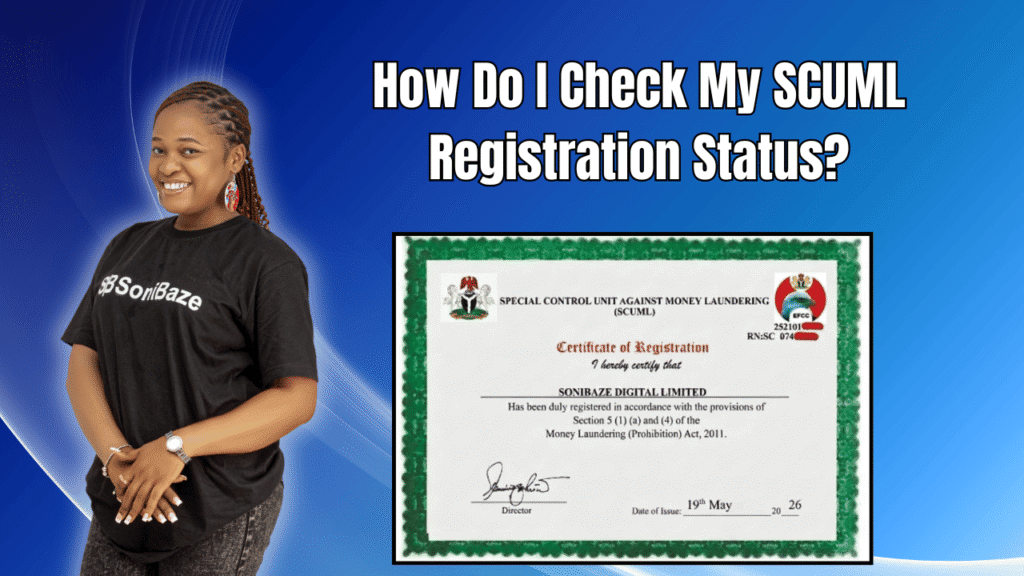
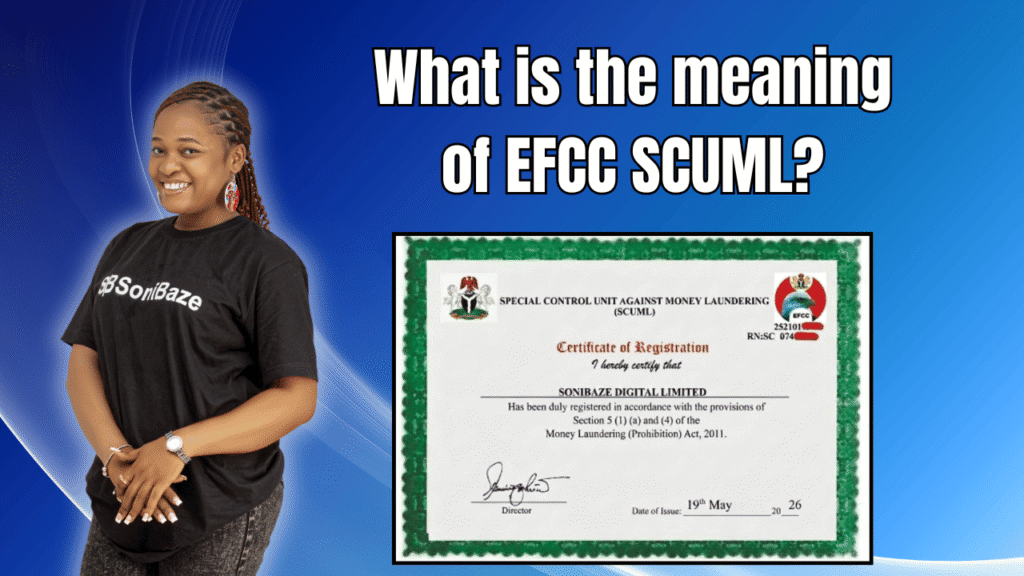
SCUML stands for Special Control Unit Against Money Laundering. It operates under the Economic and Financial Crimes Commission (EFCC) in Nigeria. The unit was created to monitor a specific category of businesses that fall outside the usual scope of bank and financial institution regulation.
SCUML was established in line with Section 17(1) of the Money Laundering (Prevention and Prohibition) Act, 2022. Interestingly, SCUML is statutorily under the Federal Ministry of Industry, Trade and Investment, but operationally domiciled within the EFCC. In practice, most businesses interact with it as an EFCC function, since the EFCC drives its day-to-day operations.
The unit exists because Nigeria, like most countries, follows international standards set by the Financial Action Task Force (FATF) on anti-money laundering and counter-terrorism financing. The FATF recommendations call for a legal and institutional framework to implement these measures, which led to Nigeria’s Money Laundering Prohibition Act.
What Are DNFBPs and Why They Matter
SCUML’s entire mandate centres on a category of businesses called DNFBPs, short for Designated Non-Financial Businesses and Professions. These are businesses that are not banks or financial institutions, but still handle large sums of money or high-value transactions in ways that could be exploited for laundering illicit funds.
SCUML registration is mandatory for entities classified as DNFBPs, including dealers in jewellery, real estate agents, dealers in precious metals and stones, chartered accountants, lawyers, notaries, and trust and company service providers. The list is broader than most people expect.
Other businesses commonly required to register include car dealerships, hotels above a certain threshold, casinos and gaming operators, import and export companies, consultancy firms, and NGOs. If your business regularly handles cash transactions above ₦5,000,000 or deals in goods that could be used to move large sums quickly, there is a strong chance you fall under this category.

The Purpose of SCUML
The primary aim of SCUML registration is to ensure that DNFBPs adhere to anti-money laundering and counter-terrorist financing regulations. By registering, a business effectively tells the government: we know what to watch for, and we will report it if we see it.
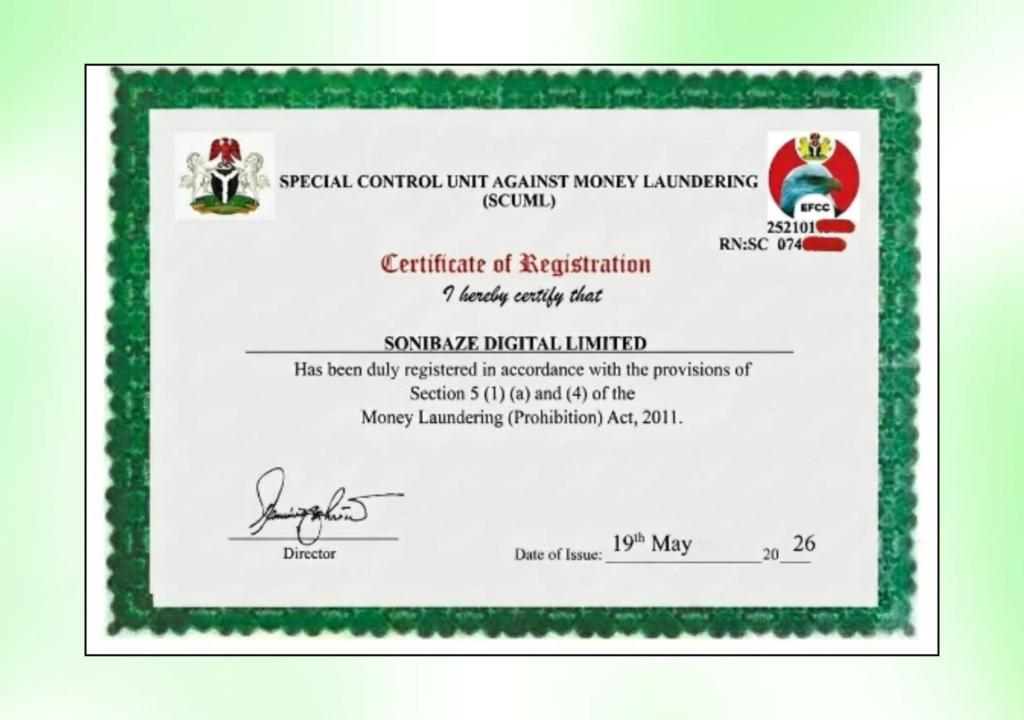
SCUML monitors, supervises, and regulates DNFBPs to ensure they are not used as tools for money laundering or terrorism financing. A SCUML certificate shows that a business has been registered and verified by the EFCC for anti-money laundering compliance.
Think of it this way. Banks already have anti-money laundering systems built in. A real estate agent or a jewellery dealer typically does not. SCUML closes that gap by extending similar oversight, in a lighter form, to sectors that move significant value outside the banking system’s direct visibility.
Compliance Benefits of SCUML Registration
Many business owners treat SCUML registration as a box to tick for the bank. In reality, it carries practical benefits beyond avoiding penalties.
Banking Access Without Disruption
This is the benefit most businesses discover the hard way. Any DNFBP that fails to register with SCUML may be ineligible to maintain bank accounts in Nigeria. Banks routinely ask for SCUML certificates as part of their own compliance checks, particularly for business accounts that process large transaction volumes.
Businesses that register early tend to report smoother banking and fewer regulatory headaches. An account frozen midway through paying suppliers or staff salaries because of a missing certificate is a problem entirely avoidable with early registration.
Credibility With Clients and Partners
By demonstrating compliance with anti-money laundering regulations, a business can gain credibility and trust from customers, partners, and other stakeholders, which can lead to increased business opportunities. For real estate firms, consultancies, and trust service providers in particular, a SCUML certificate signals that the business operates within a recognised compliance framework.
International partners and larger Nigerian corporations increasingly request proof of AML compliance before entering contracts. Having your SCUML certificate ready removes friction at this stage.
Avoiding Fines and Legal Exposure
Failure to register with SCUML can result in fines and penalties. Beyond the direct financial cost, unregistered businesses operating in regulated sectors face a higher risk of scrutiny during any EFCC investigation, even when the business itself has done nothing wrong.
Readiness for 2026 Reporting Requirements
From 1 January 2026, all reports for DNFBPs must be submitted exclusively through the SCUML portal, and adherence to this notice is mandatory. SCUML has stated it will no longer accept cash transaction reports submitted via email after 31 December 2025.
This change makes registration more time-sensitive than before. Businesses without portal login details have been encouraged to contact SCUML immediately to request them. Businesses that registered early are already positioned for this shift, while those that delay may face a scramble to set up portal access while also meeting reporting deadlines.
How SCUML Registration Works
Registration is done through the SCUML website, by clicking the “Register online” tab. Registration itself is free on the official portal, which is an important point. Some consultants charge fees to “process” applications, but the certificate has no government cost attached.
The real challenge most businesses face is getting documentation right the first time, since wrong formats, missing TIN links, or incomplete director details cause delays and rejections. A correctly submitted application can result in a certificate within seven to ten days. An application with errors can take significantly longer, sometimes weeks, as it cycles through correction and resubmission.
Required information typically includes your CAC registration documents, Tax Identification Number, details of company directors, a description of the nature of your business activities, and proof of business address.
| Step | What Happens |
|---|---|
| Confirm DNFBP status | Determine whether your business activity falls under SCUML’s regulated categories |
| Gather documents | CAC certificate, TIN, director details, business address proof |
| Register on the portal | Submit application via the official SCUML website |
| Verification | SCUML reviews submitted documents for accuracy |
| Certificate issued | Typically within 7 to 10 days for correctly submitted applications |
Obtain Your EFCC SCUML Certificate
Let us help you get your EFCC SCUML Certificate quickly and hassle-free. Our team provides fast, reliable support to ensure your SCUML registration is completed accurately and in compliance with regulatory requirements.
Who Should Prioritise SCUML Registration in 2026
Given the new portal-only reporting rule, certain businesses should treat this as urgent rather than something to handle eventually. Real estate agencies and property developers handling client deposits and large transactions sit near the top of this list. Law firms and accounting practices managing client funds in escrow or trust arrangements are another priority group.
Dealers in jewellery, gold, and other precious goods, along with car dealerships handling high-value cash sales, also fall squarely within SCUML’s remit. NGOs receiving foreign donations, consultancy firms with large retainer arrangements, and casino or gaming operators round out the group most exposed to both the compliance requirement and the practical banking risks of non-registration.
Frequently Asked Questions
Is SCUML registration the same as CAC registration?
No. CAC registration creates your business as a legal entity in Nigeria. SCUML registration is a separate, additional step required only for businesses classified as Designated Non-Financial Businesses and Professions. You need CAC registration first, since SCUML applications require your CAC documents as part of the submission.
How much does it cost to register with SCUML?
Registration on the official SCUML portal is free. Some consultants and law firms charge a service fee to handle the documentation and submission process on your behalf, but the government does not charge for the certificate itself. Be cautious of anyone implying the certificate has an official price attached.
What happens if my business does not register with SCUML?
An unregistered business that falls under DNFBP categories risks fines and penalties from the EFCC. More immediately, banks may restrict or freeze business accounts that lack a valid SCUML certificate, particularly for accounts handling significant transaction volumes. This can disrupt payments to suppliers, staff, and partners with little warning.
Does my small business need a SCUML certificate?
It depends on your sector and transaction volume, not your size alone. A small real estate brokerage, a small jewellery shop, or a one-person consultancy receiving large client payments can all fall under DNFBP categories regardless of staff count. The relevant question is whether your business activity matches one of the designated categories, not how big your operation is.
How long does it take to get a SCUML certificate?
A correctly submitted application with complete and accurate documentation typically results in a certificate within seven to ten days. Applications with errors, such as mismatched TIN details or incomplete director information, take considerably longer due to rejection and resubmission cycles. Getting documentation right the first time is the single biggest factor in how quickly the process moves.
Can SCUML registration be done online without visiting an EFCC office?
Yes. The entire registration process is designed to be completed through the SCUML online portal. Visiting an EFCC office is not required for standard registration, though businesses sometimes engage consultants or legal practitioners to ensure documentation is correctly prepared before submission.
Conclusion: Treat SCUML as Part of Your Compliance Foundation
SCUML registration is one of those requirements that businesses either handle early and forget about, or ignore until a bank account freeze forces the issue. With portal-only reporting now mandatory from 2026, the cost of delay has increased.
If your business operates in real estate, legal services, accounting, jewellery, vehicle sales, consultancy, or any other DNFBP category, registration is not optional, and the certificate itself costs nothing to obtain. The only real investment is getting your documentation in order before you submit.
For businesses focused on growing online while staying compliant on the regulatory side, SoniBaze Digital can help you build the digital presence and credibility that complements a properly registered, compliant operation.
Obtain Your EFCC SCUML Certificate
Let us help you get your EFCC SCUML Certificate quickly and hassle-free. Our team provides fast, reliable support to ensure your SCUML registration is completed accurately and in compliance with regulatory requirements.