Picking a business name feels like the easy part of registration. Then the CAC rejects it, and suddenly it is not so easy. Most name rejections are avoidable. The rules around what names are allowed and what names are not come directly from the Companies and Allied Matters Act 2020, specifically Section 852, and understanding those rules before you submit saves time and frustration.
This article covers every category of name the Corporate Affairs Commission will not register, the specific words that require special consent, and the common mistakes that cause preventable rejections.
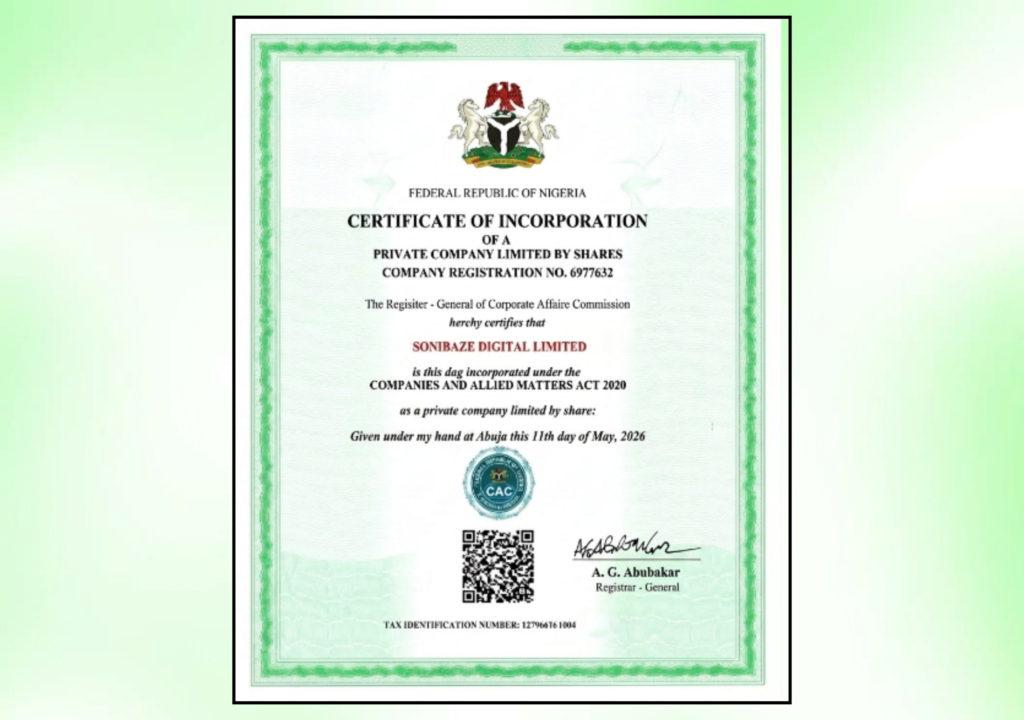
Obtain Your CAC Certificate
Let our team handle your CAC registration and help you obtain your certificate without stress. From business name registration to company incorporation.
The Legal Basis: Section 852 of CAMA 2020
Section 852 of the Companies and Allied Matters Act 2020 divides naming restrictions into two categories: names that are prohibited outright and names that are restricted, meaning they can only be used with prior consent from the CAC. The same rules apply whether you are registering a company, a limited liability partnership, a limited partnership, a business name, or incorporated trustees.
Understanding which category your proposed name falls into determines whether rejection is final or whether an application for consent can fix the problem.
Prohibited Names: These Will Always Be Rejected
Section 852(1) of CAMA provides seven categories of names that are prohibited. These are outright rejections. No consent application can override them.
1. Names Identical or Deceptively Similar to Existing Names
Names that are identical to the name of an existing company or limited liability partnership, or closely resemble such names and are capable of deceiving the public into believing the companies are the same, are prohibited. An exception can only occur if the company or limited liability partnership in existence is in the course of being dissolved and consents to the use of the name.
This is the most common reason for rejection. “Zenith Technologies Ltd” will not pass if “Zenith Technology Limited” already exists on the register. Even subtle variations may not be enough if the overall impression is similar.
| Rejected Name Example | Existing Name | Why Rejected |
|---|---|---|
| GTBank Nigeria Ltd | GT Bank Limited | Deceptively similar |
| Trendy Technologies Ltd | Trendy Tech Solutions | Confusingly close |
| First Trust Finance Ltd | First Trust Financials Ltd | Too similar to mislead |

2. Names That Conflict With Existing Trademarks or Registered Bodies
Names that, in the opinion of the Commission, would violate or conflict with any existing trademarks, business or company names, or body corporates that have been registered or existing in Nigeria are prohibited. Such names can be used where the consent of the trademark or business name owner or trustees of the body corporate has been obtained.
This extends beyond just other CAC-registered businesses. If a trademark has been registered under Nigerian law and your proposed name conflicts with it, CAC can reject the application on those grounds.
3. Names Misleading About Nationality, Race, or Religion
Names that contain any word which, in the opinion of the Commission, is likely to mislead the public as to the nationality, race, or religion of the persons who wholly or mainly own or control the business are prohibited.
A name implying the business is foreign-owned when it is not, or suggesting a specific religious or ethnic affiliation that could deceive customers, falls into this category.
4. Names That Are Deceptive or Objectionable
A name will be rejected if it is offensive, misleading, or undesirable, especially in relation to race, religion, or social order. The CAC has discretion here. Names that suggest fraudulent intent, mock religious institutions, or carry offensive language are rejected on these grounds.
5. Names That Threaten Public Peace or National Security
Names that pose a threat to public peace or national security are outright prohibited. “Revolution Army Enterprises” is an obvious example. The CAC treats any name that suggests militant, subversive, or destabilising intent as a firm rejection.
6. Names That Falsely Imply State, Royal, or Foreign Affiliation
Names that falsely imply state, royal, or foreign affiliation are prohibited. Suggesting your company is tied to the presidency, a state government, the royal family, or an international organisation like the United Nations, without actual authorisation, will not pass.
7. Names Restricted to Specific Professional Bodies
Using words like “Law,” “Engineering,” or “Medical” in a business name without the proper credentials or professional certification tied to those fields can result in rejection. Professional titles imply regulatory oversight, and using them without meeting the underlying requirements misleads the public about what the business is authorised to do.
Restricted Names: Usable Only With CAC Consent
These names are not automatically rejected, but they cannot be registered without prior consent from the Corporate Affairs Commission. Submitting a name containing these words without applying for consent first leads to an avoidable rejection.
Section 852(2) of CAMA lists specific words that are restricted:
| Restricted Word | Why It Requires Consent |
|---|---|
| Federal | Implies federal government affiliation |
| National | Suggests national authority or government backing |
| Regional | Implies government regional body status |
| State | Suggests a state government entity |
| Government | Directly implies official government status |
| Municipal | Suggests local government or municipality connection |
| Chartered | Implies a chartered professional body |
| Cooperative | Reserved for formally registered cooperative societies |
| Building Society | Specific to registered building societies |
| Group | Reserved for qualifying holding structures |
| Holding | Requires meeting group/holding company requirements |
Obtain Your CAC Certificate
Let our team handle your CAC registration and help you obtain your certificate without stress. From business name registration to company incorporation.
The word “Government,” or any other word which, in the opinion of the Commission, suggests or is calculated to suggest that it enjoys the patronage of the Government of the Federation, the Government of a State in Nigeria, or any Ministry or Department of Government, also falls under restricted usage.
Words like “Global” and “Holdings” are also frequently flagged in practice. The CAC frequently rejects names that are too similar to existing companies or contain restricted words like “Global,” “Holdings,” or “Group” without meeting specific capital requirements.
Other Common Reasons Names Are Rejected
Beyond the Section 852 categories, several other naming issues regularly cause rejections in practice.
Names With Only One Word
CAC generally requires a business name to contain at least two words. A single-word name like “Buildworks” or “Novex” is likely to be rejected without additional distinguishing terms.
Vague or Meaningless Combinations
Names containing vague or meaningless combinations, like “XYZ Ltd,” are not allowed. The business name should reflect the nature of the enterprise in a way that is identifiable and not random.
Profanity or Offensive Language
Any name containing profanity, slurs, or language considered offensive to a reasonable person will be rejected. This is covered under the deceptive and objectionable names category.
Names That Imply Chamber of Commerce Status
Words like “Chamber of Commerce” require express permission from the Registrar-General before they can be used. This applies to organisations attempting to use that designation without being formally constituted as such.
Quick Reference: Prohibited vs Restricted
| Category | Status | Can Consent Help? |
|---|---|---|
| Identical or deceptively similar to existing name | Prohibited | Only if existing company is dissolving and consents |
| Conflicts with registered trademark | Prohibited | Only with trademark owner’s consent |
| Misleading about nationality, race, or religion | Prohibited | No |
| Deceptive or objectionable content | Prohibited | No |
| Threat to public peace or security | Prohibited | No |
| False state, royal, or foreign affiliation | Prohibited | No |
| Professional terms without credentials | Prohibited | No |
| Federal, National, Regional, State | Restricted | Yes, with CAC consent |
| Government, Municipal, Chartered | Restricted | Yes, with CAC consent |
| Cooperative, Building Society | Restricted | Yes, with CAC consent |
| Group, Holding | Restricted | Yes, with CAC consent |
Frequently Asked Questions
Can I still use a restricted word if I apply for consent?
Yes. Restricted words are not outright bans. If you apply for consent through the CAC iCRP portal and can justify your use of the word, approval is possible. The process takes additional time and is not guaranteed, but it is a legitimate route.
How do I check if my proposed name is already taken?
CAC provides a public name search tool on the iCRP portal at pre.cac.gov.ng. Run a search on your proposed name before submitting the reservation. Even if an exact match does not appear, check for names that are close enough to be considered confusingly similar.
Does the same naming rule apply to NGOs and incorporated trustees?
Yes. Section 852 of CAMA 2020 applies to companies, limited liability partnerships, limited partnerships, business names, and incorporated trustees. NGOs are not exempt from these naming restrictions.
What happens if my name is rejected?
You will need to propose an alternative name. CAC does not automatically suggest replacements. Once a name is rejected, the reservation fee is typically not refunded, so running a thorough search before submission is worth the extra time.
Can I use a foreign language in my business name?
Foreign language words are not automatically prohibited, but names that mislead the public about the nationality or control of the business can still be rejected under Section 852(1). Additionally, the word “Cooperative” in any language or abbreviation falls under the restricted category, meaning even a foreign-language equivalent requires consent.
Is it possible to change a CAC-registered business name later?
Yes. A registered business name can be changed after incorporation, but the change must go through the CAC and comply with the same naming rules that apply to new registrations. The process involves paying a fee and updating the relevant registration documents.
Conclusion: Name Selection Is Not Guesswork
The rules around CAC name approval are specific, and they are set out clearly in CAMA 2020. A name gets rejected because it conflicts with an existing registration, contains a restricted word without consent, suggests false affiliation, or crosses one of the other clear lines Section 852 draws.
Spending twenty minutes searching the CAC portal and checking your proposed name against these categories is far less painful than discovering a rejection after submission, especially since fees are not automatically refunded. Get the name right before you file.
Obtain Your CAC Certificate
Let our team handle your CAC registration and help you obtain your certificate without stress. From business name registration to company incorporation.