
Many business owners in Nigeria register with the CAC and then assume the job is done. Registration is only the beginning. Every registered entity, whether a business name, a limited liability company, an NGO, or a partnership, is required to file annual returns with the Corporate Affairs Commission every single year. Skip it, and the fines start accumulating.
This article breaks down the exact penalties for late filing, the deadlines that apply to each entity type, and what happens if you let the situation go on for too long.
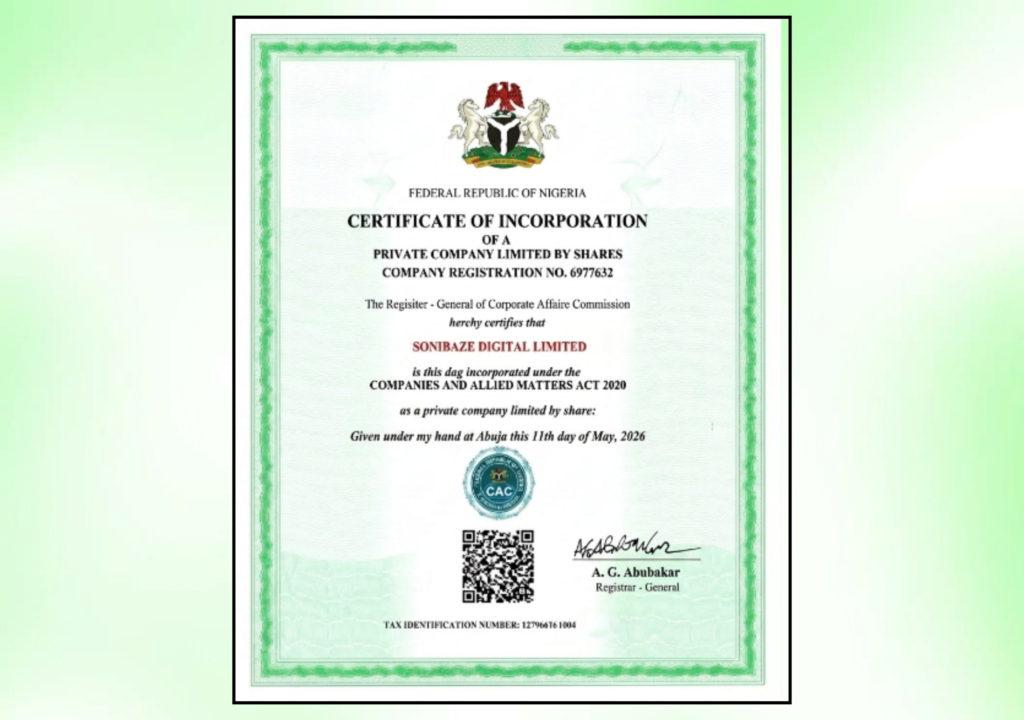
Obtain Your CAC Certificate
Let our team handle your CAC registration and help you obtain your certificate without stress. From business name registration to company incorporation.
What Are Annual Returns and Why Are They Mandatory?
Annual returns are not a tax filing and they are not a financial statement. They are a statutory declaration filed with the CAC each year to confirm that your registered entity is still active and that its details, directors, shareholders, address, are still accurate.
Think of it as the CAC’s way of keeping the company register up to date. Without annual returns, the Commission has no way of knowing whether a registered company is still operating or has simply gone quiet. Under the Companies and Allied Matters Act 2020, every registered entity in Nigeria is required to file these returns, no exceptions for dormant companies, and no exemption based on size unless a company meets the specific small company definition.
A company that has not traded during the year still has to file. Simply not doing business does not remove the obligation.
Filing Deadlines by Entity Type
The deadline that applies to your business depends on how it is registered. These are not interchangeable.
Business Names (Sole Proprietorships and Partnerships) Annual returns must be filed on or before June 30 of each year, covering the preceding year. A business name registered in 2024 does not file for the year of registration. Its first return covers 2024 and is due by June 30, 2025.
Private Limited Companies The legal requirement under Section 421(1) of CAMA 2020 is that annual returns must be delivered to the CAC within 42 days after the Annual General Meeting. In practice, the CAC annual return form specifies 14 days after the AGM. To stay safe, file within 14 days. For most private companies with a December 31 financial year-end, this means filing by June 30 of the following year.
A newly incorporated company has a longer window for its first filing. The first annual return is due within 18 months of the date of incorporation. A company incorporated in June 2025, for example, must file its first return by December 2026.
Incorporated Trustees (NGOs, Churches, Clubs, Associations) Returns must be filed between June 30 and December 31 of each year for the preceding year. This is a wider window than business names or limited companies. Filing earlier within this range is safer than waiting until December.
Limited Liability Partnerships and Limited Partnerships Annual returns must be filed within 60 days of the closure of the financial year.

| Entity Type | Filing Deadline |
|---|---|
| Business Name | On or before June 30 each year |
| Private Limited Company | Within 14 to 42 days after AGM; typically June 30 for Dec FYE |
| Public Limited Company | Within 42 days after AGM |
| Incorporated Trustees (NGOs, churches, clubs) | Between June 30 and December 31 each year |
| Limited Liability Partnership / Limited Partnership | Within 60 days after financial year end |
| Newly incorporated company (first return only) | Within 18 months of incorporation date |
What Are the Penalties for Late Filing?
This is where things get expensive quickly.
From January 1, 2024, the CAC announced full enforcement of the penalties prescribed under the Companies Regulations 2021. Before that, many companies got away with lighter treatment. That period is over.
The penalties as currently applied are structured as follows:
For business names, the late filing penalty is ₦5,000 as an initial charge, with daily penalties continuing to accrue from the day after the deadline. There is no grace period.
For small private companies, the penalty is approximately ₦5,000 initial charge plus daily fines for every day the default continues.
For private limited companies (other than small), the late filing penalty is ₦10,000.
For public limited companies, the late filing penalty is ₦25,000.
The CAMA 2020 framework also makes penalties personal. Under Section 425 of CAMA 2020, not only is the company liable for late filing penalties, but every director and officer of the company can be held personally liable as well. This is a significant change from the older regime, where only the company faced consequences.
One important note as of mid-2026: daily penalties have been listed as currently suspended by the CAC until further notice. This suspension does not remove the obligation to file, and the base late filing penalty still applies. The suspension can be lifted at any time, and companies that have not filed will owe accumulated penalties from their default date whenever daily fines resume.
Obtain Your CAC Certificate
Let our team handle your CAC registration and help you obtain your certificate without stress. From business name registration to company incorporation.
What Happens If You Ignore It for Years?
The further you fall behind, the more disruptive the consequences become.
Once a company is in default, its status on the CAC portal changes from Active to Inactive. That inactive status has immediate practical effects. If you need to access any post-incorporation services from the CAC, such as changing directors, updating your address, increasing share capital, applying for certified true copies, or obtaining a CAC Status Report, you must clear all outstanding annual returns first. Banks also require an Active status and a current Status Report before opening accounts or processing certain transactions.
Beyond the access restrictions, persistent non-filing eventually leads to a striking off notice. Under CAMA 2020, a company can be removed from the companies register for failing to file annual returns for a consecutive period of 10 years. Once struck off, the company legally ceases to exist. Restoring a struck-off company requires a formal application, a court-supervised restoration process, payment of all outstanding penalties, and submission of all overdue returns. The cost and time involved in restoration far exceeds what timely filing would ever have cost.
Following its July 2023 striking off of over ninety thousand companies from the register, the CAC also confirmed it would proceed against directors and officers of struck-off companies to recover any undischarged penalty fees. The liability does not disappear when a company is struck off.
How to Regularise Outstanding Annual Returns
If your company has missed one or more years of filing, the process for catching up involves filing back-to-back returns for each outstanding year, paying all accumulated filing fees and applicable penalties, and submitting a formal application letter to the CAC’s Registrar General if the default has been significant.
The letter is addressed to the Registrar General, explains why returns were not filed on time, and is submitted along with all outstanding fees and updated company records. If the application is successful, a relisting certificate is issued restoring the company’s active status.
All filing is handled online through the CAC Company Registration Portal. Payment is made through Remita. When you file on the portal, a Remita invoice is generated for the applicable fees. Payment can be made by card on the portal, by copying the Remita RRR and paying at a bank, or through online banking using the RRR reference. Many businesses use a CAC-accredited agent to handle this, particularly when multiple years of returns need to be filed at once.
Frequently Asked Questions
Do dormant companies need to file CAC annual returns?
Yes. Under CAMA 2020, every registered entity must file annual returns regardless of whether it conducted any business during the year. A company that has not traded still has the obligation to file confirming that status. The only exception is a company formally placed into dormancy through the CAC’s prescribed process. Simply not trading does not confer dormant status.
Can directors be personally fined for a company’s failure to file annual returns?
Yes. Under Section 425 of CAMA 2020, both the company and every director and officer of the company are liable for late filing penalties. The CAC has also stated it will pursue directors of struck-off companies for undischarged penalties even after the company has been removed from the register.
How far back can the CAC chase unpaid penalties?
There is no stated limitation period in the public notices issued by the CAC. The Commission has demonstrated willingness to pursue directors of struck-off companies for accumulated penalties, suggesting that time alone does not extinguish the liability.
Can I access CAC services while my annual returns are overdue?
No. The CAC requires all annual returns to be current before processing post-incorporation services. This includes changing directors or shareholders, updating the registered address, increasing share capital, applying for certified true copies, and obtaining a Status Report. A Status Report with Active status is also required by banks for account opening and periodic reviews.
Is there a grace period after the deadline?
No. Daily penalties begin accruing from the day after the filing deadline, though as of mid-2026 the CAC has suspended daily penalties until further notice. The base late filing penalty still applies from the date of default. Filing as soon as possible after a missed deadline limits total exposure.
Can foreign companies in Nigeria skip annual returns?
No. Foreign companies operating in Nigeria are not exempt from annual returns. The obligation applies to all registered entities regardless of ownership or country of incorporation.
Conclusion: The Cost of Delay Grows Every Day You Wait
Annual returns are one of the simplest recurring obligations a registered Nigerian business has. The fees are modest when filed on time. The penalties are not. A company that ignores filings for several years can easily find itself facing a bill, restricted access to CAC services, an inactive status, and personal liability for its directors, all of which could have been avoided by a straightforward online filing each year.
If your company’s returns are overdue, the right move is to calculate exactly what is owed and file everything in one go, rather than waiting for an enforcement notice to force the issue.
Obtain Your CAC Certificate
Let our team handle your CAC registration and help you obtain your certificate without stress. From business name registration to company incorporation.