
This question comes up constantly. A business owner starts trading, money starts moving through their personal account, and at some point, a client, a bank, or a payment platform asks for a corporate account. The obvious next question is whether you can get one without going through the Corporate Affairs Commission first.
The short answer is no. The longer answer explains why, what the exceptions look like, and what getting registered actually costs in 2026.
Obtain Your CAC Certificate
Let our team handle your CAC registration and help you obtain your certificate without stress. From business name registration to company incorporation.
What Nigerian Banks Require to Open a Business Account
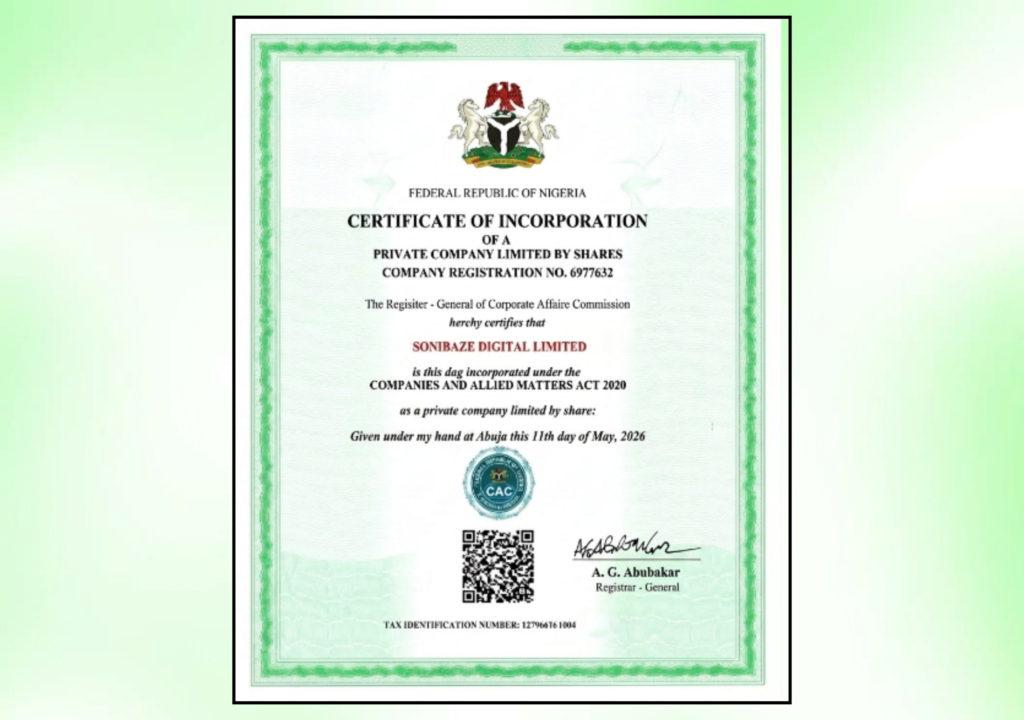
Nigerian commercial banks require a CAC Certificate of Incorporation or Certificate of Registration, along with a current CAC Status Report, before opening a corporate or business account. This is not a discretionary policy that varies from bank to bank. It is the standard across the industry.
Beyond the CAC documents, banks typically ask for a Tax Identification Number from the Federal Inland Revenue Service, valid identification for all directors or signatories, a Bank Verification Number for each signatory, and recent proof of address for the business premises. For limited companies, a board resolution authorising the account opening is also required.
Without CAC registration, your business is restricted to operating through the owner’s personal bank account. That creates real problems the moment your transactions start drawing scrutiny, whether from clients expecting a business account number, auditors reviewing financial records, or tax authorities tracking turnover.
Why Banks Won’t Budge on This Requirement
It comes down to legal identity. A business that is not registered with the CAC does not have a formally recognised identity separate from its owner. Banks cannot open an account in a name that has no legal standing.
There is also a regulatory angle. The Central Bank of Nigeria’s Know Your Customer guidelines, along with anti-money laundering obligations, require banks to verify the legal existence of any entity they open an account for. CAC registration is the primary proof of that legal existence. Without it, there is nothing for the bank to verify.
Personal accounts are typically not accepted for institutional payments, government contracts, or large-volume commercial transactions. A personal account might work for early-stage sales, but it will become a problem quickly once your business starts growing and counterparties start asking for corporate banking details.
Are There Any Exceptions?
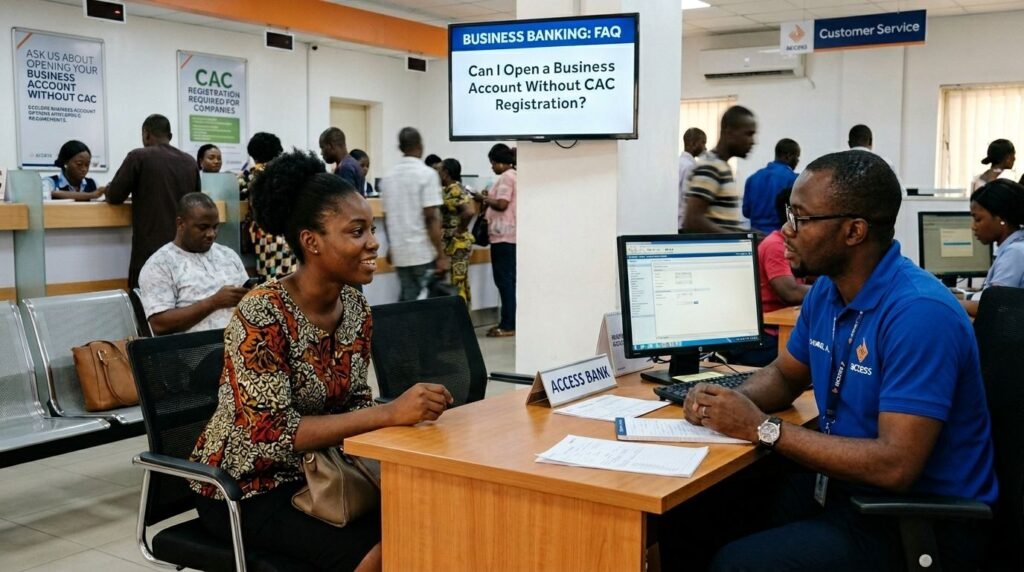
Some banks offer SME-specific account products that are designed for informal or early-stage businesses. Some banks accept informal business types under special SME products, which can allow traders to operate with a simplified account structure before full CAC registration is complete.
These products exist, but they come with limits. They typically cap transaction volumes, restrict certain payment types, and do not carry the same weight as a full corporate account when dealing with government agencies, international partners, or platforms that require verified business accounts. They are a temporary accommodation, not a substitute for CAC registration.
Associations and cooperatives sit in a slightly different category. For Associations and Cooperatives, a scanned copy of a Certificate of Registration from the state or CAC is accepted, which means state-level registration may suffice in some cases for this entity type. This does not apply to businesses operating under a business name or as a limited company.
What Operating Without CAC Registration Costs You
The consequences go beyond banking access.
Without CAC registration, a business cannot open a corporate bank account. This limits access to bank loans, grants, payment gateways, and the ability to process transactions under a business name.
Contracts are another exposure. Contracts entered into under an unregistered business name may face enforceability challenges in Nigerian courts. A registered business has legal standing to sue and be sued in its business name. An unregistered entity does not carry the same recognition under the law.
Government work is off the table entirely. Federal, state, and local government agencies in Nigeria require bidders and contractors to present valid CAC registration documents. Most large private-sector organisations, NGOs, and multinational companies also require CAC documentation from vendors and service providers before executing contracts or releasing payment.
Then there is enforcement. In December 2025, the CAC directed that all POS operators obtain CAC registration before January 1, 2026, warning that unregistered terminals would be seized and operators shut down. Security agencies were designated to enforce compliance. That directive signals the direction things are going. Regulatory tolerance for unregistered businesses has been decreasing, not increasing.
Obtain Your CAC Certificate
Let our team handle your CAC registration and help you obtain your certificate without stress. From business name registration to company incorporation.
How Much Does CAC Registration Actually Cost in 2026?
The financial barrier is lower than many business owners realise. A business name registration costs around ₦11,000 in total, roughly ₦1,000 to reserve the name and ₦10,000 to register, and is typically processed within 24 to 72 hours through the CAC online portal.
If you need limited liability, to protect personal assets, raise investment, or look more serious to corporate clients, a private limited company starts from roughly ₦30,000 in CAC fees, plus stamp duty on your share capital. With agent fees, a realistic total often lands between ₦40,000 and ₦150,000.
There is also a window worth checking before you pay anything. In September 2025, CAC partnered with SMEDAN to register 250,000 micro and small businesses for free, with further cycles expected. Before you pay anyone, check the SMEDAN portal to see whether a free registration window is open and whether you qualify.
Business Name vs Limited Company: Which Do You Need?
The choice between registering a business name and incorporating a limited liability company affects what you can and cannot do with your account.
A business name registration under a sole proprietorship or partnership is the simpler and cheaper route. It gives you a CAC certificate, a registered business identity, and the ability to open a corporate account. It does not separate your personal assets from your business liabilities.
A private limited company, or Ltd, is a separate legal entity. Under CAMA 2020, a single individual can register a limited liability company as a sole shareholder and director. This structure provides limited liability protection, makes your business more credible to institutional clients, and is typically required before applying for certain licences or entering into significant contracts.
For most small businesses just starting out, a business name registration is enough to open a corporate account and operate legitimately. Moving to a limited company makes more sense once the business reaches a size where liability protection and institutional credibility become relevant.
What You Need to Open a Corporate Account Once Registered
Once your CAC registration is in order, the supporting documents banks typically ask for include:
| Document | Purpose |
|---|---|
| CAC Certificate of Incorporation or Registration | Proof of legal existence |
| CAC Status Report | Confirms current directors, shareholders, address |
| FIRS Tax Identification Number | Tax registration |
| Valid ID for directors and signatories | Identity verification |
| BVN for each signatory | CBN KYC requirement |
| Proof of business address | Verification of business premises |
| Board resolution (for limited companies) | Authority to open account and appoint signatories |
Frequently Asked Questions
Can I receive business payments into my personal account while waiting to register?
Yes, personal accounts can receive payments, and many new businesses start this way. The problem is that it is difficult to separate business and personal finances, creates complications at tax filing time, and becomes increasingly inadequate once transaction volumes grow or institutional clients start asking for corporate account details.
How long does CAC registration take in 2026?
Business name registration through the CAC online portal typically processes within 24 to 72 hours. Limited company incorporation takes longer, usually between three and seven working days when documents are submitted correctly.
Do I need a TIN before or after CAC registration?
A TIN is required when opening the corporate bank account, not necessarily before registering with the CAC. However, FIRS issues TINs automatically to entities registered with CAC under a system integration between the two agencies. Many businesses receive their TIN shortly after CAC registration without making a separate application.
What happens if I have been trading under an unregistered business name for years?
You can register at any point, and there is no backdating requirement that forces you to restate prior transactions. The practical priority is getting registered before you miss a contract that requires it, before a bank review flags your account activity, or before CAC enforcement actions catch up with your sector.
Can a foreigner open a business account in Nigeria?
Most banks allow foreign-owned companies to open business accounts if all CAC documents and identification details are complete. The process may take longer due to identity verification and BVN enrolment requirements, but the underlying requirement is the same: CAC registration must come first.
Is there a difference between a corporate account and a business account?
In Nigerian banking terminology, both terms are used. A corporate account typically refers to accounts held by limited liability companies, while a business account can refer more broadly to accounts held by any registered entity, including business names and partnerships. The CAC registration requirement applies to both.
Conclusion: Registration Is the Starting Point, Not the Obstacle
Business owners who delay CAC registration often frame it as something to deal with later, once the business is more established. In practice, registration is what makes the business bankable, contractable, and credible to anyone you want to do serious work with.
At ₦11,000 for a business name and a 24 to 72-hour processing time, the financial and time cost is low enough that there is no practical reason to keep trading without it. The corporate account follows directly from the certificate.
Obtain Your CAC Certificate
Let our team handle your CAC registration and help you obtain your certificate without stress. From business name registration to company incorporation.