
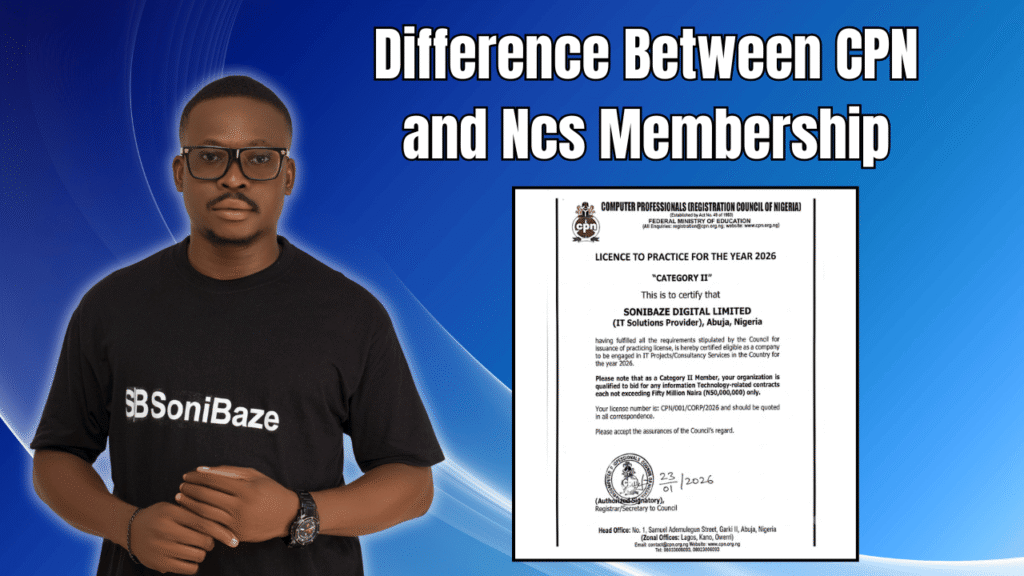
If you work in IT in Nigeria, chances are you have come across the letters CPN at some point. Maybe a job listing asked for it. Maybe a colleague mentioned theirs during a salary discussion. Either way, it raises a fair question: is this certificate actually worth pursuing, or is it just another piece of paper to add to the pile?
This article breaks down what the CPN certificate is, who issues it, and what it actually does for your career once you have it.
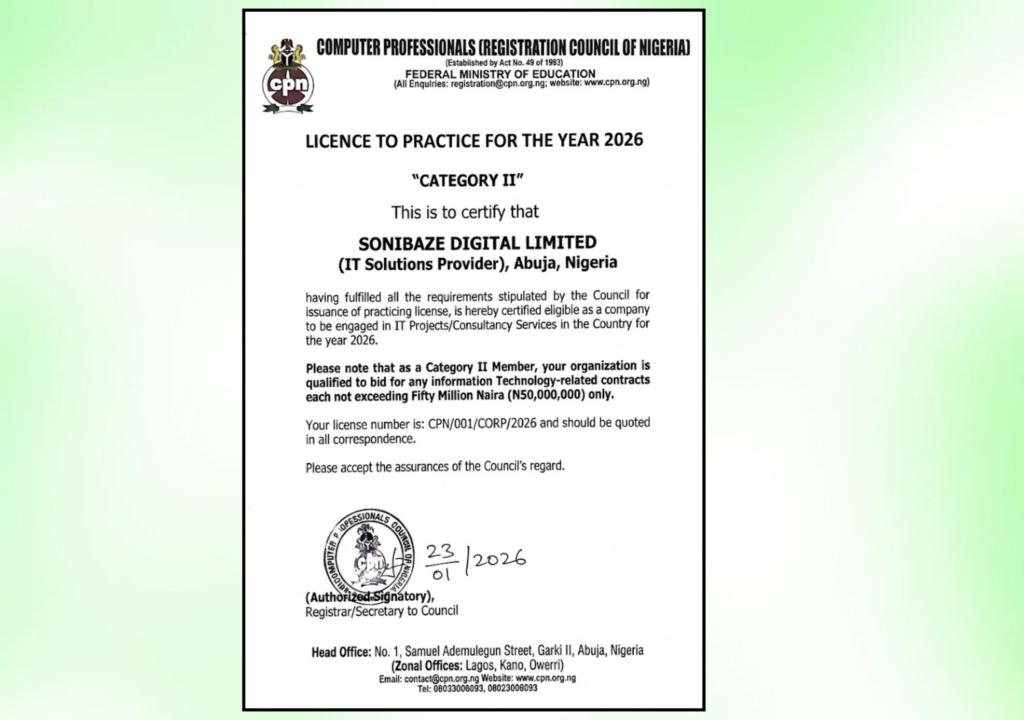
Obtain Your CPN certificate
Let us help you obtain your Computer Professionals Registration Council of Nigeria (CPN) Certification with ease. Our experts provide guidance throughout the application process, helping you achieve professional recognition and compliance.
What Is the CPN Certificate?
CPN stands for the Computer Professionals Registration Council of Nigeria. It is a regulatory body established by an act of the National Assembly, originally Decree No. 49 of 1993, later codified as the CPN Act CAP C22 LFN 2004.
The council exists to regulate the practice of computing and IT in Nigeria. Its role covers certifying professionals, setting standards for the industry, accrediting computing courses in tertiary institutions, and maintaining a register of licensed practitioners.
Getting a CPN certificate means going through their registration process, which can include foundation level and professional level examinations depending on your educational background. Once you pass and complete the requirements, you receive a registration number and certificate. From there, you can be listed as a Member of the Computer Professionals Registration Council of Nigeria, abbreviated as MCPN.
Benefits of Having a CPN Certificate
Legal Recognition to Practice IT in Nigeria
CPN is the only body in Nigeria authorised by the government to license and register IT professionals. This means your certificate is not just a credential. It is a form of legal recognition that you are qualified to practice computing professionally in the country.
For government contracts, certain regulated industries, and corporate roles where compliance matters, this recognition can be the difference between being eligible for a position and being automatically screened out.
A Verifiable Professional Identity
Once registered, your name and membership status are searchable on the CPN’s official member verification portal. Anyone, including employers, clients, or government agencies, can confirm that you are a registered IT professional in Nigeria.
This matters more than it might seem. In an industry where self-taught developers and certificate mills are common, having a verifiable, government-backed registration sets you apart from someone who simply lists “IT professional” on their CV with nothing behind it.

Recognition Comparable to Academic Qualifications
The CPN issues certificates at different levels that are designed to be comparable to standard academic qualifications. The Foundation Certificate aligns with SSCE level, CPE I with OND, CPE II with HND or BSc, and CPE III with a Master’s degree.
For professionals who came into IT through non-traditional routes, perhaps via bootcamps, self-study, or career transitions, this gives a structured way to formalise your qualifications in a way that is recognised within Nigeria’s regulatory framework.
Access to Professional Development and Training
CPN membership comes with access to continuous professional development programs. The council runs workshops, seminars, and conferences aimed at keeping practitioners updated on current technology trends and best practices.
For someone working in a fast-moving field like cybersecurity, software development, or data analysis, having structured access to ongoing training through a recognised body adds value beyond the certificate itself.
Networking With Other Registered Professionals
Membership opens access to a community of registered IT practitioners across Nigeria. CPN maintains a database of members and organises events where practitioners connect, share knowledge, and in some cases find collaboration or job opportunities.
In a profession where referrals and reputation carry significant weight, being part of an organised professional body gives you visibility you would not have on your own.
Eligibility for Chartered Status and Higher Recognition
Long-term CPN members who meet specific criteria, such as years of registration and participation in council activities, become eligible for chartered status. Chartered Information Technology Practitioner status is one of the higher recognitions available within the Nigerian IT regulatory structure.
This kind of progression matters for professionals aiming for senior consulting roles, board positions, or leadership in IT governance, where chartered status can carry weight that a basic degree alone does not.
International Recognition Through Qualification Assessment
According to the CPN, its professional qualifications, when assessed by international credential evaluation agencies using recognised qualification frameworks, are accepted globally. For Nigerian IT professionals considering opportunities abroad, this can simplify the process of having local qualifications recognised by foreign employers or institutions.
Compliance for Corporate Organizations
It is not just individuals who benefit. Organizations that engage in the sale or use of computing services in Nigeria are also expected to register with CPN. For IT companies, having registered and certified staff supports compliance and can be a factor in winning contracts, particularly with government bodies and larger corporations that require vendors to meet regulatory standards.
Benefits at a Glance
| Benefit | Who It Helps Most |
|---|---|
| Legal recognition to practice IT in Nigeria | Anyone seeking government or regulated-sector roles |
| Verifiable professional identity | Freelancers and consultants building credibility |
| Academic-equivalent recognition | Self-taught and non-traditional IT professionals |
| Continuous professional development | Practitioners in fast-changing fields |
| Networking with registered professionals | Those building a referral-based career |
| Eligibility for chartered status | Senior professionals and consultants |
| International qualification recognition | Professionals considering opportunities abroad |
| Corporate compliance | IT companies bidding for contracts |
Obtain Your CPN certificate
Let us help you obtain your Computer Professionals Registration Council of Nigeria (CPN) Certification with ease. Our experts provide guidance throughout the application process, helping you achieve professional recognition and compliance.
Is CPN Registration Worth It for Everyone?
Not every IT role in Nigeria requires CPN registration, and plenty of developers, designers, and analysts build successful careers without it. That said, for roles tied to government, regulated industries, or any context where formal credentials are checked, it can open doors that informal experience alone cannot.
For corporate organizations, the calculation is a bit different. Registration can be part of meeting compliance requirements when bidding for certain contracts, so it is worth checking whether your sector or target clients expect it.
Frequently Asked Questions
Who is eligible to register with CPN?
Individuals and organizations involved in the sale or use of computing services in Nigeria are eligible to apply. The exact entry point depends on your educational background. Graduates with a degree in computing typically start at a different exam stage than those entering with an OND or HND.
How much does CPN registration cost?
Costs vary depending on your entry point and the exam stage required. Individual application fees and exam fees have historically ranged from around ₦10,000 for application up to roughly ₦100,000 for higher-level exams and registration programs, though these figures can change over time.
What is the difference between CPN and Nigeria Computer Society?
CPN is the regulatory body responsible for licensing and registering IT professionals in Nigeria, established by an act of the National Assembly. The Nigeria Computer Society is a professional association, and in some cases CPN registration history is considered as part of NCS membership criteria. They serve related but distinct roles.
Does a CPN certificate guarantee a job?
No certificate guarantees employment on its own. What CPN registration does is add a layer of formal recognition and compliance that can make a candidate more competitive for specific roles, particularly in government or regulated sectors, alongside actual skills and experience.
How long does the CPN registration process take?
The timeline depends on your starting point and which exams you need to complete. After meeting all requirements, successful applicants are notified and invited to collect their registration certificate, but the overall process can take several months depending on exam schedules and document processing.
Can foreign employers recognise a CPN certificate?
CPN states that its qualifications, when evaluated by international credential assessment agencies against recognised frameworks, are accepted globally. Recognition in practice can still depend on the specific country and employer, so it is worth confirming with the relevant assessment body if you are planning to use the certificate abroad.
Conclusion: A Credential Worth Considering for the Right Career Path
The CPN certificate is not a magic ticket, but it is one of the few formal, government-backed recognitions available to IT professionals in Nigeria. For anyone targeting government contracts, regulated industries, or simply wanting a verifiable professional identity in a crowded field, it adds a layer of legitimacy that informal experience cannot replicate on its own.
Whether it is worth the time and cost comes down to where you want your career to go. If formal recognition, compliance, or international credential assessment matter for your goals, CPN registration is worth looking into properly.
Obtain Your CPN certificate
Let us help you obtain your Computer Professionals Registration Council of Nigeria (CPN) Certification with ease. Our experts provide guidance throughout the application process, helping you achieve professional recognition and compliance.