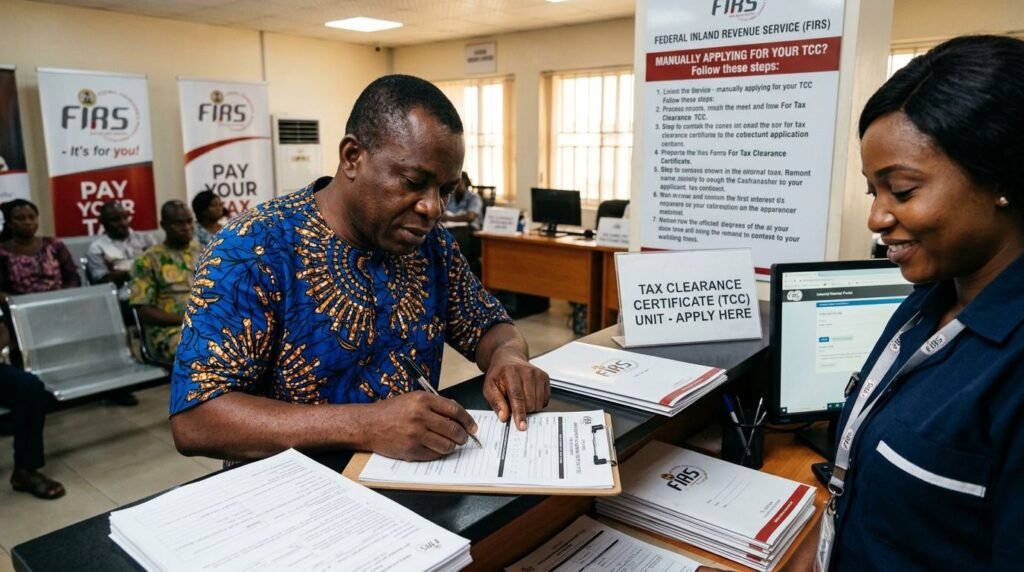
Not every business can generate its Tax Clearance Certificate online. New companies, businesses with pending tax assessments, and taxpayers with unresolved filing gaps cannot use the automated FIRS portal the way established companies can. For them, the manual route at a FIRS office is the only path forward.
This article focuses specifically on how to apply for a TCC manually at the FIRS office, what documents you need to bring, and what the process looks like from start to finish.
Obtain Your Tax Clearance Certificate (TCC)
Let us help you obtain your Tax Clearance Certificate (TCC) quickly and hassle-free. Our experts provide reliable support throughout the application process, ensuring your business meets all tax compliance requirements.
What Is a Tax Clearance Certificate?
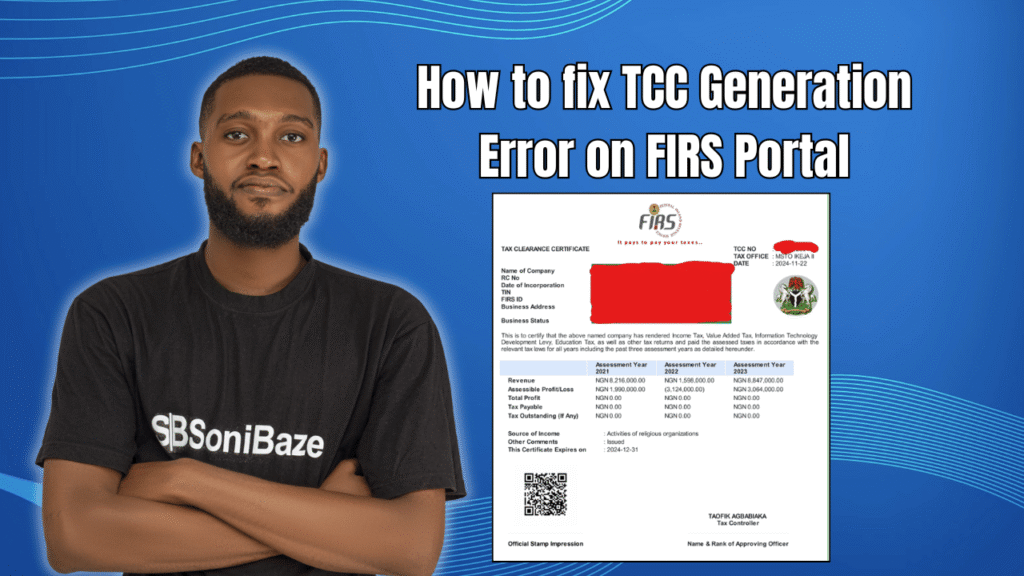
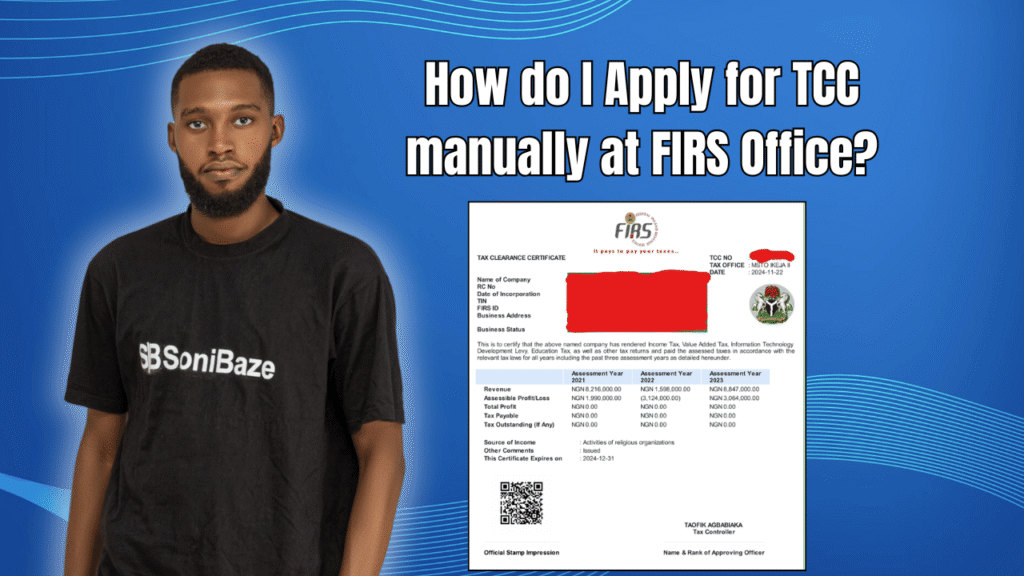
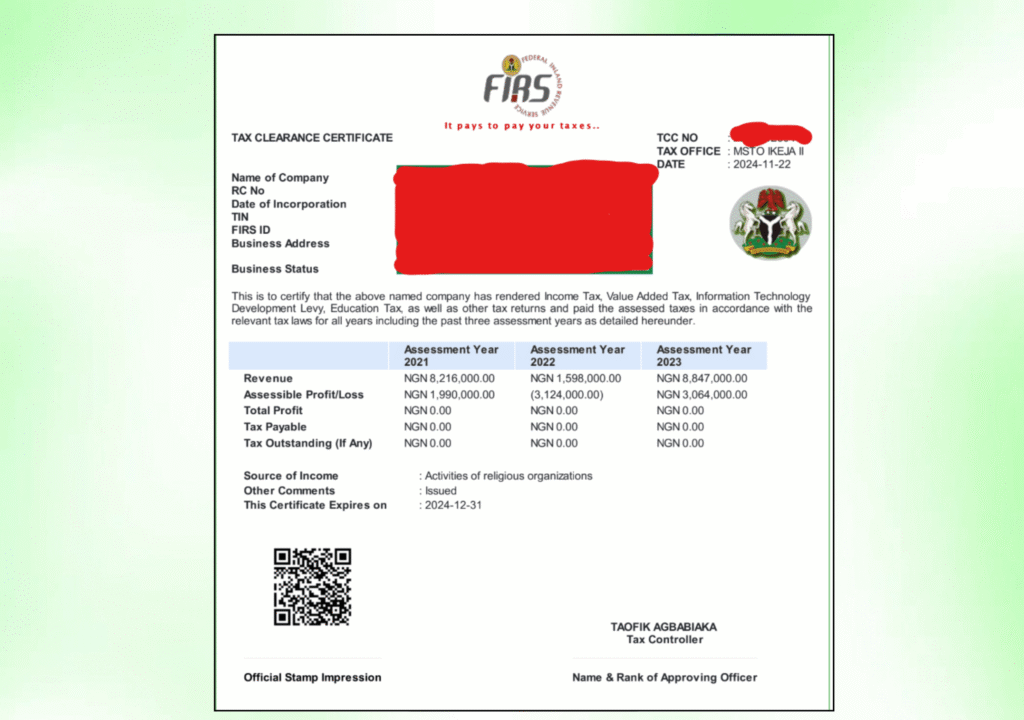
A Tax Clearance Certificate, commonly referred to as a TCC, is an official document issued by the Federal Inland Revenue Service confirming that a taxpayer has paid all taxes due or has no outstanding tax liabilities up to the date of issuance. It is issued annually and covers the three years immediately preceding the current year of assessment.
The TCC shows the taxpayer’s name, Tax Identification Number, nature of business for companies or name of employer for individuals, and financial details across the three-year period including turnover, assessable profit or loss, total profit, tax payable, and tax paid.
It is the end product of a complete tax compliance process. You cannot apply for one if you have not registered for taxes, filed your returns, and paid what is due.
When Is the Manual Route Necessary?
FIRS has an online TCC portal at tcc.firs.gov.ng that allows existing companies to generate their certificate automatically once compliance is confirmed. However, this automated process is only available to companies that have registered for taxes and filed corporate tax returns with FIRS for two or more years, and have no outstanding liabilities or pending assessments.
The manual route at a FIRS office becomes necessary in the following situations.
Your company is newly registered and has not yet completed two full years of tax filings with FIRS. New taxpayers cannot receive the TCC via the online portal and must apply manually at the tax office.
Your company has an outstanding tax liability that has not been fully resolved. Until the liability is settled and confirmed by FIRS, the portal will not generate a certificate.
Your company has a pending tax reassessment or dispute that is still under review. Until the case is resolved, the system flags the account and blocks automatic TCC generation.
Your tax returns have gaps or errors that need to be reconciled in person with a tax officer before a certificate can be issued.
In any of these situations, walking into your nearest FIRS office is the correct next step.
Prerequisites Before Visiting the FIRS Office
Going to the FIRS office without preparing properly often means multiple visits. Before you go, confirm the following.
Your company is registered with FIRS and has a valid Tax Identification Number. If you do not have a TIN yet, that comes before anything else.
All tax returns are filed. This includes Company Income Tax annual returns, Value Added Tax returns, Withholding Tax returns, and PAYE returns where applicable. Returns should be filed accurately for the preceding three years. Filing even a nil return matters. A company that did not trade in a given year still needs to have filed a return for that year.
All outstanding taxes have been paid. If there are liabilities, settle them before applying. FIRS will not issue a TCC for a period in which taxes remain unpaid. Confirm the outstanding balance with your tax officer before assuming you are clear.
You have receipts and evidence of payment for all taxes remitted. These will be required during the manual review.
Documents to Bring to the FIRS Office
The document requirements differ slightly depending on whether you are applying as a company or as an individual.
For companies:
Certificate of Incorporation issued by the Corporate Affairs Commission.
Current CAC Status Report showing your directors and shareholders.
Tax Identification Number printout from FIRS.
Audited financial statements for the three preceding years. For companies, audited accounts are how FIRS determines taxable income and verifies what tax was due. If your accounts are not audited, this becomes a problem at the TCC stage.
Company Income Tax returns for the preceding three years, with evidence of filing.
Proof of all tax payments made during the relevant period, including payment receipts, teller copies, or FIRS payment confirmation printouts.
VAT returns and remittance evidence for the period.
Withholding Tax remittance evidence where applicable.
A formal application letter requesting the TCC, written on the company’s letterhead and signed by a director or authorised representative.
Two passport photographs of the authorised representative visiting the office.
For individuals under the PAYE scheme:
A formal application letter requesting the TCC.
Tax returns filed for the last three years and the current year.
Proof of tax remittance across the relevant period.
Certificate of Payment and Tax from the employer.
Tax Identification Number.
A detailed taxpayer brief.
Two passport photographs.
Obtain Your Tax Clearance Certificate (TCC)
Let us help you obtain your Tax Clearance Certificate (TCC) quickly and hassle-free. Our experts provide reliable support throughout the application process, ensuring your business meets all tax compliance requirements.
Step-by-Step: The Manual TCC Application Process
Step 1: Visit Your Nearest FIRS Office
Locate the FIRS office that covers your business’s registered address or the zone where you file your taxes. Bring all your documents in an organised folder. Disorganised submissions slow down the review process and give the tax officer more reasons to send you back for additional information.
Step 2: Request the TCC Application Form
At the FIRS office, request a TCC application form. Fill it out accurately and completely. The form will ask for basic company or individual details, the Tax Identification Number, the period for which the TCC is being requested, and information about tax compliance status.
Cross-check every entry against your supporting documents before submitting. A name spelling difference between the form and your CAC documents, or a TIN that does not match FIRS records, can delay the entire process.
Step 3: Submit the Form and Supporting Documents
Submit the completed form along with all required documents to the designated tax officer. The officer will review the submission for completeness before accepting it formally into the system.
At this stage, the officer may ask questions about your tax filings, payment history, or any discrepancies they notice in the documents. Answer these accurately. If there are gaps in your returns or payment history, this is where they surface, and it is better to address them directly than to have the application rejected without explanation later.
Step 4: Provide Additional Information if Requested
The taxpayer or authorised representative may be required to provide additional information to support the application. This is particularly common for companies with complex business structures, those applying for the first time, or those that have had changes in directorship or ownership during the period under review.
Respond to any such requests promptly. Delays at this stage are within your control and directly affect how quickly the certificate is issued.
Step 5: Await Review and Verification
FIRS will review the application and verify your tax compliance status internally. They cross-check your filing history, payment records, and assessment records against what you have submitted.
If everything matches, the application moves toward certificate issuance. If discrepancies are found, you will be contacted to resolve them before the TCC can be issued.
Step 6: Collect Your TCC
Once approved, FIRS issues your TCC. For manual applications, collection is typically done in person at the same FIRS office. Some offices may notify you by phone or email when the certificate is ready.
Processing time after a complete and accurate submission is generally two weeks, though this varies by office workload and the complexity of the company’s tax history.
Manual vs Online TCC Application
| Factor | Manual at FIRS Office | Online via tcc.firs.gov.ng |
|---|---|---|
| Who can use it | All taxpayers, especially new companies and those with outstanding issues | Existing companies with 2 or more years of filed returns and no liabilities |
| Documents required | Full document pack including audited accounts and payment evidence | Handled automatically by the system |
| Processing time | Typically two weeks from complete submission | Faster, usually same day or within a few days |
| In-person visit required | Yes | No |
| Best for | First-time applicants, companies with pending assessments | Compliant existing companies |
Common Reasons Manual TCC Applications Are Delayed
Missing or unfiled returns for one or more years in the three-year period. Even a nil return must be filed. An unfiled year leaves a gap FIRS cannot certify, and the certificate will not cover that period.
Unaudited financial statements. FIRS uses audited accounts to verify taxable income for companies. Submitting management accounts or unaudited figures instead of formally audited statements is a common mistake that causes rejections.
Payment evidence that does not match FIRS records. If you paid through a bank but the payment is not reflecting on FIRS’s system, you need to reconcile this before the certificate can be issued. Bring original teller copies or printouts from the FIRS payment gateway as backup.
Mismatched information between submitted documents and FIRS records. If your company name, TIN, or director details on the application do not exactly match what FIRS has on file, the application will be queried.
Frequently Asked Questions
How long does a manually applied TCC take to process at FIRS?
A complete and accurate manual application typically takes about two weeks to process. Applications with missing documents, unresolved liabilities, or information mismatches take longer because each issue adds a correction cycle before the certificate can be issued.
Can I apply for a TCC if I have not filed tax returns for the past three years?
No. You need to file all outstanding returns before applying. FIRS cannot certify tax compliance for a period in which no return was filed. File the outstanding returns first, pay any liabilities that arise, and then apply for the TCC.
Do I need an accountant or tax consultant to apply manually?
It is not a strict requirement, but it helps significantly. A tax consultant familiar with FIRS processes can identify gaps in your filings before you visit the office, prepare your documents in the correct format, and handle any additional information requests on your behalf. Companies applying for the first time or those with complex tax histories benefit most from professional support.
Is there a fee for manual TCC application at FIRS?
No. FIRS does not charge a fee for issuing a Tax Clearance Certificate. Any costs are indirect, such as the cost of having financial statements audited, engaging a tax consultant, or paying outstanding tax liabilities before the application.
Can an individual apply for a TCC at a FIRS office?
Yes. Individuals, including self-employed professionals, directors, and expatriates doing business in Nigeria, can apply for a TCC at a FIRS office. The document requirements differ slightly from the corporate track, with emphasis on personal income tax returns, PAYE records where applicable, and proof of tax payment for the preceding three years.
What happens if FIRS finds an unpaid liability during the review?
The application is put on hold until the liability is settled. FIRS will typically notify you of the outstanding amount. Once you pay and provide proof of payment, the review process continues. This is why settling all known liabilities before applying saves significant time.
Conclusion: Prepare Before You Walk In
The manual TCC process at a FIRS office is not complicated, but it rewards preparation. Applicants who arrive with complete, accurate, and well-organised documents move through the process in roughly two weeks. Those who show up hoping to sort out filing gaps or payment discrepancies at the counter end up making multiple trips.
If your company cannot use the automated online portal, audit your compliance status first. Confirm your filings are complete, your payments are reflected in FIRS records, and your financial statements are properly audited. When all of that is in order, the visit to the FIRS office becomes the last step rather than the first one.
Obtain Your Tax Clearance Certificate (TCC)
Let us help you obtain your Tax Clearance Certificate (TCC) quickly and hassle-free. Our experts provide reliable support throughout the application process, ensuring your business meets all tax compliance requirements.