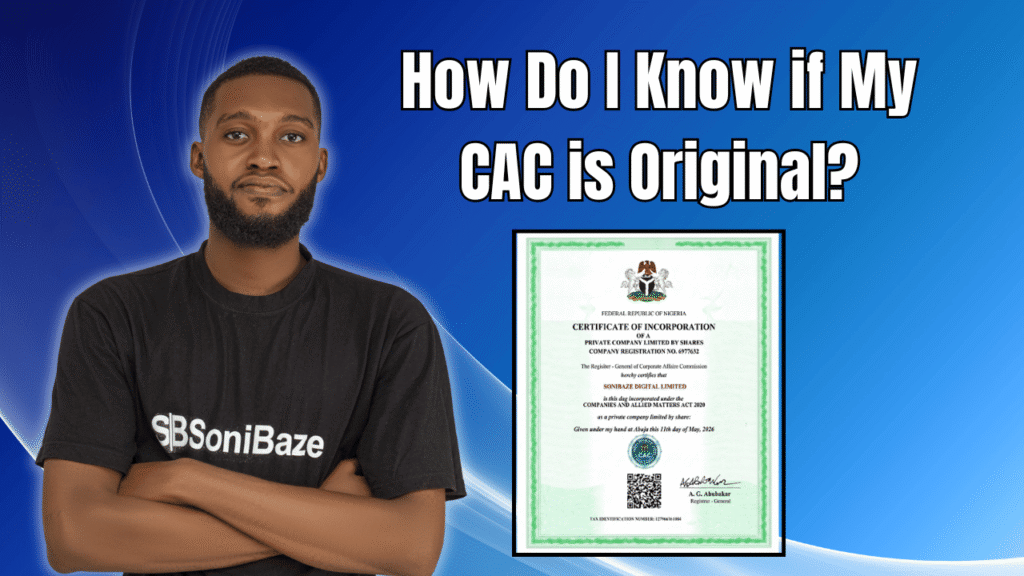
A fake CAC certificate is more common in Nigeria than most people want to admit. Fraudsters use them to open bank accounts, win contracts, and establish fake legitimacy before disappearing with deposits or advance payments. If you are about to do business with a company, or if you just received your own certificate from an agent and want to confirm it is genuine, knowing how to verify a CAC certificate is a practical skill that takes less than five minutes.
This article covers exactly how to check if a CAC certificate is original, the verification methods available, and what to look for if something seems off.
Obtain Your CAC Certificate
Let our team handle your CAC registration and help you obtain your certificate without stress. From business name registration to company incorporation.
What a Genuine CAC Certificate Contains
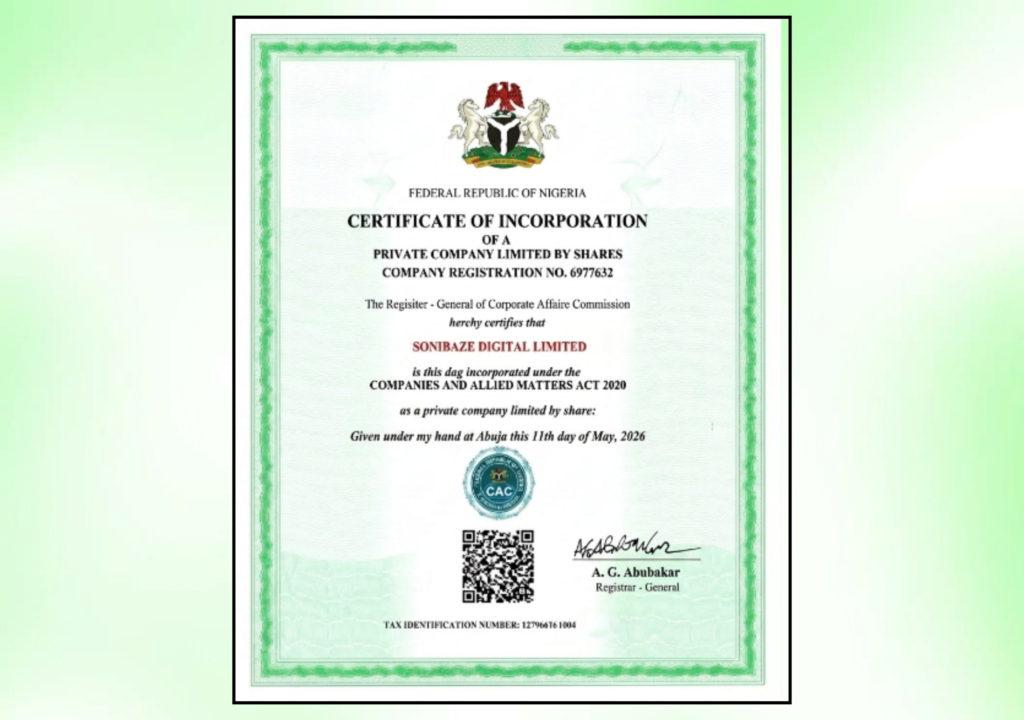
Before verifying anything, it helps to know what a legitimate certificate actually looks like. A genuine CAC certificate issued by the Corporate Affairs Commission should contain the following:
| Detail | What to Check |
|---|---|
| Company or business name | Exact registered name |
| Registration number | RC number (companies) or BN number (business names) |
| Date of registration | The official incorporation or registration date |
| Type of entity | Business name, limited liability company, NGO, etc. |
| CAC stamp and signature | Official commission seal on the document |
| CAC letterhead | Issued on official CAC-branded stationery |
If any of these are missing, inconsistent with what the business claims, or look like they were edited, that is already a reason to investigate further before proceeding.
Method 1: Verify Online Using the CAC Public Search Portal
This is the fastest and most reliable method. The Corporate Affairs Commission provides a free public search tool that lets anyone check whether a business is registered and confirm its details in real time.
Steps to Verify
Step 1. Visit the official CAC search portal at https://search.cac.gov.ng
Step 2. On the search page, enter either the business name or the registration number shown on the certificate. If you are searching by name, avoid typing “Ltd” or “Nig” at the end — enter just the core name for broader results.
Step 3. Hit search and wait for results. The portal typically returns results in under ten seconds.
Step 4. Review the results. A registered business will show its RC or BN number, company type, registration status, and whether it is active or inactive.
Step 5. Cross-reference what the portal shows with what is printed on the certificate in hand. The registration number, company name, date of incorporation, and business type should all match exactly.
If the portal shows no record for that company name or number, the certificate is either fake, the registration never completed, or there is a data entry error worth investigating further.

Method 2: Check Through the CAC Main Website
The Corporate Affairs Commission also provides a Public Search section directly on its main website at https://www.cac.gov.ng. Navigate to the Public Search option from the homepage and follow the same process as above. Both portals pull from the same database, so the results are consistent.
Method 3: Visit a CAC Office Directly
If you need an official confirmation, particularly for legal purposes or high-value transactions, visiting a CAC office gives you a physical, authoritative record. CAC has offices in all 36 states and the FCT.
At the office, inform the officer on duty that you want to verify a business registration. You will be asked to provide the company name or registration number. For basic verification, there is no charge. If you need certified copies of the registration document or a status report, a fee applies, typically between ₦1,000 and ₦5,000 depending on the document type.
Method 4: Request a CAC Status Report
A Status Report is a document issued directly by CAC that confirms a company’s registration details, current status, directorship, share capital, and registered address. It is a more detailed alternative to the online public search. Banks, government agencies, and serious business partners often request this document as proof of legitimacy.
If you are verifying a third party, asking them to provide their CAC certificate alongside a recent status report gives you two documents to cross-reference. A legitimate business will have no problem producing both.
Obtain Your CAC Certificate
Let our team handle your CAC registration and help you obtain your certificate without stress. From business name registration to company incorporation.
What the Verification Results Tell You
| Portal Result | What It Means |
|---|---|
| Registered / Active | Business is officially registered and in good standing |
| Registered / Inactive | Registration exists but the company may not be compliant with annual returns |
| No record found | Business is not in CAC’s database — potential fake or incomplete registration |
| Name mismatch | Name on certificate does not match portal — possible forgery or name change |
| RC number mismatch | Certificate may have been altered or fabricated |
A status of Inactive does not automatically mean the business is fraudulent. It may simply mean annual returns are overdue. But it is worth asking about, especially if you are entering a significant transaction.
Red Flags That Suggest a Fake Certificate
Not every fake is caught immediately through online search. Some fraudsters use real registration numbers that belong to different companies. Beyond the portal check, watch for these signs:
Low print quality is one of the most common tells. Genuine CAC certificates are printed on good paper with a clear, unsmudged CAC seal. A certificate that looks like it was printed on a home printer, has blurry text, or shows signs of image editing is suspicious.
Mismatched details are another sign. If the business operates as a limited liability company but the certificate says “business name,” or if the RC number format does not match the entity type, investigate further before proceeding.
An agent refusing to let you verify is itself a red flag. Any legitimate business owner or agent should have no objection to you confirming registration status on the CAC portal before a transaction. Resistance or deflection on this point is worth noting.
What to Do If You Cannot Find Your Own Certificate Online
If you registered through an agent and your certificate is not showing up in the CAC database, it is possible the registration process was not completed, or that the agent collected your documents and funds without actually filing. This situation is more common than it should be.
Contact the Corporate Affairs Commission directly or visit the nearest CAC office with your application receipt and any correspondence from your agent. If the registration was genuinely filed, CAC can confirm it. If it was not, you will need to start the process again through the official portal at https://pre.cac.gov.ng or with a verified agent.
Frequently Asked Questions
Is the CAC verification portal free to use?
Yes. The CAC Public Search portal at https://search.cac.gov.ng is completely free and accessible without creating an account. Anyone can search for any registered business in Nigeria.
What if the business was recently registered and does not appear in the search yet?
Newly registered businesses can take a few days to appear in the CAC public database after approval. If the business was registered within the last three to seven working days, try again after that window has passed before assuming the certificate is fake.
Can I verify a business name registration the same way as a limited company?
Yes. The same CAC portal handles both RC numbers (for incorporated companies) and BN numbers (for registered business names). The search process is identical — enter the name or registration number and review the results.
What is a Certified True Copy and do I need one?
A Certified True Copy, commonly called a CTC, is an official replica of a CAC document that the commission certifies as accurate. It is legally valid for court proceedings, international transactions, and formal documentation requirements. If you need a replacement for a lost certificate or want something legally certifiable, a CTC is the document to request from CAC directly.
What does it mean if the company is registered but listed as inactive?
Inactive status generally means the company has not filed its annual returns with CAC. The company may still be legitimately operating, but it is not fully compliant. For everyday transactions, this may be acceptable. For formal partnerships, contracts, or financial transactions, you may want to request confirmation that annual returns are being filed before proceeding.
Can a real RC number be used on a fake certificate?
Yes. A fraudster can take a genuine RC number belonging to a registered company and print it on a fake certificate with a different company name. This is why cross-referencing the name on the certificate with the name the portal returns for that RC number matters just as much as confirming the number exists.
Conclusion: Verification Takes Two Minutes and Can Save Serious Losses
The CAC Public Search portal exists specifically so that anyone in Nigeria can confirm whether a business is real before trusting it. The process takes two minutes, costs nothing, and eliminates the most common avenue through which business fraud happens in Nigeria.
Before signing a contract, transferring funds, or entering a formal partnership with any company, run the name or RC number through https://search.cac.gov.ng. If the details match, proceed with confidence. If they do not, you have saved yourself a significant problem.
Obtain Your CAC Certificate
Let our team handle your CAC registration and help you obtain your certificate without stress. From business name registration to company incorporation.