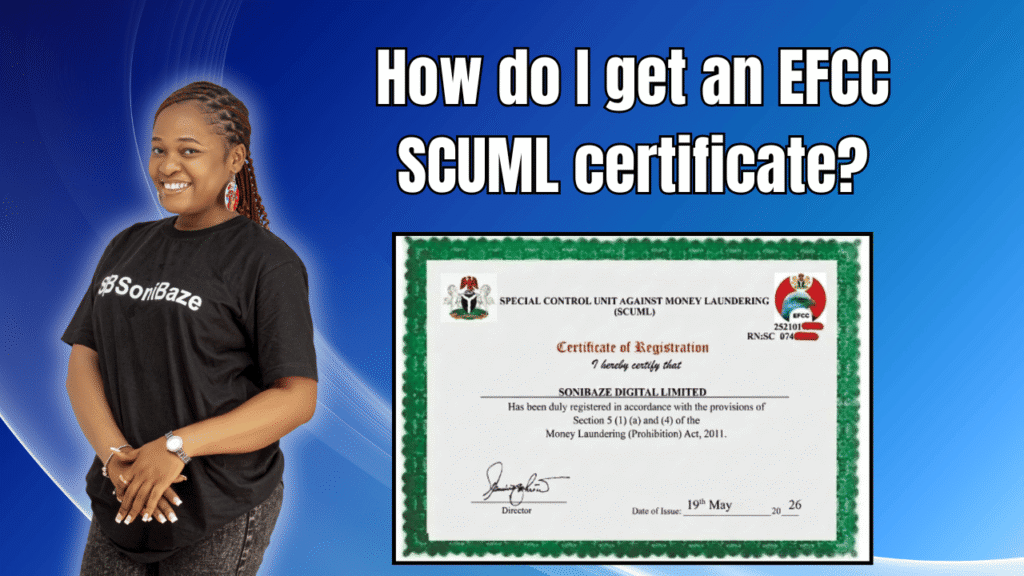
If your business has ever been told to “provide your SCUML certificate” before a bank account could be opened, you are not alone. Many business owners in Nigeria run into this requirement for the first time when a bank compliance officer asks for it, and most have no idea where to start.
SCUML certification is mandatory for a wide range of businesses, not just financial institutions. This article explains what SCUML is, who needs it, the documents required, and the exact steps to get certified.
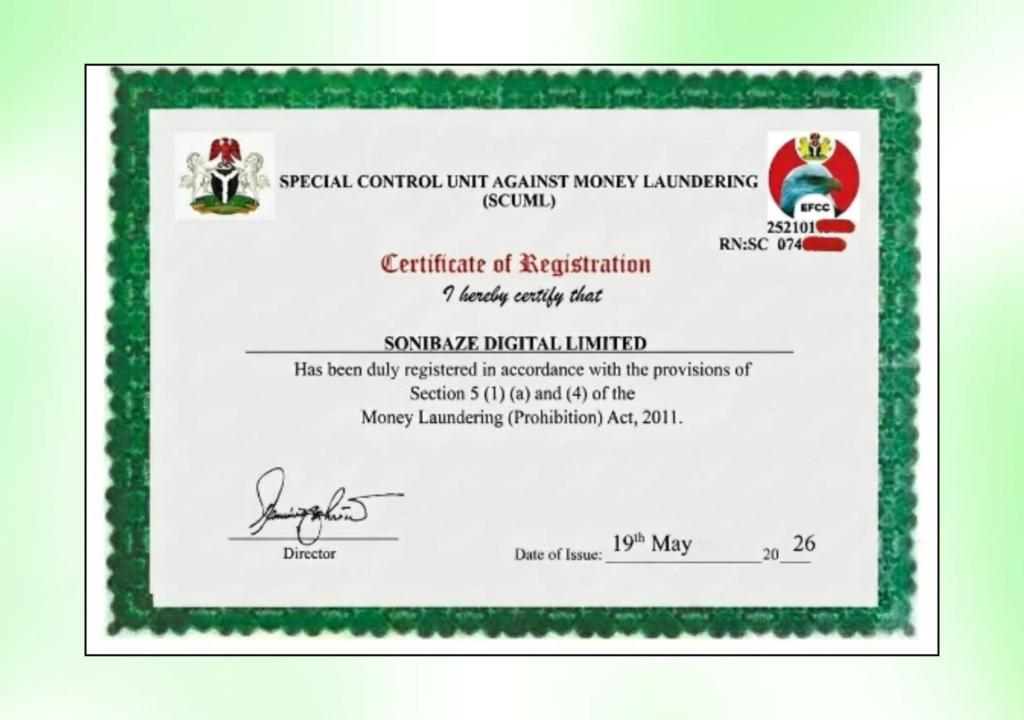
Obtain Your EFCC SCUML Certificate
Let us help you get your EFCC SCUML Certificate quickly and hassle-free. Our team provides fast, reliable support to ensure your SCUML registration is completed accurately and in compliance with regulatory requirements.
What Is SCUML?
SCUML stands for Special Control Unit Against Money Laundering. It operates under the Economic and Financial Crimes Commission, though it was created under the Money Laundering (Prohibition) Act to monitor Designated Non-Financial Institutions, often shortened to DNFIs.
In simple terms, the certificate confirms that your business is registered with the EFCC for anti-money laundering monitoring purposes. Banks require it before opening or maintaining a corporate account for businesses that fall into the DNFI category. Without it, your business account can be flagged, restricted, or refused outright.
Who Needs a SCUML Certificate?
A long list of business types fall under DNFI classification. If your business sits in any of the following categories, SCUML registration is not optional.
| Business Category | Examples |
|---|---|
| Accounting and audit firms | Chartered accountants, audit practices |
| Law firms | Legal practices and consultancies |
| Real estate | Real estate agents, estate surveyors and valuers |
| Car dealers | New and used vehicle dealerships |
| Hotels and hospitality | Hotels, lodges, event centres |
| Casinos and lottery businesses | Pool betting, casinos, lottery operators |
| Dealers in luxury goods | Jewellery, precious metals and stones |
| Supermarkets | Large retail stores |
| Construction companies | Building and civil engineering firms |
| Consulting companies | Business and management consultancies |
| Mortgage brokers | Mortgage and loan brokerage firms |
| Clearing and forwarding | Freight forwarding companies |
| Tax consultants | Tax advisory firms |
| Mechanized farming | Large-scale agricultural operations |
| Non-profit organizations | NGOs, charities, faith-based organizations |
If you fall outside this list, your business may not need SCUML. But if your bank flags your account for it, it usually means they have classified your business under one of these categories based on your CAC registration.
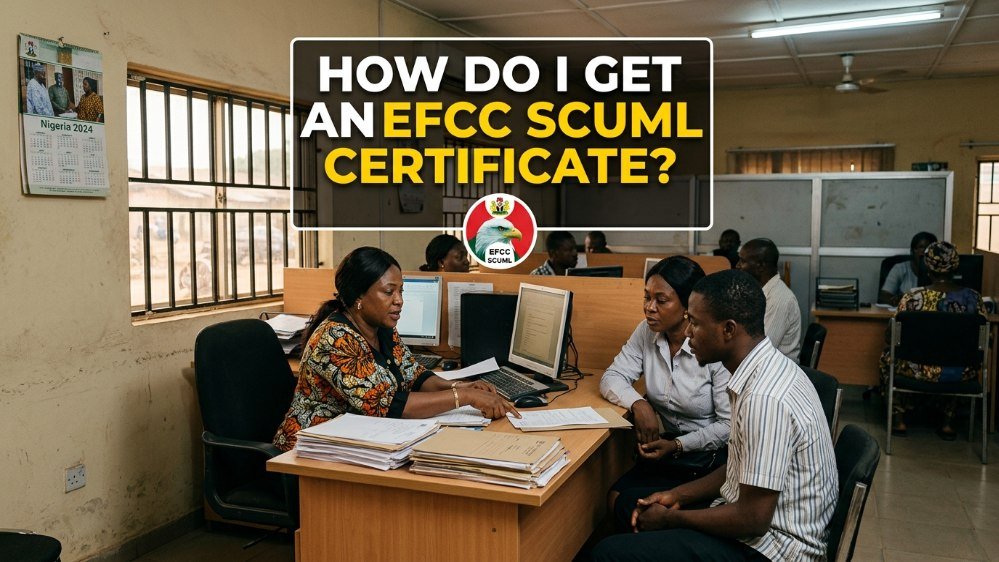
Documents Required for SCUML Registration
The exact documents depend on whether your business is registered as a Limited Liability Company or a Business Name, and on your specific sector. Below is the baseline requirement.
| Business Structure | Core Documents Required |
|---|---|
| Limited Liability Company | Certificate of Incorporation, Memorandum and Articles of Association, Status Report (CAC 1.1 or CAC 7 and CAC 2), TIN printout |
| Business Name | Certificate of Registration of Business Name, Status Report (Form BN-01), TIN printout |
On top of these, most applicants also need their Bank Verification Number, a valid means of identification, and bank account details for at least one proprietor or director.
Some categories carry additional requirements. Law firms need a Call to Bar certificate. Accounting firms need ICAN, ANAN, or ACCA certification. Real estate businesses need certification from the Nigerian Institution of Estate Surveyors and Valuers. Car dealers need evidence of registration with the Association of Motor Dealers of Nigeria. Hotels need registration with the Hotel Owners Forum Abuja or the relevant state association. Check the category-specific requirement before you start, since a missing additional document is the most common cause of rejection.
How to Get a SCUML Certificate: Step by Step
Step 1: Confirm Your Business Category
Before applying, identify which DNFI category your business falls under. The SCUML portal lists categories such as accounting firms, real estate, hotels, construction companies, and non-profits. Your category determines exactly which documents you need, so get this right first.
If you are unsure which category applies, check the business activity listed on your CAC certificate. That description usually points directly to the correct SCUML category.
Step 2: Gather Your Documents
Collect your CAC documents, TIN printout, BVN, valid ID, and bank account details. If your category requires an additional professional certificate or association membership, get that ready too. Scan everything into clear PDF or image files before you start the online application, since the portal requires uploads rather than physical submissions.
Step 3: Register on the SCUML Portal
Visit the official SCUML portal and select “Register Online.” Choose your business category from the dropdown list, which will then display the specific documents required for that sector. Read the registration guideline carefully before proceeding, since the portal requires you to confirm you have read it before continuing.
Step 4: Fill the Online Application Form
Complete the form with your business details, including company name, CAC registration number, business address, and the names and BVNs of beneficial owners or proprietors. Accuracy matters here. Any mismatch between what you enter and what appears on your CAC documents can delay or stall your application.
Step 5: Upload Required Documents
Upload each document in the format the portal specifies. Make sure scans are legible and that names on the documents match what you entered in the form. Blurry uploads or mismatched names are common reasons applications get sent back for correction.
Step 6: Submit and Wait for Review
Once submitted, the EFCC reviews the application and may request clarification or additional documents. SCUML certificates are issued free of charge, so be cautious of anyone asking for payment to “process” your certificate through the official channel. Processing through the portal directly typically takes three to four weeks, depending on how complete your application is.
Step 7: Download Your Certificate
Once approved, your SCUML certificate becomes available for download directly from the portal. Save a digital copy and print a physical copy, since banks often request both when verifying your business account.
Obtain Your EFCC SCUML Certificate
Let us help you get your EFCC SCUML Certificate quickly and hassle-free. Our team provides fast, reliable support to ensure your SCUML registration is completed accurately and in compliance with regulatory requirements.
Common Reasons Applications Get Delayed
Most delays come down to avoidable mistakes. Mismatched business names between the CAC certificate and the application form cause immediate flags. Missing the additional sector-specific document, such as a professional certificate for accountants or a Call to Bar certificate for lawyers, sends the application back. Outdated CAC status reports also cause problems, since SCUML checks that your business registration is current and not lapsed.
Submitting an incomplete TIN printout is another frequent issue. The printout needs to clearly show your TIN, business name, and registration details exactly as they appear on your other documents.
Frequently Asked Questions
Is the SCUML certificate free?
Yes. The EFCC issues SCUML certificates free of charge through the official portal. If anyone demands a fee directly tied to “issuing” the certificate, that is not an official EFCC charge. Some consultants charge a service fee for handling the application on your behalf, which is separate from the certificate itself.
How long does SCUML registration take?
Processing through the portal typically takes three to four weeks if your documents are complete and accurate. Applications with missing or mismatched documents take longer, since they get sent back for correction before review can continue.
Can I register for SCUML myself, or do I need a consultant?
You can register yourself directly on the SCUML portal. A consultant becomes useful if you are unsure which category your business falls under, if you are missing documents and need help sourcing them, or if you simply want someone to manage the process while you focus on running your business.
What happens if my business needs SCUML but I don’t register?
Banks can restrict or refuse to open a corporate account for businesses classified as DNFIs without a valid SCUML certificate. Existing accounts can also be flagged or placed under restrictions during compliance reviews. For businesses that rely on smooth banking operations, operating without SCUML when required creates an ongoing operational risk.
Does SCUML registration expire?
SCUML certificates do not require frequent renewal in the same way as some licenses, but your underlying CAC registration must remain current and in good standing. If your CAC status changes, such as a change of business name or directors, you may need to update your SCUML registration to match.
Which businesses are most commonly surprised by the SCUML requirement?
Consultants, real estate agents, law firms, and NGOs are frequently caught off guard, often when a bank flags their account during a routine compliance check. Many of these businesses register with CAC without realizing their activity classification falls under a DNFI category that requires SCUML.
Conclusion: Get Ahead of the Requirement Before Your Bank Flags You
SCUML registration is one of those compliance steps that businesses tend to handle reactively, usually after a bank account gets restricted. Getting ahead of it means one less disruption to your operations later.
The process itself is straightforward once you know your category and have your documents ready. Confirm where your business fits, gather the right paperwork, and submit through the official portal. The certificate is free, the process is online, and the only real cost is the time it takes to get your documents organized correctly the first time.
Obtain Your EFCC SCUML Certificate
Let us help you get your EFCC SCUML Certificate quickly and hassle-free. Our team provides fast, reliable support to ensure your SCUML registration is completed accurately and in compliance with regulatory requirements.