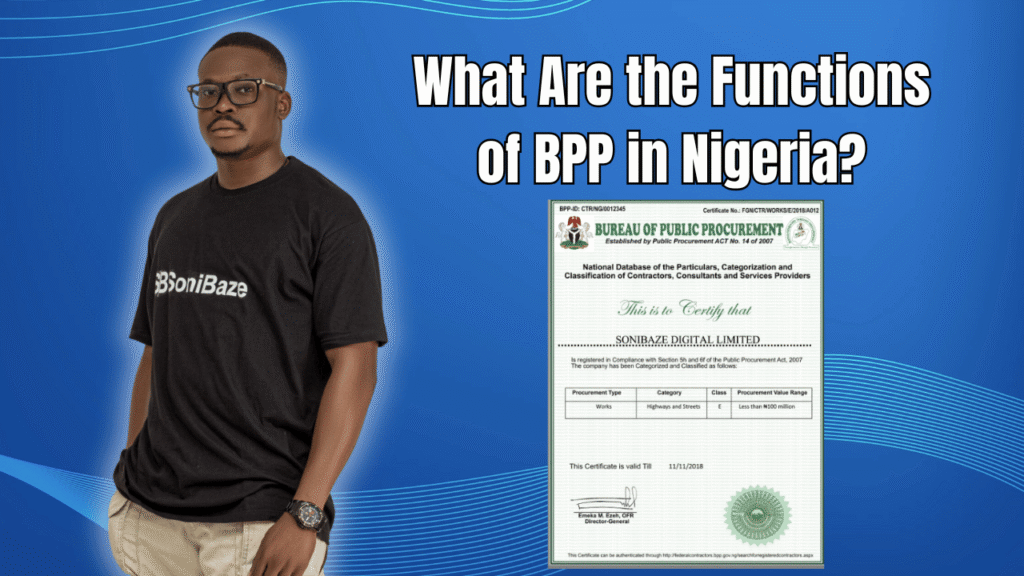
Nigeria’s public procurement system has had a complicated history. Before 2007, contract awards at the federal level were largely arbitrary, budgets were routinely inflated, and accountability was nearly absent. The Bureau of Public Procurement was created specifically to fix that, and it remains the central regulatory authority over how the Federal Government spends money on goods, works, and services.
This article covers what the BPP actually does, function by function, and why it matters for businesses that work with or intend to work with the Federal Government.
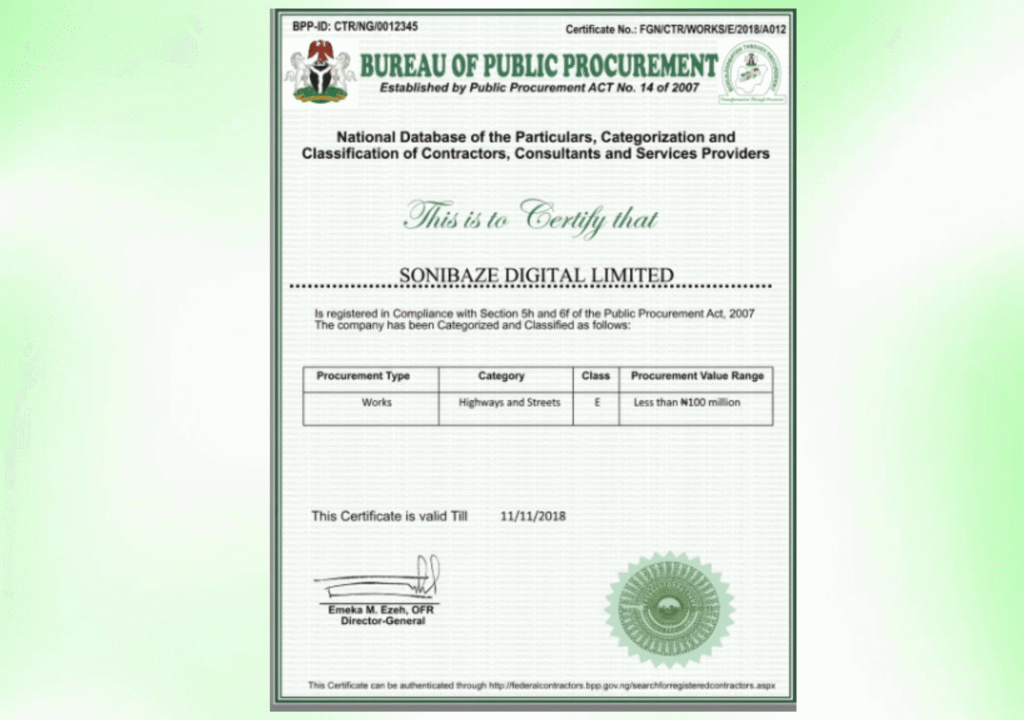
Obtain Your BPP Certificate
Let us help you obtain your Bureau of Public Procurement (BPP) Registration Certificate quickly and hassle-free. Our experts provide reliable support throughout the registration process, ensuring your business is ready to participate in public procurement opportunities.
Background: Where BPP Came From
The push for procurement reform in Nigeria gained momentum after a World Bank Country Procurement Assessment survey in 1999 established a direct link between weak procurement procedures, corruption, and poor infrastructure development. In 2001, the Federal Government responded by setting up the Budget Monitoring and Price Intelligence Unit, commonly called Due Process, to begin enforcing standards in government contract awards.
That unit later became the Bureau of Public Procurement after the Public Procurement Act was signed into law in 2007. The Act gave the bureau a formal legal mandate, defined its powers, and embedded it permanently into the federal procurement architecture.
BPP’s mission, as the bureau states it, is to professionalise procurement in a way that ensures transparency, efficiency, competition, integrity, and value for money in support of national development. Every function listed in the Act flows from that mission.
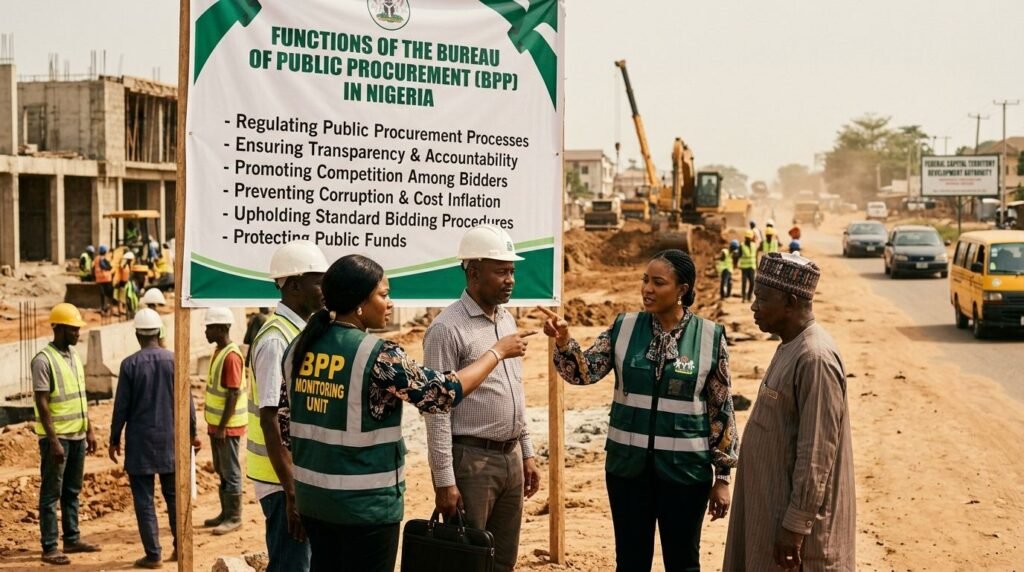
Functions of BPP in Nigeria
1. Formulating Procurement Policies and Guidelines
The first and most foundational function of BPP is formulating the general policies and guidelines that govern public sector procurement across the Federal Government. These guidelines are developed by the bureau and submitted to the National Council on Public Procurement for approval before they take effect.
This means BPP does not just enforce rules, it creates them. Every standard bidding document, every procurement threshold, and every procedural requirement that a Federal Ministry or Agency must follow originates with the bureau.
2. Certifying Federal Procurement Before Contract Award
One of BPP’s most significant powers is the authority to certify federal procurement prior to the award of contracts, subject to the thresholds set by the Council. In practice, this means that contracts above certain financial thresholds cannot be awarded without BPP issuing a No Objection certificate.
This function is what gives the bureau direct influence over individual procurement decisions. A ministry that awards a contract without BPP certification where one is required has acted outside the law, and the contract can be nullified. For businesses bidding on large federal contracts, this is the function they interact with most directly.
3. Supervising Procurement Policy Implementation
Formulating policy is only useful if it is actually followed. BPP supervises the implementation of established procurement policies across all Federal Ministries, Departments, and Agencies. This means the bureau monitors whether procuring entities are following the procedures they are required to follow, not just whether they have submitted paperwork.
Where there are persistent or serious breaches, BPP can recommend sanctions to the Council, including the suspension of officers involved, the discipline of accounting officers, or even the temporary transfer of a procuring entity’s procurement function to a third party.
4. Price Monitoring and the National Price Database
BPP monitors the prices of tendered items and maintains a national database of standard prices. This function addresses one of the most common forms of procurement fraud: contract inflation. By tracking what goods and services actually cost across federal procurement, the bureau creates a reference point that procuring entities and auditors can use to identify when a contract price is unreasonably high.
The national price database also helps standardise costs across MDAs so that the same item is not purchased at wildly different prices by different government departments.
5. Publishing the Procurement Journal
The bureau publishes the details of major contracts in the procurement journal, in both print and electronic formats, and maintains an archival system for all editions. This publication serves as a public record of significant government procurement activity.
Publishing contract details is a transparency mechanism. It allows the public, civil society organisations, and oversight bodies to see what contracts have been awarded, to whom, and at what value.
6. Maintaining the National Database of Contractors and Service Providers
BPP maintains the National Database of Federal Contractors, Consultants and Service Providers, accessible at federalcontractors.bpp.gov.ng. Every company that intends to do business with the Federal Government must register on this database, and BPP is responsible for keeping the information accurate, categorised, and current.
This database is also how the bureau enforces accountability at the vendor level. Companies that have been debarred or sanctioned are flagged in the system, preventing them from participating in federal procurement.
7. Collating and Archiving Federal Procurement Plans
BPP collates and maintains in an archival system all federal procurement plans and information submitted by procuring entities. Under the law, MDAs are required to prepare annual procurement plans and submit them to the bureau. This gives BPP visibility over what each agency intends to procure, creating an early warning system for procurement irregularities before contracts are even awarded.
The bureau’s digital platform, NOCOPO (the Nigerian Open Contracting Portal), supports this function by allowing MDAs to submit procurement plans and records electronically, making the data accessible to the public.
8. Running a Single Government Procurement Portal
BPP is responsible for establishing and maintaining a single internet portal that serves as the primary and definitive source of all information on government procurement. This covers all public sector procurement information at all times, not just selected announcements.
The intent is to centralise procurement information so that vendors, citizens, and oversight bodies have a single, reliable place to find tenders, contract awards, procurement plans, and related data. The NOCOPO platform is the bureau’s implementation of this function.
9. Capacity Building and Training
BPP coordinates relevant training programs to build institutional capacity across the procurement profession. The bureau organises workshops, training programmes, and certifications for procurement officers in MDAs to improve their understanding of modern procurement practices.
The bureau also runs the Nigerian Procurement Certification Programme (NPCP), a professional registry open to Nigerian citizens practising procurement across public and private sectors. This function is about making sure the people executing procurement have the skills to do it correctly, not just the authority to do it.
10. Conducting Procurement Research and Surveys
BPP conducts procurement research and surveys to stay informed about how the system is working and where it needs adjustment. This includes reviewing the socio-economic effects of procurement policies and advising the Council accordingly.
Research findings feed back into policy development, allowing the bureau to update its guidelines based on evidence rather than assumption.
11. Updating Standard Bidding and Contract Documents
The bureau updates standard bidding and contract documents to reflect current procurement practices and legal requirements. Standardised documents reduce the room for manipulation at the procuring entity level by setting out exactly what a bid or contract should contain. Without standardisation, individual agencies could design tender documents in ways that favour specific vendors.
12. Preventing Fraud and Applying Sanctions
BPP has the power to prevent fraudulent and unfair procurement practices and to apply administrative sanctions where necessary. This includes nullifying procurement proceedings or contract awards that contravene the Public Procurement Act, calling for the production of accounts and documents, examining persons in connection with any procurement proceeding, and acting on complaints filed by aggrieved parties.
For companies that have been treated unfairly in a procurement process, this is the function that gives them a formal channel to seek redress.
13. Conducting Procurement Audits
BPP conducts procurement audits and submits reports to the National Assembly on a biannual basis. Audits provide a structured mechanism for reviewing whether past procurement decisions complied with the law. Submitting the reports to the National Assembly is what makes the bureau accountable to a higher oversight authority rather than operating without external review.
Obtain Your BPP Certificate
Let us help you obtain your Bureau of Public Procurement (BPP) Registration Certificate quickly and hassle-free. Our experts provide reliable support throughout the registration process, ensuring your business is ready to participate in public procurement opportunities.
BPP Functions at a Glance
| Function | What It Does |
|---|---|
| Policy formulation | Creates the rules and guidelines all MDAs must follow |
| Contract certification | Issues No Objection for contracts above set thresholds |
| Policy supervision | Monitors whether MDAs are following procurement procedures |
| Price monitoring | Tracks market prices and maintains a national price database |
| Procurement journal | Publishes major contract details for public record |
| Contractor database | Maintains the national register of federal vendors |
| Procurement plan archive | Collates annual MDA procurement plans and information |
| Government portal | Operates the centralised procurement information platform |
| Capacity building | Trains procurement officers and runs the NPCP certification programme |
| Research | Studies the effects of procurement policies and advises the Council |
| Standard documents | Updates bidding and contract document templates |
| Fraud prevention and sanctions | Investigates and punishes procurement violations |
| Procurement audits | Reviews compliance and reports to the National Assembly biannually |
Why These Functions Matter for Businesses
A company that understands what BPP does is better positioned to navigate the Federal Government procurement space. Knowing that BPP maintains the price database tells you that inflated quotations are tracked. Knowing that BPP can nullify contracts tells you that cutting corners in the process has real consequences. Knowing that BPP runs a complaint procedure means there is a formal route to challenge unfair tender processes.
Registration on the national contractor database is step one. Understanding how the bureau operates after that is what separates businesses that bid competitively from those that get caught off guard.
Frequently Asked Questions
Is BPP the same as Due Process?
Not exactly. Due Process was the informal name for the Budget Monitoring and Price Intelligence Unit (BMPIU) established in 2001. When the Public Procurement Act was signed into law in 2007, that unit was formally restructured into the Bureau of Public Procurement. The two terms refer to different stages of the same procurement reform effort, with BPP being the current and legally established version.
Does BPP have authority over state government procurement?
BPP’s statutory mandate covers federal procurement only. States that have enacted their own public procurement laws may have equivalent state-level bureaus, as Adamawa State has done, but these are separate bodies. BPP’s oversight does not extend to state government contracts.
Can BPP cancel a contract that has already been awarded?
Yes. Under the Public Procurement Act, BPP has the power to nullify the whole or any part of any procurement proceeding or contract award that contravenes the law. This power applies even after a contract has been signed, though in practice the consequences are more straightforward when the intervention happens before execution begins.
What is NOCOPO?
NOCOPO stands for the Nigerian Open Contracting Portal. It is BPP’s digital platform for procurement transparency, where MDAs submit procurement plans, publish tender notices, and record contract awards. It is the implementation of BPP’s mandate to maintain a single government procurement portal.
How does BPP handle procurement complaints?
Aggrieved parties in a procurement process, whether a losing bidder or a party affected by an irregular contract award, can file complaints with BPP. The bureau is required to act on complaints in accordance with the procedures set out in the Public Procurement Act. This gives businesses a formal channel outside of the courts to challenge decisions they believe were unlawful.
Where can companies contact BPP directly?
BPP’s head office is at Plot 256, Zone AO, Off Herbert Macaulay Way, behind Unity Bank, Central Business District, FCT, Abuja. For contractor database support, the bureau can be reached at ccspsupport@bpp.gov.ng. General enquiries go to info@bpp.gov.ng.
Conclusion: BPP Sits at the Centre of Federal Procurement
Every time a Federal Ministry buys a vehicle, awards a construction contract, or hires a consulting firm, BPP’s framework governs how that happens. The bureau sets the rules, certifies major contracts, monitors prices, trains procurement officers, publishes records, and audits compliance. It is not a peripheral body. It is the architecture of public procurement in Nigeria at the federal level.
For businesses that want to win federal contracts, understanding BPP’s functions is not optional background knowledge. It is practical information that affects how bids are structured, what documents are required, and what recourse exists when something goes wrong.
Obtain Your BPP Certificate
Let us help you obtain your Bureau of Public Procurement (BPP) Registration Certificate quickly and hassle-free. Our experts provide reliable support throughout the registration process, ensuring your business is ready to participate in public procurement opportunities.