If you are considering a career in tech, front end development is one of the most accessible entry points in Nigeria right now. Before you commit time and money to learning HTML, CSS, JavaScript, and a framework, you want to know what the job actually pays at the start.
This guide covers the junior front end developer salary in Nigeria, how pay varies by location and employer type, what remote work offers, and what you can do to earn more as you grow.
Ready to start a career in web development? Learn and start your tech career today.
What Does a Junior Front End Developer Do?
A junior front end developer builds the parts of a website or app that users see and interact with. The role involves writing HTML, CSS, and JavaScript, working with design files to implement interfaces, fixing visual bugs, and ensuring pages render correctly across different devices and screen sizes.
At the junior level, you are expected to know the basics well and possibly have some experience with one modern framework, most commonly React or Vue.js. Most employers place the junior threshold at less than two years of professional experience.
Junior Front End Developer Salary in Nigeria: The Numbers
Salary data for junior front end developers in Nigeria currently comes from multiple sources, and the figures vary depending on the methodology. Here is what the most referenced platforms report.
Local (Naira-Based) Salaries
Junior front end developers in Nigeria typically earn between ₦200,000 and ₦500,000 per month for local roles. This range applies to those with under two years of experience who can demonstrate practical HTML, CSS, JavaScript, and at least basic framework knowledge.
Glassdoor’s Lagos-specific data puts the median closer to ₦120,000 per month, with the typical range sitting between ₦103,965 and ₦154,326 monthly, based on reported salaries. The gap between this figure and the ₦200,000 to ₦500,000 range reflects the difference between what is actually being reported by employees in formal roles versus what negotiated or market-rate offers look like for candidates with demonstrable skills.
PayScale data shows that an early career front end developer with one to four years of experience earns an average total compensation of ₦1,236,504 per year, which works out to roughly ₦103,000 per month. This lower figure is weighted by some very early internship-level positions.
The realistic take-home for a junior front end developer with a solid portfolio, joining a funded startup or mid-size company in Lagos or Abuja, sits closer to ₦150,000 to ₦300,000 per month in 2025 and into 2026.
Salary by Experience Band
| Experience Level | Monthly Salary Range | Notes |
|---|---|---|
| Intern / Trainee (0 months) | ₦40,000 – ₦80,000 | Stipend-based roles, mostly Lagos |
| Entry Level (0 – 1 year) | ₦80,000 – ₦200,000 | Basic HTML/CSS/JS knowledge |
| Junior (1 – 2 years) | ₦150,000 – ₦350,000 | Framework experience expected |
| Junior (with React/Vue) | ₦250,000 – ₦500,000 | Strong portfolio required |
| Remote (junior, dollar-paying) | ₦1,000,000 – ₦2,000,000 | $1,000 – $2,000 equivalent |
How Location Affects Your Pay
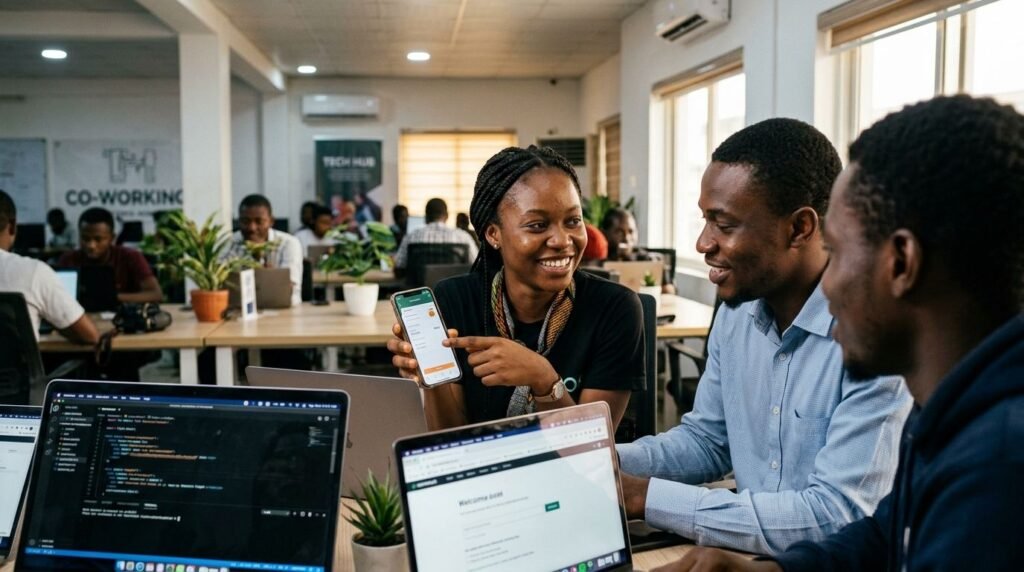
Lagos remains the highest-paying city for front end developers in Nigeria because of the concentration of funded startups, fintech companies, and multinational tech operations. Glassdoor reports the average front end developer salary in Lagos at ₦208,333 per month, with top earners at the 90th percentile reaching ₦940,000 monthly.
Abuja offers competitive salaries particularly within government technology projects, larger corporations, and agencies working on public sector digital contracts. Pay in Abuja tends to be slightly lower than Lagos for pure product companies but closer when the role involves contract or consultancy work.
Port Harcourt and other cities pay less on average, though remote-first roles have made geography less of a barrier for developers willing to work with international clients.
Remote Salaries for Junior Front End Developers in Nigeria
Junior front end developers working remotely for foreign companies typically earn between $1,000 and $2,000 per month, the equivalent of roughly ₦1,000,000 to ₦2,000,000. These roles are more competitive and usually require a strong portfolio, good written communication skills, and familiarity with tools like GitHub, Slack, and Figma.
Platforms commonly used to land these roles include Upwork, Toptal, LinkedIn, and Contra. The reality is that most remote junior roles lean toward candidates who can already demonstrate shipped projects, not just coursework certificates.
Factors That Affect Junior Front End Developer Salary in Nigeria
Several variables determine where your offer lands within the ranges above.
Skills and stack depth. Candidates who know only HTML and CSS will earn less than those who can work confidently in React, use Git properly, and understand basic API integration. Each additional skill you can demonstrate moves the number upward.
Portfolio quality. Nigerian employers at the junior level rarely hire on certificates alone. A portfolio of three to five live or documented projects signals readiness in a way that a certificate does not.
Employer type. Funded startups and product companies tend to pay more than traditional agencies or small businesses. Government projects and NGOs often offer stability but tend to sit toward the lower end of the range.
City of employment. As covered above, Lagos consistently pays more for the same role than most other Nigerian cities.
Negotiation. Many junior developers in Nigeria accept the first offer made. Researching market rates before negotiating and communicating your portfolio clearly can make a material difference to your starting salary.
Ready to start a career in web development? Learn and start your tech career today.
Junior vs Mid-Level vs Senior: Salary Trajectory
Understanding where the junior salary fits in the broader career trajectory helps you plan realistically.
| Career Stage | Experience | Monthly Salary Range |
|---|---|---|
| Junior | 0 – 2 years | ₦100,000 – ₦500,000 |
| Mid-Level | 3 – 5 years | ₦500,000 – ₦1,500,000 |
| Senior | 5+ years | ₦1,500,000 – ₦3,500,000+ |
| Remote (any level) | Skill-dependent | $1,000 – $5,000+ per month |
A mid-level front end developer in Nigeria typically has three to five years of experience, works independently, and is proficient in frameworks, version control, APIs, and performance optimization. The jump from junior to mid-level pay is often the most significant salary increase in a front end developer’s career.
How to Increase Your Salary as a Junior Front End Developer
The ceiling for a junior developer in Nigeria depends heavily on how quickly they acquire the right additional skills and where they apply them. A few practical steps make a consistent difference.
Learn React or Vue.js properly, not just surface-level tutorials. Most product companies in Nigeria and internationally build on React, and being able to work with component-based architecture puts you ahead of candidates who know only vanilla JavaScript.
Build a portfolio that includes real-use-case projects. A to-do app does not demonstrate much. A working e-commerce UI, a dashboard with real data, or a clone of a known product shows depth.
Apply for remote work early. The pay difference between a local junior role and a remote junior role earning in dollars can be as much as five to ten times. The sooner you position for remote work, the faster your earnings grow.
Frequently Asked Questions
How much does a junior front end developer earn per month in Nigeria?
The range is wide. In local company roles, you can expect between ₦100,000 and ₦350,000 per month depending on your skills, the company size, and your location. For remote roles paying in dollars, junior developers typically earn between ₦1,000,000 and ₦2,000,000 monthly.
Is front end development a good career choice in Nigeria?
Yes, and the demand is growing. More businesses are investing in digital products, which increases the need for developers who can build and maintain web interfaces. The career also offers a clear path from junior to senior with corresponding salary increases.
Can a self-taught developer get hired as a junior front end developer in Nigeria?
Yes. Nigerian tech hiring at the junior level is largely portfolio-driven. Companies care more about what you can build than where you studied. A strong portfolio of projects carries more weight than a degree in many product and startup environments.
What skills do you need to get a junior front end developer job in Nigeria?
At minimum, employers expect working knowledge of HTML, CSS, and JavaScript. Most also want some experience with a framework, usually React or Vue.js, basic version control using Git, and the ability to work from a design file such as a Figma mockup.
Do front end developers in Nigeria earn more in Lagos than Abuja?
Generally yes, though the gap is narrowing for remote-ready roles. Lagos has more funded tech companies and startups, which drives higher average salaries. Abuja offers competitive pay within government tech, corporate digital projects, and agencies, but the top-end salaries are not as high as Lagos for product-focused roles.
How long does it take to become a junior front end developer in Nigeria?
With consistent, focused learning, most people reach a job-ready level within six to twelve months. Structured bootcamps and certification programs can accelerate this, particularly those with project-based curricula.
Conclusion: Front End Development Pays Well in Nigeria When You Position Yourself Correctly
The salary gap between the lowest and highest junior front end developer pay in Nigeria is enormous. Someone in an internship role at a small agency might earn ₦50,000 a month. Someone with a strong React portfolio, clear communication skills, and the ability to work with remote clients can earn ten times that or more, at the same level of experience.
The skills are learnable. The path is clear. What separates junior developers at the bottom of the range from those at the top is almost always portfolio quality, framework depth, and intentional job targeting.
SoniBaze Digital runs a tech academy in Karu, Abuja offering certified training in web development, digital marketing, UI/UX design, and more. Training is available physically, online, and as corporate programs. Visit sonibaze.ng to find out more and register for the next cohort.
Ready to start a career in web development? Learn and start your tech career today.