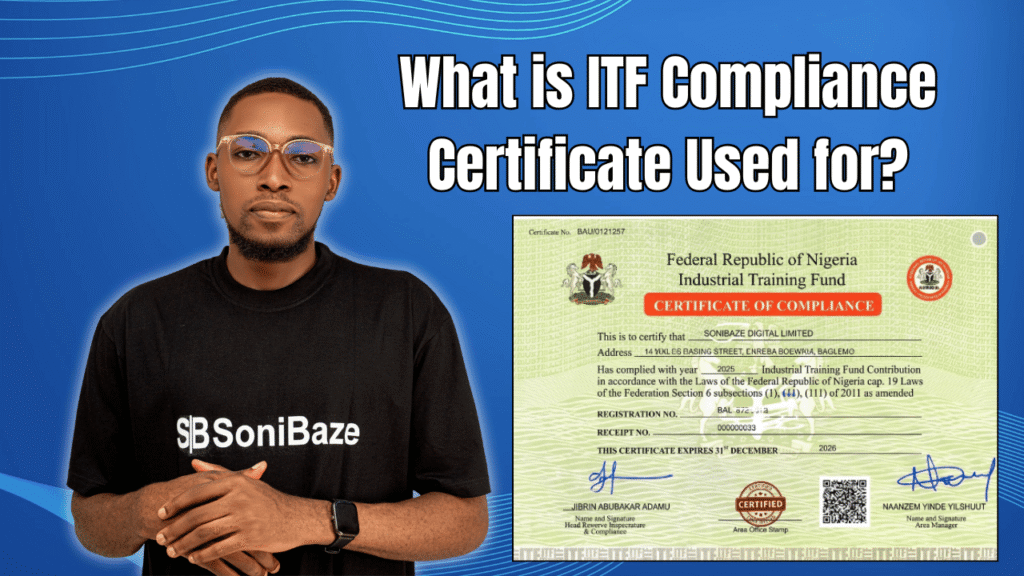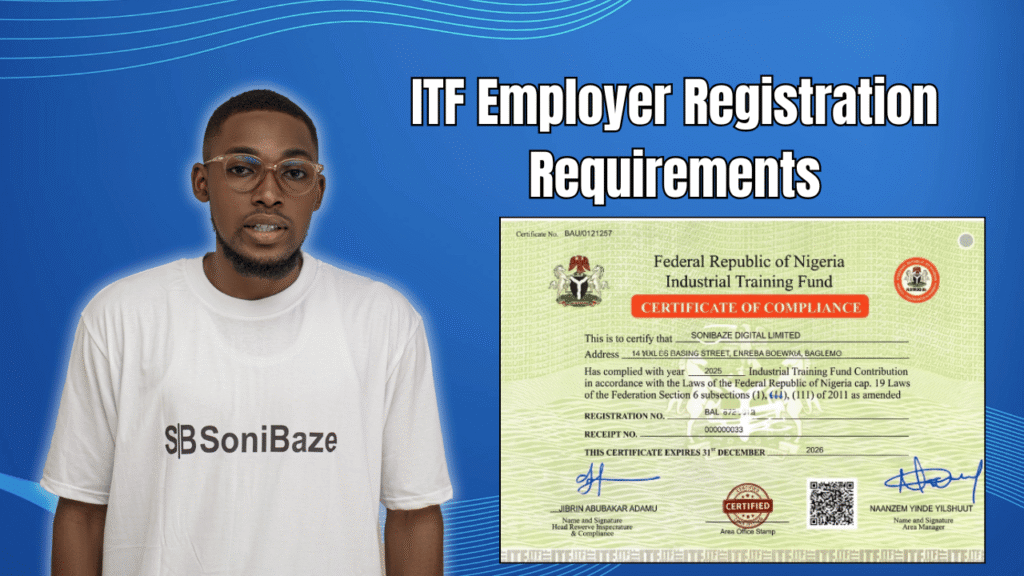
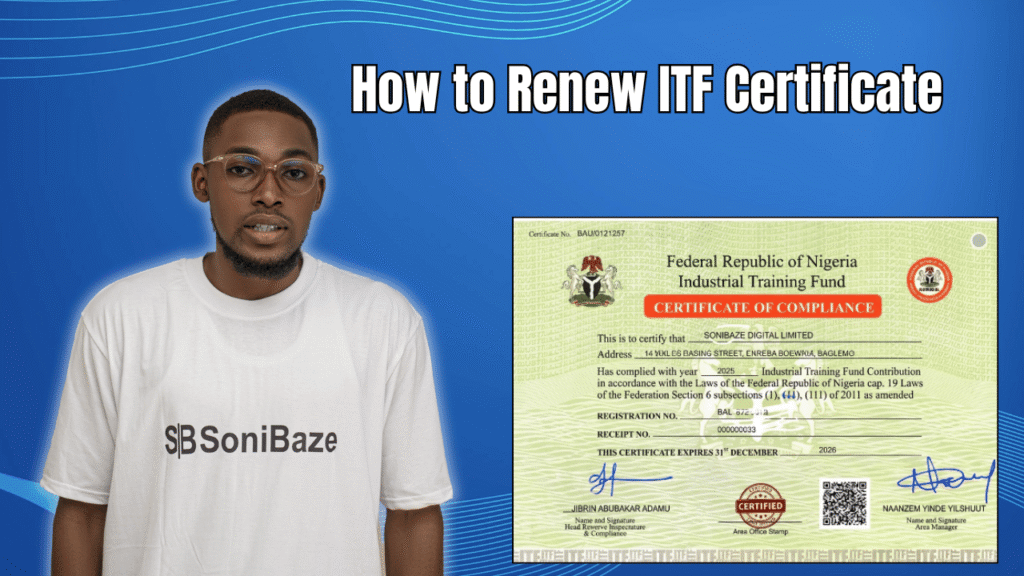
The ITF compliance certificate is not a one-time document. It expires. And if your business depends on government contracts or tenders, a lapsed certificate can get a bid disqualified before anyone even reads the proposal.
This article covers how the renewal process works, what documents you need, what it costs, and what happens if you let it slide past the deadline.
Obtain Your ITF Certificate
Let us help you obtain your Industrial Training Fund (ITF) Compliance Certificate quickly and hassle-free. Our experts provide reliable support throughout the application process, ensuring your business meets all statutory compliance requirements.
What Is the ITF Compliance Certificate?
The Industrial Training Fund is a federal government parastatal established under the Industrial Training Fund Act, with its mandate rooted in promoting and encouraging the acquisition of skills in industry and commerce across Nigeria. Every qualifying employer is required to contribute 1% of their total annual payroll to the Fund.
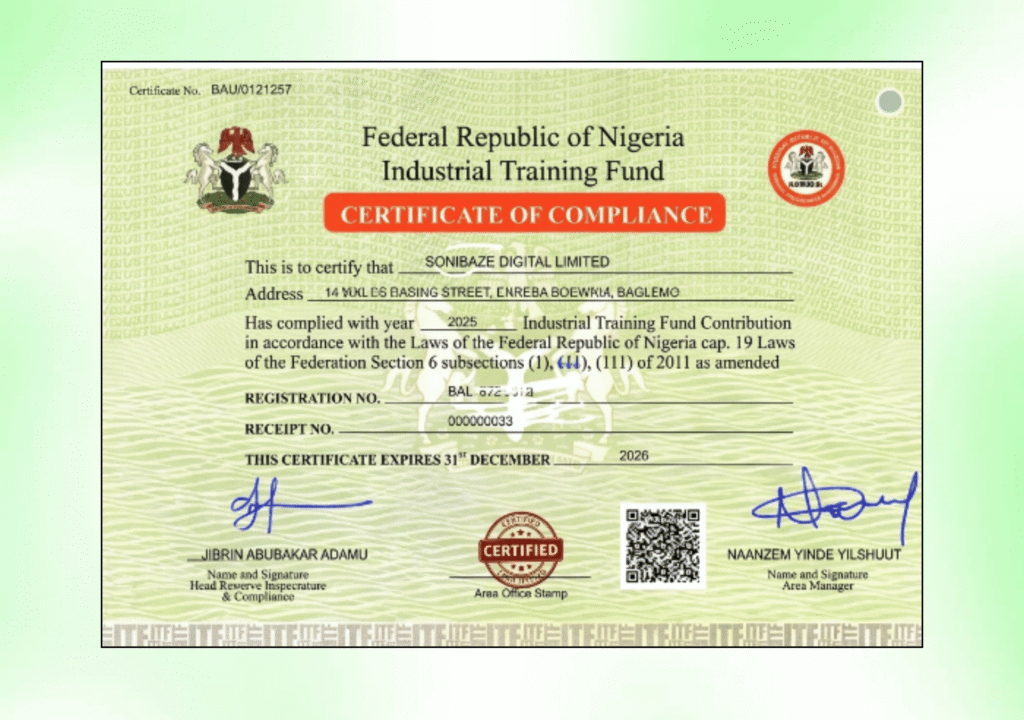
The ITF Compliance Certificate is the document ITF issues to confirm that your company has met this obligation. Without it, your organisation cannot bid for contracts from Federal Government Ministries, Departments, and Agencies. It is also required for companies seeking expatriate quota approvals, and for businesses involved in import and export using customs services.
Who Needs to Renew an ITF Certificate?
Any employer who has previously registered with ITF and holds a compliance certificate needs to renew it annually by paying the training contribution for the new year. The liability threshold applies to companies that have five or more employees, or companies with fewer than five employees but with an annual turnover of ₦50 million and above.
Companies operating in the Free Trade Zones are exempt under the current framework.

When Does the ITF Certificate Need to Be Renewed?
Training contributions must be remitted not later than 1 April every year. This is the annual deadline, and it applies to the renewal process as well. Missing it triggers late payment penalties that compound monthly.
Plan to start the renewal process in January or February at the latest. Getting documents together, calculating payroll figures, and completing the payment takes time, and the 1 April cutoff does not move.
Documents Required to Renew an ITF Certificate
Renewal uses ITF Form 5A rather than the new employer Form 7A. The documents required are broadly the same, but the focus is on the current year’s payroll figures and updated company records.
| Document | Notes |
|---|---|
| Completed ITF Form 5A | Available at the ITF Area Office or ITF portal |
| Certificate of Incorporation | CAC certificate |
| Audited Accounts or Management Accounts | Must reflect the current or most recently completed financial year |
| Tax Clearance Certificate | Current year clearance from FIRS |
| List of employees and payroll schedule | Breakdown used to assess 1% contribution liability |
| Evidence of previous ITF payment | Prior year’s Remita receipt or bank payment evidence |
| Company profile | Showing nature of business and key personnel |
If your company details, directors, or business address have changed since the last certificate was issued, update those with the Corporate Affairs Commission before submitting the ITF renewal. Mismatched records slow the process down.
How to Renew an ITF Certificate: Step by Step
Step 1: Complete ITF Form 5A
Already registered employers use Form 5A, not 7A. The form covers your company’s identity details, employee count, and payroll figures for the year. Fill it out accurately because the contribution amount is calculated directly from the payroll figures you declare.
Step 2: Submit to Your ITF Area Office
Submit the completed ITF Form 5A to the ITF Area Office where the company is registered for vetting of their liability to the Fund. Take your supporting documents with you or have them ready for submission alongside the form. The Area Office reviews the submission and assesses what your company owes for the year.
Step 3: Generate Your RRR on the ITF Pay-Portal or Remita
Once the liability assessment is done, you need to generate a Remita Retrieval Reference on either the ITF Pay-Portal or the Remita platform. This reference number is what links your payment to your company’s ITF account.
Step 4: Make Payment at a Bank
Make payment into the ITF Account through Banks. Take the generated RRR to your bank and make the payment. Online payment through Remita is also accepted. Keep your payment receipt because you will need it in the next step.
Step 5: Submit Evidence of Payment
Submit evidence of payment to the Area Office. The Area Office will then issue the Compliance Certificate to the company. Some Area Offices issue the certificate on the spot after payment confirmation. Others may take a few days to process and issue it.
Renewal Process at a Glance
| Step | Action | Where |
|---|---|---|
| 1 | Complete ITF Form 5A | ITF Area Office or portal |
| 2 | Submit form and documents | Your ITF Area Office |
| 3 | Receive liability assessment | Area Office review |
| 4 | Generate RRR | ITF Pay-Portal or Remita |
| 5 | Make payment | Bank or Remita online |
| 6 | Submit payment evidence | Area Office |
| 7 | Collect compliance certificate | Area Office |
Obtain Your ITF Certificate
Let us help you obtain your Industrial Training Fund (ITF) Compliance Certificate quickly and hassle-free. Our experts provide reliable support throughout the application process, ensuring your business meets all statutory compliance requirements.
How Much Does ITF Renewal Cost?
The cost of renewing an ITF certificate depends on your company’s annual payroll, not a fixed fee.
| Cost Component | Amount |
|---|---|
| Annual training contribution | 1% of total annual payroll |
| Late payment penalty | 5% of unpaid amount per month of default |
| Professional service fees (if using a consultant) | ₦50,000 to ₦150,000 typically |
The contribution itself goes directly to the Fund based on what your payroll figures show. If you had ten employees each earning ₦200,000 monthly, your annual payroll would be ₦24,000,000, and the 1% contribution would be ₦240,000. Calculate this figure before you go to the Area Office so you are not surprised.
Penalties for Late or Non-Renewal
Missing the 1 April deadline has financial and legal consequences.
| Offence | Penalty |
|---|---|
| Late payment of contribution | 5% of unpaid amount for each month of default |
| Failure to provide adequate staff training | ₦500,000 (first offence), ₦1,000,000 (subsequent) for corporate body |
| Principal officers (CEO, Secretary) found liable | ₦50,000 fine or 2 years imprisonment (first offence) |
| Providing false returns or information | Same penalties as above |
The 5% monthly penalty compounds. An organisation that misses the April deadline and only settles in October has accumulated six months of penalty on top of the original contribution. This adds up fast, especially for companies with large payrolls.
What About the ITF Reimbursement Benefit?
After paying the ITF levy, qualifying employers are entitled to apply for training reimbursements, access ITF training programmes at no additional cost, and host NYSC and student industrial attachment placements on a cost-sharing basis.
This is the part most Nigerian employers miss. The certificate is not just about compliance for contract purposes. If your company spent money on staff training during the year, you may be eligible to claim back a portion of that expenditure from ITF. The reimbursement application is separate from the renewal process but is only available to companies that are current on their contributions.
How Long Does Renewal Processing Take?
Registration with ITF takes an average of 10 working days. For renewals where your company is already in the system and your documents are complete, the process can move faster. Some Area Offices process renewals in five to seven working days, particularly when payment evidence is clean and no queries arise from your payroll records.
Build a buffer of at least two to three weeks before any contract tender deadline that requires the certificate.
Frequently Asked Questions
Is the renewal process the same as first-time registration?
Not exactly. First-time applicants complete Form 7A and go through an initial assessment. Renewal uses Form 5A and focuses on the annual payroll for the year being assessed. The document requirements overlap, but the forms and the process differ slightly.
Can I renew online without visiting an ITF office?
Some stages of the process, including RRR generation and payment, can be completed online through the ITF Pay-Portal or Remita. However, most Area Offices still require physical submission of Form 5A and supporting documents. Check with your specific ITF Area Office to confirm what can be handled remotely.
What if I missed last year’s renewal?
You can still renew, but you will owe the outstanding contribution plus the 5% monthly penalty for each month of default. Pay the arrears alongside the current year’s contribution and submit both to the Area Office for assessment.
Does the ITF certificate cover all my business locations?
The certificate is typically issued through the ITF Area Office of the jurisdiction where your company’s registered address sits. If your business has multiple locations across different states, confirm with ITF whether a single certificate covers all branches or whether separate registrations apply.
How do I know which ITF Area Office to visit?
Your registration was originally made at the Area Office corresponding to your company’s registered address. If you are unsure, contact ITF’s head office or check the ITF website for the office nearest to your registered business address.
Can a new company with fewer than five employees still get an ITF certificate?
Yes, under a concession arrangement. A new start-up company with fewer than five employees can write an application letter on company letterhead addressed to the Area Manager of ITF, requesting that the compliance certificate be issued, while stating the reason for the demand, and submit it alongside the Certificate of Incorporation. This route is for companies that need the certificate for business reasons even though they do not yet meet the threshold for mandatory contribution.
Conclusion: Treat April 1 as a Hard Deadline
The ITF certificate renewal is annual. The deadline is April 1, and the penalty for missing it compounds every month. For businesses that regularly bid on government contracts, letting the certificate lapse is an expensive mistake, not just because of penalties but because a disqualified bid represents lost revenue.
Start the process in January. Calculate your payroll contribution early, gather your documents, and get to your Area Office before the queue builds up in March. The process is not complicated when your paperwork is in order. The delays happen when companies arrive unprepared.
Obtain Your ITF Certificate
Let us help you obtain your Industrial Training Fund (ITF) Compliance Certificate quickly and hassle-free. Our experts provide reliable support throughout the application process, ensuring your business meets all statutory compliance requirements.