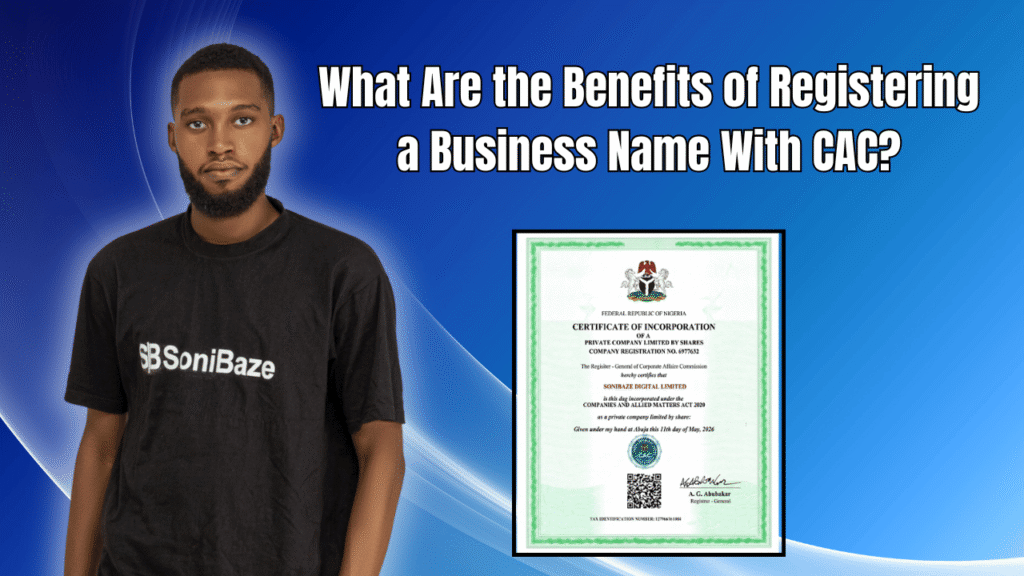
A lot of Nigerian business owners operate for months or even years without registering their business name with the Corporate Affairs Commission. Some believe it is only necessary when things get bigger. Others simply do not know what they are missing by delaying.
This article covers what registering a business name with the CAC actually does for you, practically and legally, and why the benefits stack up quickly once you understand them.
Obtain Your CAC Certificate
Let our team handle your CAC registration and help you obtain your certificate without stress. From business name registration to company incorporation.
What Does Registering a Business Name With CAC Mean?
Registering a business name with the Corporate Affairs Commission means your trading name is officially recognised by the Federal Government of Nigeria. It is not the same as incorporating a limited liability company. Business name registration covers sole proprietors and partnerships that want to trade under a name other than their own legal name.
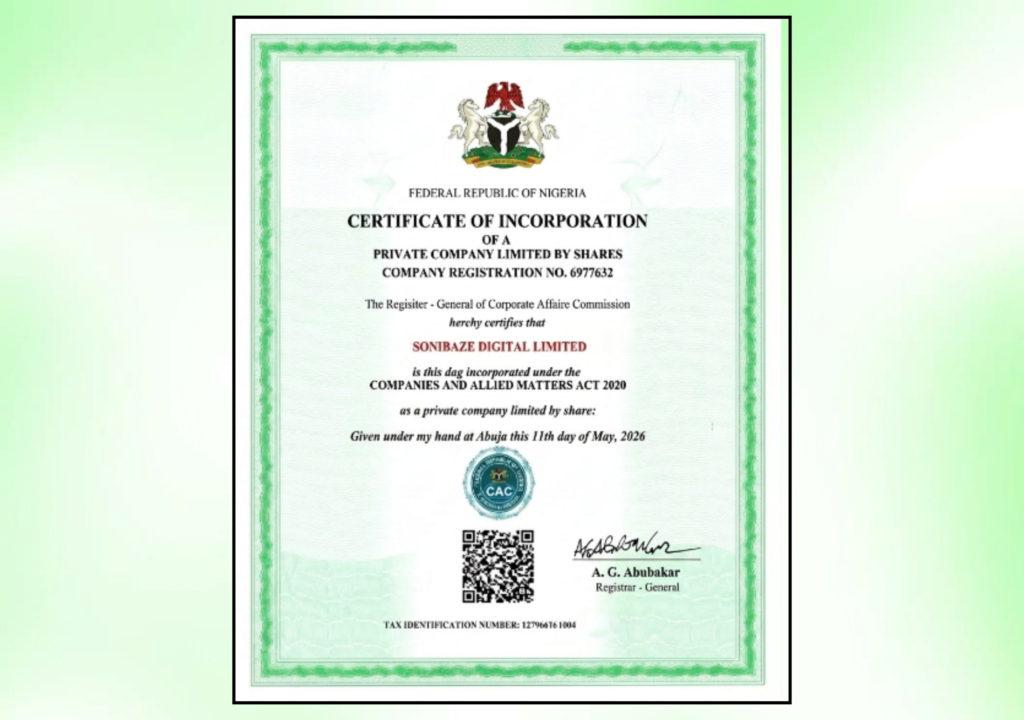
The process is done through the CAC online portal. Once approved, you receive a CAC certificate with a unique registration number that identifies your business in Nigeria’s official commercial records.
Benefits of Registering a Business Name With CAC
Legal Recognition and Protection
Once your business name is registered, it becomes legally protected under that name in Nigeria. No other person or entity can register the same name with the CAC, which protects your brand identity at the registration level.
This matters more than most people realise. Without registration, someone else can legally register your trading name and you would have little official recourse. A registered business name gives you a defensible claim.

Access to a Corporate Bank Account
This is the most immediate practical benefit for most businesses. Banks in Nigeria require a CAC certificate before opening a corporate account for a business name or company. Without it, you are left managing business finances through a personal account, which creates accounting problems, limits your professional credibility with clients, and can complicate tax reporting.
A corporate account also makes it easier to receive payments from organisations that do not transact with individual accounts.
Credibility With Clients, Suppliers, and Partners
Registered businesses are taken more seriously. When you send an invoice or a proposal with a CAC registration number attached, it signals that your business has met at least the baseline legal requirement for formal operation in Nigeria.
Many corporate clients, government agencies, and NGOs will not enter into contracts with an unregistered business. For service providers in fields like consulting, marketing, IT, or construction, registration can be the difference between landing a contract and being disqualified before the conversation even starts.
Eligibility for Government Contracts and Tenders
Federal and state government procurement processes require bidders to provide evidence of CAC registration. This applies to contracts issued by ministries, agencies, and government-owned enterprises across Nigeria.
Without registration, your business is automatically excluded from this category of work regardless of how capable or competitive your offering is.
Access to Business Loans and Financing
Microfinance banks, commercial banks, and development finance institutions in Nigeria typically require CAC documentation as part of the loan application process. This applies to loan products aimed specifically at small and medium businesses.
Schemes like the CBN’s various SME intervention funds and government-backed grants for small businesses also require CAC registration as a prerequisite. Without it, you cannot access most formal financing options available to Nigerian businesses.
Basis for Other Mandatory Registrations
Several other business registrations and compliance certificates depend on having a valid CAC registration first. SCUML registration requires it. Tax Identification Number linkage requires it. Some professional licences and sector-specific permits require proof of CAC registration as part of the application.
Getting your CAC registration done early means the rest of your compliance journey builds on a solid foundation rather than being repeatedly blocked at the first document check.
Separation of Business and Personal Affairs
A registered business name creates a clear boundary between your personal financial life and your business operations. Even though a business name does not offer the full legal separation that a limited liability company does, it establishes a formal identity for the business in banking, contracts, and tax records.
This separation matters as the business grows. It makes it easier to track income, report accurately, and protect your personal assets from being directly associated with business liabilities in documentation.
A Record That Supports Brand Building
Having a registered CAC certificate gives your business a traceable, verifiable history. When potential partners or investors look up your business, a CAC registration number gives them something to verify independently. It adds a layer of legitimacy that an unregistered business simply cannot offer.
For businesses working on their digital presence, having a registered name also makes domain registration, social media verification, and professional email setup more consistent and credible.
Obtain Your CAC Certificate
Let our team handle your CAC registration and help you obtain your certificate without stress. From business name registration to company incorporation.
Quick Reference: Benefits at a Glance
| Benefit | What It Enables |
|---|---|
| Legal recognition | Protects your business name from being registered by someone else |
| Corporate bank account | Access to a business account separate from personal finances |
| Client and partner credibility | Makes you eligible for contracts from organisations that require CAC |
| Government tenders | Qualifies your business to bid for federal and state contracts |
| Loans and financing | Opens access to SME loan products and government funding schemes |
| Downstream compliance | Enables SCUML, TIN linkage, and sector-specific licences |
| Business and personal separation | Cleaner financial records and documentation boundary |
| Verifiable business history | Builds credibility with partners, clients, and potential investors |
Frequently Asked Questions
How much does it cost to register a business name with CAC?
The government fee for business name registration is currently ₦10,000 for the name reservation and registration combined. If you use a consultant or registration service, their professional fee is separate and varies, typically between ₦15,000 and ₦50,000 depending on the provider. The CAC portal itself is at no extra charge beyond the official fees.
How long does CAC business name registration take?
If your documents are submitted correctly and the name is available, registration typically takes three to seven working days through the online portal. Some applications are approved faster, while others require additional clarification and can take up to two weeks.
Is a registered business name the same as a limited liability company?
No. A business name registration covers a sole proprietor or partnership trading under a specific name. A limited liability company, such as an RC-numbered entity, is a separate legal entity with its own rights and liabilities. Business name registration does not create a separate legal personality the way company incorporation does.
Can two people register the same business name?
No. CAC checks for name availability before approving registration. If a name has already been registered, a new application for the same or a substantially similar name will be rejected. This is part of what makes registration valuable as a form of name protection.
Do I need to renew a business name registration?
Business name registrations with the CAC do not technically expire, but you are expected to file annual returns to keep the registration active and in good standing. Failure to file annual returns can result in the business being marked as inactive in the CAC register.
Can I register a business name if I am not yet generating revenue?
Yes. There is no revenue requirement for CAC business name registration. Many business owners register before launching because it allows them to open a bank account, set up their business infrastructure, and take on contracts from day one.
Conclusion: Registration Is a Foundation, Not a Formality
Registering your business name with the CAC is not bureaucratic paperwork. It is the step that makes everything else possible. Access to a bank account, government contracts, formal financing, and serious client relationships all trace back to having that registration in place.
The cost is low, the process is fully online, and the practical benefits begin from the day you receive your certificate. For any business owner in Nigeria that is still operating unregistered, the question is not whether to register but why it has not happened yet.
Obtain Your CAC Certificate
Let our team handle your CAC registration and help you obtain your certificate without stress. From business name registration to company incorporation.