Procurement used to be seen as a back-office function. Something people fell into rather than chose. That has changed significantly in Nigeria over the past decade, and the shift is visible in how employers now advertise procurement roles and what they ask for.
Today, both private sector employers and government agencies expect procurement professionals to hold recognised qualifications, not just experience. If you are thinking about a career in procurement, or if you are already working in the field and want to move into senior roles, this article breaks down exactly what qualifications are expected and how the framework works in Nigeria.
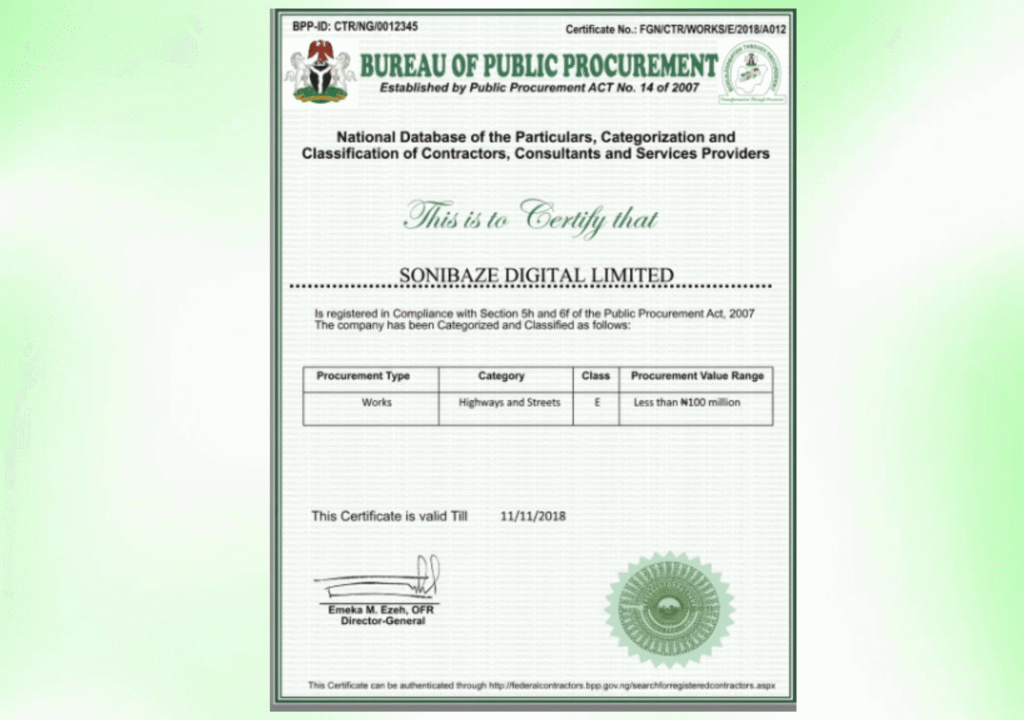
Obtain Your BPP Certificate
Let us help you obtain your Bureau of Public Procurement (BPP) Registration Certificate quickly and hassle-free. Our experts provide reliable support throughout the registration process, ensuring your business is ready to participate in public procurement opportunities.
The Two Tracks: Public Procurement and Private Sector
Procurement qualifications in Nigeria split into two broad tracks. Public procurement, which covers work in government ministries, departments, and agencies, is regulated by the Bureau of Public Procurement and has a formal national certification scheme. Private sector procurement, which includes multinationals, manufacturing, oil and gas, and financial services, tends to look toward international certifications, particularly CIPS.
Understanding which track is relevant to you shapes which qualification to pursue first.
Public Procurement: The Nigeria Procurement Certification Programme
The Nigeria Procurement Certification Programme, commonly known as NPCP, is the official certification framework for public procurement professionals in Nigeria. It is run in collaboration with the Bureau of Public Procurement and the SPESSE Centers of Excellence, and it is structured into four tiers, each corresponding to a different level of expertise and responsibility.
Tier 1: Foundation Level
This is the entry point. The minimum academic requirement for Tier 1 is a Secondary School Certificate, an Ordinary National Diploma or NCE, or a Bachelor’s degree or HND in any field. Candidates at this level are also required to complete the BPP online course and Track A of the SPESSE Centre of Excellence modules one and two.
Soft skills assessed at this level include communication, time management, team collaboration, and motivation for professional growth. This tier is designed for people new to procurement with little or no prior experience in the field.
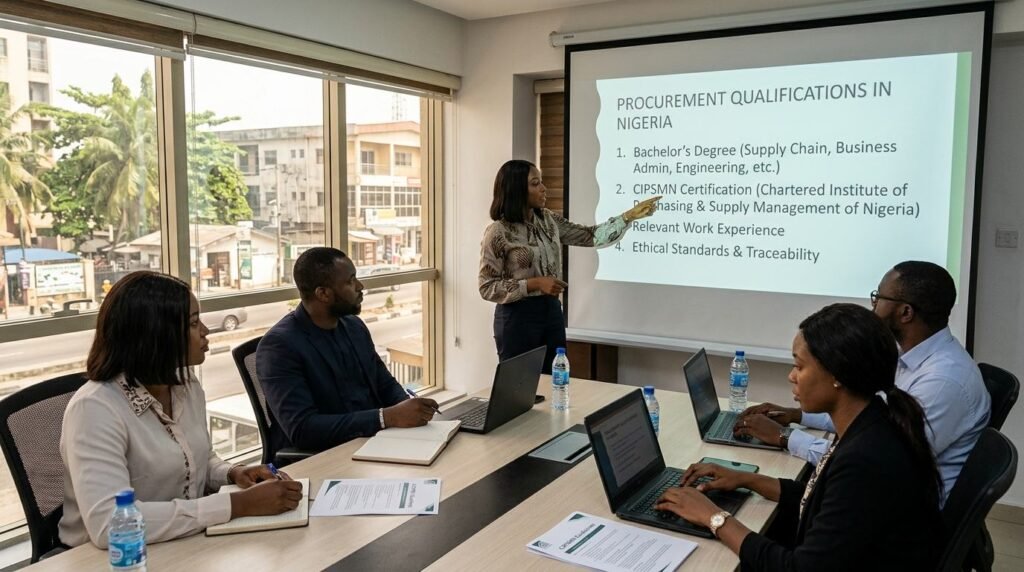
Tier 2: Intermediate Level
This is the second level of the National Public Procurement Certification Route. It requires a higher educational foundation and some exposure to procurement work. Candidates here are expected to demonstrate a working knowledge of procurement processes, basic contract management, and public financial regulations.
Tier 3 and Tier 4: Advanced and Expert Levels
The upper tiers of the NPCP framework are designed for experienced professionals moving into management and leadership roles within public procurement. These levels require a combination of academic qualification, years of relevant experience, and demonstrated competence in strategic procurement, policy interpretation, and compliance oversight.
The platform at npcp.ng allows candidates to check which certification tier they currently qualify for and review all prerequisites before applying.
Private Sector Procurement: CIPS Qualifications
For anyone working in or targeting private sector procurement in Nigeria, the Chartered Institute of Procurement and Supply qualifications are the most widely recognised standard. CIPS is the world’s largest professional body dedicated to procurement and supply chain, and its certifications are increasingly specified by Nigerian employers across industries.
CIPS Level 3: Certificate in Procurement and Supply Operations
This is the entry-level CIPS qualification. It provides a foundational understanding of procurement and supply chain principles and is suited for people starting out or those in operational roles who want to formalise their knowledge. Level 3 typically requires only basic educational qualifications to enter.
CIPS Level 4: Diploma in Procurement and Supply
This is the most commonly pursued CIPS qualification among procurement officers in Nigeria. It covers strategic sourcing, contract management, supplier performance, and cost management at a level that directly applies to mid-career roles.
Employers at Nestle Nigeria, Shell Nigeria, and Julius Berger frequently list CIPS Level 4 as preferred or required. It is best suited for procurement officers with two or more years of experience who are targeting senior officer or managerial positions.
Each CIPS level typically takes three to four months to complete, though this varies based on prior experience and study pace. Pinnacle Business School Nigeria is one of the authorised CIPS study and examination centres in the country.
CIPS Level 6: Advanced Diploma and MCIPS
MCIPS, which stands for Member of the Chartered Institute of Procurement and Supply, is the highest professional membership designation. It requires completing the CIPS Level 6 Advanced Diploma and demonstrating professional competence through practical application.
In Nigeria’s oil and gas sector and among large multinationals, MCIPS is often a stated requirement for senior and managerial procurement roles. Companies like Procter and Gamble Nigeria, Unilever Nigeria, Shell Nigeria, and Guinness Nigeria regularly specify CIPS membership or equivalent in their procurement job postings.
Obtain Your BPP Certificate
Let us help you obtain your Bureau of Public Procurement (BPP) Registration Certificate quickly and hassle-free. Our experts provide reliable support throughout the registration process, ensuring your business is ready to participate in public procurement opportunities.
Other Recognised Qualifications
Certified Procurement Professional (CPP)
The Certified Procurement Professional certification is offered in Nigeria through providers like Prosync Nigeria. It targets professionals already working at a senior or team leader level in procurement, supply chain, purchasing, warehousing, or logistics.
The exam consists of 40 multiple-choice questions. Candidates must score at least 65 percent, which is 26 out of 40, to pass. The programme covers strategic sourcing, procure-to-pay processes, corporate governance in procurement, category management, and digitisation in procurement processes.
Project Management Qualifications
Qualifications like PMP (Project Management Professional) and PRINCE2 are not procurement certifications but are valued in sectors where procurement officers work closely with project teams. In oil and gas, construction, and telecoms, procurement professionals who also hold project management credentials are better positioned for cross-functional roles and senior appointments.
Finance and Accounting Qualifications
ICAN and similar finance qualifications are considered complementary to procurement expertise, particularly in organisations where procurement officers are expected to understand budgeting, financial reporting, and audit processes. These are most relevant in public sector procurement and in financial services organisations.
Minimum Academic Requirements by Role Type
| Role Type | Minimum Academic Qualification | Additional Expectation |
|---|---|---|
| Entry-level public procurement officer | SSCE, OND, NCE, or Bachelor’s degree | BPP online course and SPESSE modules |
| Mid-level public procurement officer | Bachelor’s degree or HND | NPCP Tier 2 or equivalent certification |
| Senior public procurement officer | Bachelor’s degree plus postgraduate qualification | NPCP Tier 3 or 4, proven sector experience |
| Entry-level private sector procurement | Bachelor’s degree in any field | CIPS Level 3 or enrolment |
| Mid-level private sector procurement | Bachelor’s degree, two or more years experience | CIPS Level 4 Diploma |
| Senior or managerial private sector | Relevant degree plus experience | CIPS MCIPS or equivalent, CPP |
| Oil and gas or multinational procurement | Degree in relevant field plus experience | CIPS MCIPS, PMP often specified |
Skills That Employers Expect Alongside Qualifications
Qualifications open the door. Skills determine how far you go inside it.
Nigerian procurement employers consistently look for negotiation skills, the ability to analyse spending and identify savings, supplier relationship management, contract drafting and review, and familiarity with procurement software and ERP systems. Analytical thinking and financial literacy are increasingly important as procurement functions in larger organisations move closer to strategic decision-making.
For public sector roles, knowledge of the Public Procurement Act 2007, BPP guidelines, and due process requirements is expected at every level above entry.
Frequently Asked Questions
Do I need a specific degree to work in procurement in Nigeria?
No specific degree is mandated for procurement work in Nigeria. A Bachelor’s degree or HND in any field meets the basic academic requirement for most roles. That said, degrees in supply chain management, business administration, economics, engineering, or finance are commonly seen among procurement professionals and are well aligned with the demands of the role.
Can I start a procurement career without a university degree?
Yes, particularly in public procurement. The NPCP Tier 1 framework accepts candidates with an OND, NCE, or even a Secondary School Certificate, provided they complete the required BPP online training and SPESSE modules. In the private sector, most formal procurement roles specify at least a Bachelor’s degree or HND, though some entry-level supply chain positions are more flexible.
Is CIPS recognised by Nigerian employers?
Yes. CIPS is widely recognised across private sector organisations in Nigeria, particularly in multinationals, manufacturing, oil and gas, and financial services. Many Nigerian employers explicitly list CIPS qualification as preferred or required in their procurement job adverts, especially for roles at mid-level and above.
How long does it take to get CIPS qualified in Nigeria?
Each CIPS level typically takes three to four months to complete. Going from Level 3 through to Level 6 takes considerably longer depending on study pace, work commitments, and exam scheduling. Many procurement professionals in Nigeria pursue one level at a time, continuing to work full time alongside their studies.
What is the difference between NPCP and CIPS?
NPCP is Nigeria’s national certification programme for public procurement, run in collaboration with the Bureau of Public Procurement. It is most relevant for professionals working or intending to work in government agencies and MDAs. CIPS is an international certification from a UK-based professional body and is most valued in private sector, multinational, and NGO procurement roles. Some professionals hold both, particularly those who move between sectors.
Is procurement certification mandatory in Nigeria?
For public procurement officers in federal government agencies, the BPP has progressively pushed for certification as a professional standard, and there is a formal registration process for procurement officers at the federal level. For private sector roles, certification is not legally mandated but is increasingly required by employers as a condition of hiring or promotion, particularly at mid-level and above.
Conclusion: Qualifications Have Become the Entry Ticket
A few years ago, procurement in Nigeria was largely experienced-based. Today it is moving firmly toward a qualifications-driven profession, particularly as the BPP tightens its standards for public sector practitioners and as multinationals align their Nigerian operations with global hiring requirements.
Whether you are entering the field for the first time or looking to move from operational to strategic procurement, the clearest path is to match your current academic level to the right certification tier, build relevant work experience alongside it, and add complementary skills in finance, project management, or data analysis over time.
Obtain Your BPP Certificate
Let us help you obtain your Bureau of Public Procurement (BPP) Registration Certificate quickly and hassle-free. Our experts provide reliable support throughout the registration process, ensuring your business is ready to participate in public procurement opportunities.