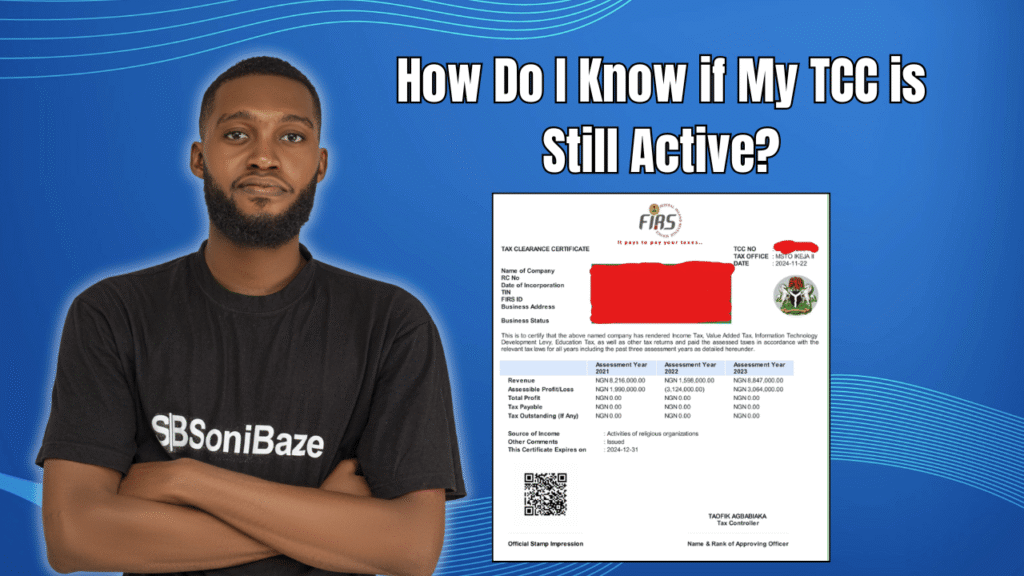
A Tax Clearance Certificate sitting in a folder is not the same as an active one. Many business owners in Nigeria find this out the hard way, usually when they pull out a TCC for a contract bid or bank request and get told it is no longer valid. The certificate looks fine. The problem is what has happened to the tax records behind it.
This article explains how to check if your TCC is still active, what active actually means, and the common reasons a certificate stops being usable before it even expires.
Obtain Your Tax Clearance Certificate (TCC)
Let us help you obtain your Tax Clearance Certificate (TCC) quickly and hassle-free. Our experts provide reliable support throughout the application process, ensuring your business meets all tax compliance requirements.
What Does “Active” Mean for a TCC?
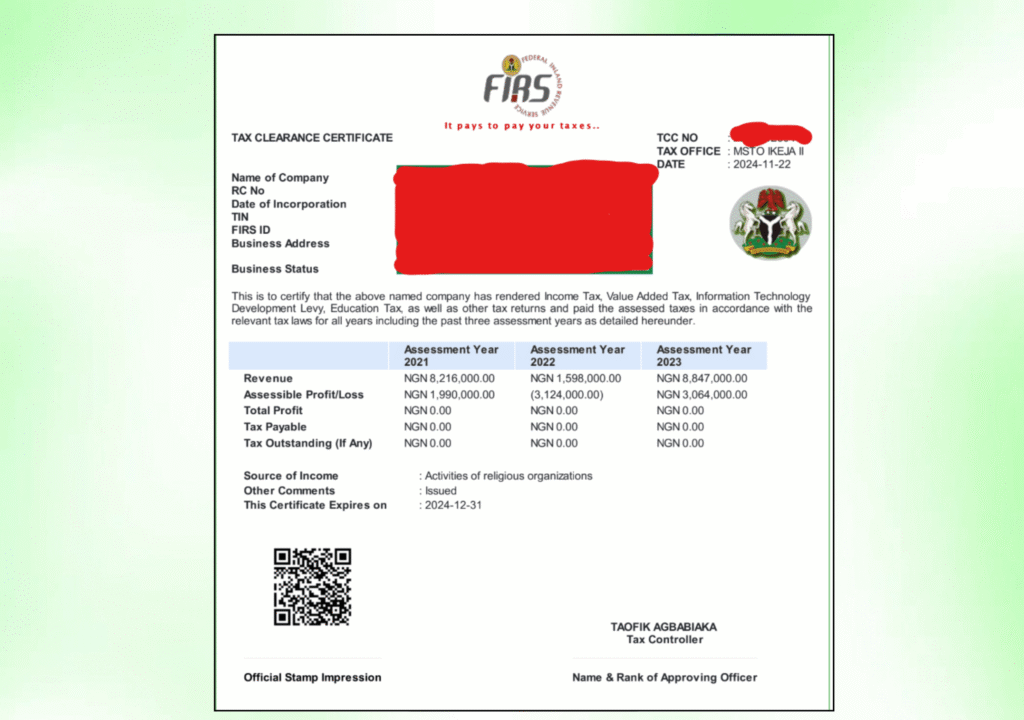
A Tax Clearance Certificate in Nigeria covers the three years of assessment immediately before the current year. A TCC issued in 2026, for example, covers 2023, 2024, and 2025. The certificate itself does not have a stamped expiry date in the way a driver’s licence does, but it has an implied validity window.
Most institutions, including Federal Government agencies, banks, and procurement bodies, treat a TCC as current only for the year in which it was issued. Once a new year begins, a new TCC is expected. A 2025 TCC being submitted in 2026 will often be rejected or questioned, regardless of whether your tax records are still clean.
Beyond the year it was issued, a TCC can also become effectively inactive if your tax compliance status changes after the certificate was generated. Outstanding returns, unpaid liabilities, or unresolved queries with FIRS or the State Internal Revenue Service can all flag your records even if the certificate is still physically in your hands.
How to Check if Your TCC is Still Active
There are two things to verify: whether the certificate itself is genuine and currently recognised, and whether your underlying tax records are still clean enough to generate a new one if needed.
Method 1: Verify Online Through the NRS Portal
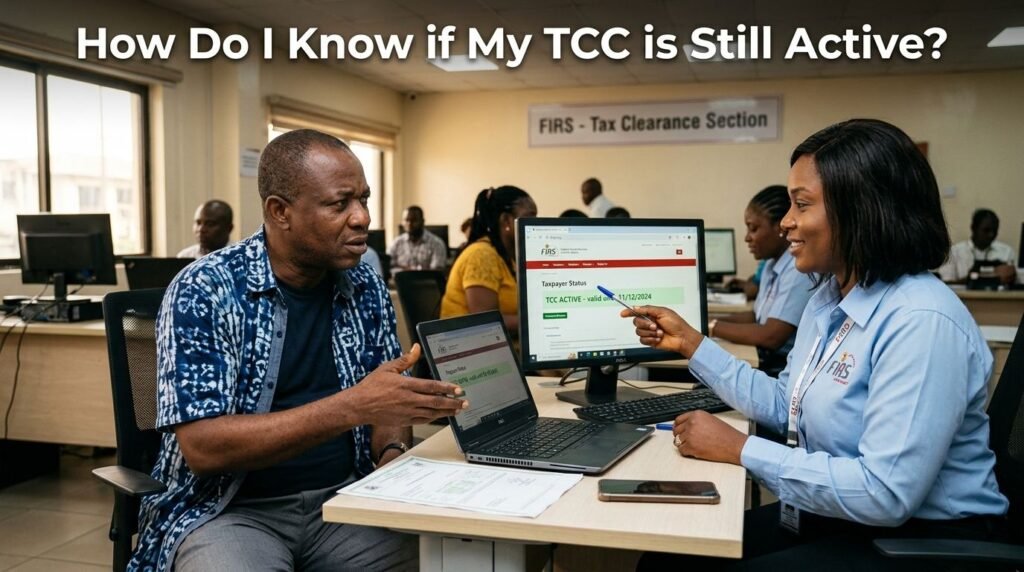
The Nigeria Revenue Service (formerly FIRS) provides an online verification tool at tcc.firs.gov.ng. This is the fastest and most reliable way to confirm the status of a corporate TCC.
To verify, visit the portal, click “Verify TCC,” and enter the certificate reference number printed on your TCC. You can also scan the QR code on the e-TCC document if you have the electronic version. The system will confirm whether the certificate is genuine and show the details it covers.
If the certificate was issued by a State Internal Revenue Service for personal income tax, you will need to contact that specific state IRS directly, as state-issued TCCs are not verified through the NRS portal.
Method 2: Try to Generate a New TCC
If you are an existing company registered with FIRS for two or more years with a history of filed returns, you can test your current compliance status by logging into tcc.firs.gov.ng with your company’s Tax Identification Number and password and attempting to generate a new TCC.
If the system generates a certificate immediately, your records are clean and your compliance is current. If the system blocks generation and shows a reason, that reason tells you exactly what is wrong: unfiled returns, outstanding tax liability, or a pending reconciliation. Each of these can be resolved before your next submission deadline.
Method 3: Check Your Tax Records Directly
Log into the FIRS e-Services portal and review your company’s filing history. Confirm that annual returns, Company Income Tax, VAT, and Withholding Tax records have all been filed for the three most recent years of assessment. If any year is missing, your TCC will not generate cleanly regardless of what the physical certificate says.
At a Glance: TCC Status Check Methods
| Method | How to Use It | Best For |
|---|---|---|
| NRS online verification (tcc.firs.gov.ng) | Enter certificate reference number or scan QR code | Confirming if an existing certificate is genuine and recognised |
| Generate a new TCC online | Log in with TIN and attempt generation | Checking if current compliance qualifies for a fresh certificate |
| Review FIRS filing history | Log into e-Services and check return records | Identifying missing filings before they become a problem |
| Contact issuing tax office | Visit or call the relevant FIRS or State IRS office | Resolving blocked applications and pending reconciliations |
Obtain Your Tax Clearance Certificate (TCC)
Let us help you obtain your Tax Clearance Certificate (TCC) quickly and hassle-free. Our experts provide reliable support throughout the application process, ensuring your business meets all tax compliance requirements.
Reasons a TCC May No Longer Be Usable
Even if you have a physical TCC in hand, it can be rejected or treated as inactive for several reasons.
The most common is age. A TCC issued in a previous calendar year is regularly declined by government agencies and banks that expect a certificate covering the most recent completed year of assessment. Holding a 2024 TCC in mid-2026 will create problems for most official submissions.
Unfiled returns are the next most frequent cause. If your company filed returns for 2022 and 2023 but missed 2024, the system will flag a gap. The TCC you hold may have been issued before that gap existed, but any new verification or generation attempt will expose it.
Outstanding tax liabilities are another common block. Taxes assessed but not paid, including penalties and interest on late payments, sit against your TIN in the FIRS system. Until those are cleared or a payment arrangement is agreed, a new TCC cannot be generated.
Mismatched records between CAC and FIRS, such as different business names, addresses, or director details, can also create compliance flags that prevent TCC generation or cause a certificate to be questioned during third-party verification.
What to Do if Your TCC is No Longer Active
The fix depends on why it is inactive.
| Problem | Solution |
|---|---|
| TCC is from a previous year | Apply for a new TCC for the current year of assessment |
| Missing tax returns | File outstanding returns, including late-filing penalties, then apply |
| Outstanding tax liabilities | Pay all taxes due or agree a payment plan with FIRS, then apply |
| Pending reconciliation | Visit the designated FIRS tax office and resolve the query |
| Name or record mismatch | Update FIRS records to match CAC, then apply |
For any situation involving a blocked application or a reconciliation query, visiting the actual FIRS tax office in person moves things faster than trying to resolve it remotely.
How Long Does a TCC Last?
The practical answer for most use cases in Nigeria is one calendar year. A TCC issued in January 2026 covers 2023, 2024, and 2025, and will generally be accepted throughout 2026. By the time 2027 arrives, most government agencies and banks will expect a 2027 TCC covering the updated three-year window.
There is no universal statutory expiry date printed on the certificate, but the convention of annual renewal is widely enforced. Treat your TCC the same way you treat other annual compliance certificates. Renew it at the start of each year rather than waiting for it to be rejected in the middle of a time-sensitive process.
Frequently Asked Questions
Can I use a TCC from last year for a government contract bid this year?
In most cases, no. Federal procurement processes and most government agencies expect a TCC for the current year of assessment. A certificate from the previous year is likely to be declined, particularly for BPP registration renewals and formal tender submissions. It is safer to generate a fresh TCC before bidding.
My TCC portal says my application is blocked. What does that mean?
It means the system has found a compliance gap in your tax records. The portal will usually indicate the reason, which is either an unfiled return, an outstanding liability, or a pending reconciliation. Resolve the specific issue flagged and attempt generation again. If the reason is not clear, visit the FIRS tax office assigned to your TIN.
Is there a difference between an active TCC and a valid TCC?
In practice, yes. A valid TCC is one that is genuine and was legitimately issued. An active TCC is one that reflects current compliance and will be accepted by the requesting institution. A certificate can be valid (genuine) but inactive (outdated or superseded by new compliance gaps). Verification through the NRS portal confirms both.
Does my personal TCC affect my company’s TCC?
They are separate documents from different issuing authorities. Your company’s TCC comes from the Nigeria Revenue Service and covers Company Income Tax. Your personal TCC comes from the State Internal Revenue Service where you are domiciled and covers Personal Income Tax. One does not directly affect the other, but as a company director, you may be required to present both in certain transactions.
How long does it take to get a new TCC if mine has lapsed?
If your records are up to date and no outstanding liabilities exist, an existing company can generate a TCC online within minutes through tcc.firs.gov.ng. If there are gaps to resolve first, the timeline depends on the nature of the issue. Unfiled returns plus payment plus reconciliation can take anywhere from two to six weeks, particularly if the process requires visiting a tax office.
Can a third party verify my TCC without my involvement?
Yes. Anyone with your TCC reference number or the QR code from the electronic certificate can run a verification check through the NRS portal. This is how banks, procurement officers, and government agencies confirm the authenticity of certificates submitted to them.
Conclusion: Do Not Wait Until You Need It to Check
Most people discover their TCC is no longer active at exactly the wrong moment: during a contract bid, a bank account opening, or a regulatory submission. By then, fixing the problem takes time that the process does not have.
The smarter approach is a simple annual check. At the start of each year, log into tcc.firs.gov.ng, attempt to generate a fresh TCC, and confirm it downloads without errors. If it does, file it and move on. If it does not, you have time to resolve the issue before it costs you a contract.
Obtain Your Tax Clearance Certificate (TCC)
Let us help you obtain your Tax Clearance Certificate (TCC) quickly and hassle-free. Our experts provide reliable support throughout the application process, ensuring your business meets all tax compliance requirements.