A Tax Clearance Certificate gets mentioned constantly in Nigerian business circles, yet many business owners do not fully understand what it actually does beyond being one more document to chase before a deadline. Some treat it as a formality. Others only start looking for it when a contract or visa application demands it.
Both approaches create problems. This article explains what the TCC is, what it is specifically used for, and why maintaining one is worth treating as an ongoing priority rather than a last-minute task.
Obtain Your Tax Clearance Certificate (TCC)
Let us help you obtain your Tax Clearance Certificate (TCC) quickly and hassle-free. Our experts provide reliable support throughout the application process, ensuring your business meets all tax compliance requirements.
What Is a Tax Clearance Certificate?
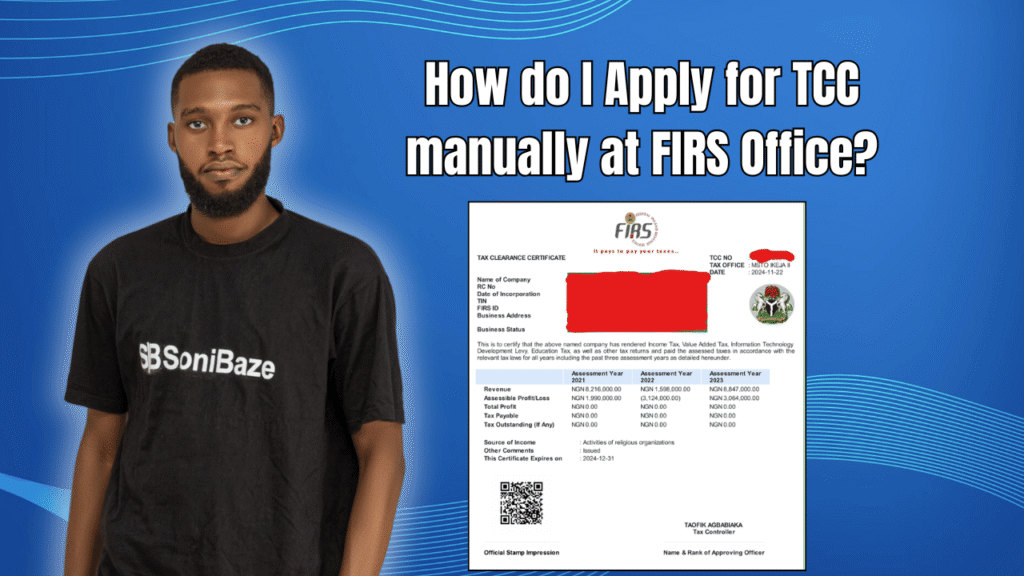
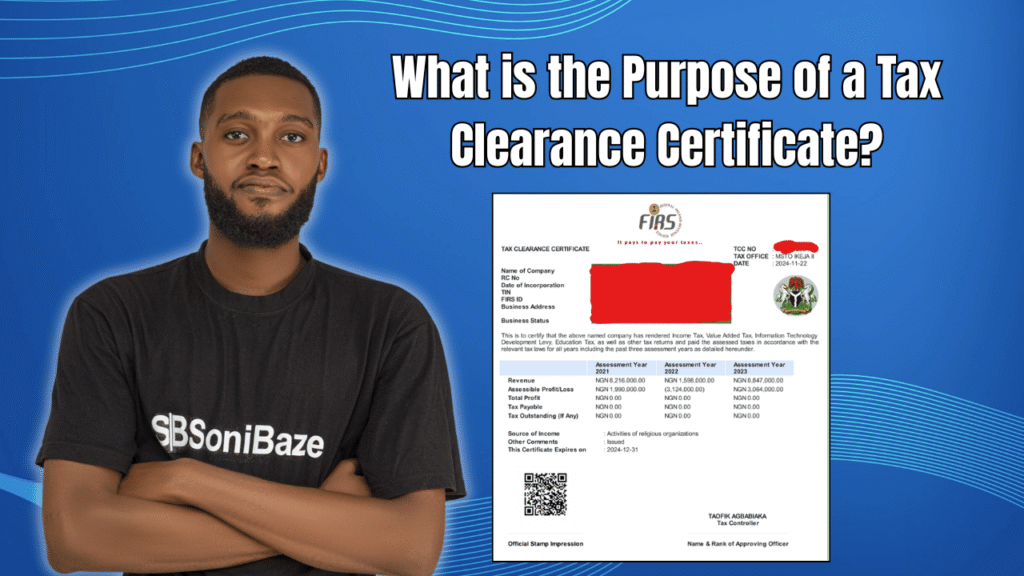
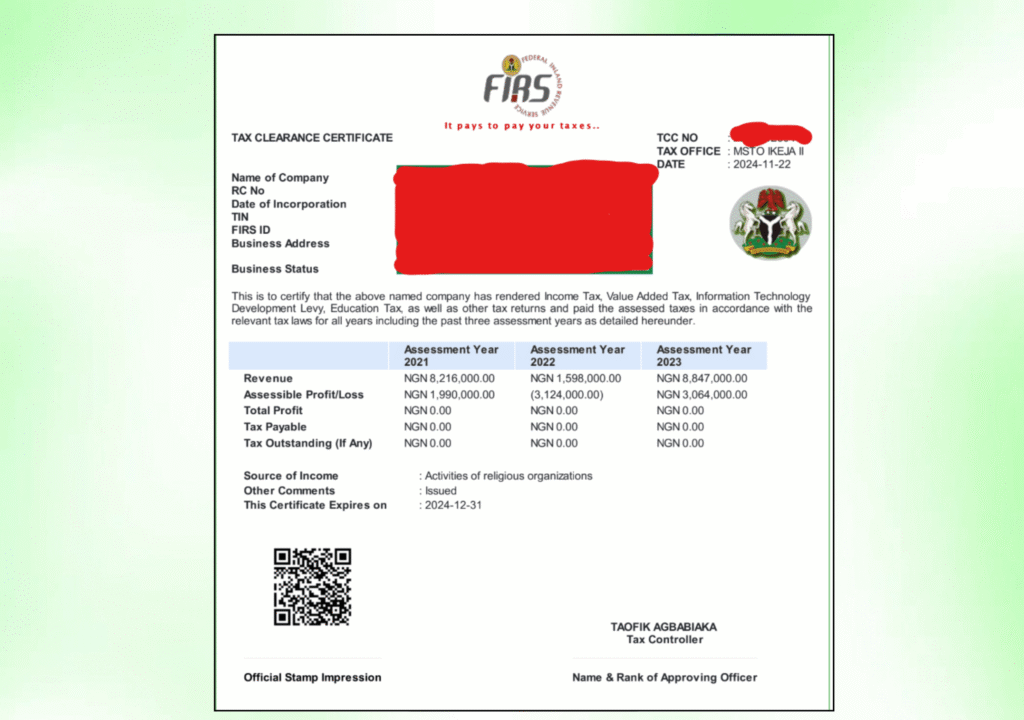
A Tax Clearance Certificate, commonly called a TCC, is an official document issued by a tax authority confirming that an individual or company has properly declared income, filed tax returns, and settled applicable taxes for the assessment years covered. It shows that the taxpayer’s affairs are in order at the date of issue.
In Nigeria, two bodies issue the TCC depending on who is applying. The Federal Inland Revenue Service issues certificates for companies and organisations. State Internal Revenue Services issue certificates for individuals based on where they reside or earn income. For Abuja residents and FCT-based businesses, the FCT Internal Revenue Service handles individual TCC applications.
The certificate covers the three years immediately preceding the current year of assessment. A TCC issued in 2025, for example, would cover the 2022, 2023, and 2024 tax years.
The Core Purpose of a Tax Clearance Certificate
The central purpose of the TCC is to confirm tax compliance. It tells any institution or authority reviewing it that this person or business has met their tax obligations for the period covered, with no outstanding liabilities.
Beyond that single confirmation, the certificate unlocks access to a range of transactions, contracts, and privileges that would otherwise be unavailable.

What Is a Tax Clearance Certificate Used For?
This is where most people need the most clarity. The TCC is not just required in one place. It shows up across government, banking, employment, and international travel.
Government Contracts and Procurement
Any business bidding for contracts from Federal Government ministries, departments, or agencies needs a valid TCC. This applies whether the contract is for construction, supplies, consulting, or professional services. It is also a required document for BPP registration on the National Database of Federal Contractors. Without it, a company cannot even qualify to submit a bid.
Business Registration and Licensing
The TCC is required for several regulatory purposes, including applying for trade licences such as those issued by the Nigerian Upstream Petroleum Regulatory Commission and the Nigerian Communications Commission. Some regulatory bodies require it as part of the filing for renewals or expansions of existing licences.
Bank Loans and Financial Services
Banks and financial institutions frequently request a TCC before processing loan applications or business financing. It functions as a signal of financial credibility. A business with a clean tax record is viewed as lower risk than one that cannot produce proof of compliance. For large loan amounts in particular, the TCC has become a standard part of the documentation package.
Opening Corporate Bank Accounts
Some banks request the TCC as part of the documentation for opening corporate accounts, particularly for companies in regulated sectors. This is separate from SCUML requirements and applies specifically to tax compliance verification.
Employment Verification
Many Nigerian employers, especially in the public sector and in large private companies, require job applicants to present a valid TCC as part of pre-employment documentation. It serves as a check on the financial and compliance integrity of prospective staff, particularly for roles with financial oversight responsibilities.
Visa Applications
Several foreign embassies and high commissions in Nigeria ask for a TCC when processing visa applications. This is particularly common for business visas and long-stay applications where proof of financial standing in Nigeria is needed.
Expatriate Quotas and Immigration Purposes
Companies seeking to employ foreign nationals need to apply for expatriate quotas from the Ministry of Interior. A valid TCC is among the documents required for this process.
Due Diligence in Business Transactions
When companies merge, acquire assets, or form formal partnerships, the TCC forms part of the due diligence review. A potential partner or investor in Nigeria will reasonably expect to see evidence that the business they are dealing with is tax-compliant.
Scholarships and Government Benefits
Individuals applying for government scholarships or certain public benefits may be asked to provide a TCC as part of the eligibility process.
Obtain Your Tax Clearance Certificate (TCC)
Let us help you obtain your Tax Clearance Certificate (TCC) quickly and hassle-free. Our experts provide reliable support throughout the application process, ensuring your business meets all tax compliance requirements.
Summary of TCC Uses
| Purpose | Who It Applies To |
|---|---|
| Government contracts and procurement | Companies and consultants |
| BPP registration | All Federal Government vendors |
| Trade licences (NUPRC, NCC, others) | Companies in regulated sectors |
| Bank loans and business financing | Individuals and companies |
| Corporate account opening | Companies |
| Pre-employment documentation | Individuals |
| Visa applications | Individuals |
| Expatriate quota applications | Companies employing foreign nationals |
| Business mergers and acquisitions | Companies |
| Scholarships and government benefits | Individuals |
Who Needs a Tax Clearance Certificate in Nigeria?
The TCC is not limited to large companies or wealthy individuals. It applies across a broad range of taxpayers.
Companies of all sizes need it, including newly incorporated businesses. A new company that has not yet generated revenue will receive a TCC showing “zero” liability, confirming it owes nothing for the period before operations commenced. Being new does not exempt a company from applying.
Individuals who need a TCC include salaried employees, self-employed professionals, consultants, freelancers, civil servants, and sole traders. Essentially, if your work or income intersects with government processes, banking, or foreign travel, maintaining a valid TCC is practical rather than optional.
What Happens Without a Valid TCC?
The consequences of not having a current TCC are direct and practical. Government contract bids are disqualified. Loan applications stall. Licence renewals hit a wall. Visa applications get delayed or refused. Employment in certain sectors becomes harder to secure.
Beyond those immediate blocks, operating without tax compliance eventually attracts penalties, fines, and in serious cases, legal action. The TCC is both the reward for compliance and the proof that triggers access to opportunities.
Common Mistakes That Delay TCC Processing
A few errors come up repeatedly and cause unnecessary delays in getting the certificate.
Filing tax returns late, or not at all, is the biggest one. The TCC is issued based on returns that have already been filed. If returns are missing for any of the three years covered, the certificate cannot be issued until that gap is addressed.
Mismatched records between what the Corporate Affairs Commission holds and what FIRS has on file also cause problems. The business name, registered address, and director details need to be consistent across all records.
Using an outdated or incorrect TIN is another common issue. The TIN used to apply must be the one tied to actual filed returns. If there is a mismatch, the application will flag an error that requires manual resolution.
Waiting until a deadline, such as a contract submission date, to start the TCC process is the most avoidable mistake. The certificate takes time to process, and trying to get it in three days when a bid closes in five is the kind of situation that costs companies contracts.
Frequently Asked Questions
How long is a Tax Clearance Certificate valid?
A TCC covers three preceding tax years and is typically valid for one year from the date of issue. Once it expires, it must be renewed. Renewal confirms that tax compliance has continued beyond the previously assessed period.
Is TCC the same as a Tax Identification Number?
No. A TIN is a unique identifier assigned to a taxpayer. It is used to track tax history and is required before a TCC can be issued. A TCC is a separate document that confirms taxes have actually been paid. Having a TIN does not mean you have a TCC.
Can a new company get a Tax Clearance Certificate?
Yes. A newly incorporated company can and should apply for a TCC. The certificate will indicate zero liability for the period before the company commenced operations. Being newly registered does not exempt a company from obtaining the certificate when it is required.
Who issues the TCC in Abuja?
For individuals in Abuja and the FCT, the FCT Internal Revenue Service handles TCC applications. For companies, the Federal Inland Revenue Service is the issuing body regardless of where the company is located in Nigeria.
Does the TCC cost anything?
The government does not charge a statutory fee for issuing the TCC itself. However, taxes assessed must be paid before the certificate can be issued. If a consultant is engaged to assist with the application and document preparation, that professional fee is a separate arrangement and not a payment for the certificate itself.
Can I apply for a TCC online?
Yes. The FIRS has migrated its TCC processing to the TaxPromax platform. Applications can be submitted online through tcc.firs.gov.ng. State revenue services vary in their digital readiness, with Lagos State being among the most advanced in online processing.
Conclusion: The TCC Is About Access, Not Just Compliance
A Tax Clearance Certificate is not paperwork for its own sake. It is the document that determines whether a business or individual can participate in government contracts, access financing, employ foreign staff, apply for licences, or get a visa processed without friction.
Staying current with tax returns and renewing the TCC annually removes most of the stress associated with it. The businesses and individuals who run into problems with the TCC are almost always those who let their returns lapse and then discover the gap at exactly the wrong moment.
Obtain Your Tax Clearance Certificate (TCC)
Let us help you obtain your Tax Clearance Certificate (TCC) quickly and hassle-free. Our experts provide reliable support throughout the application process, ensuring your business meets all tax compliance requirements.