Most Nigerian businesses think of PR as press releases and newspaper coverage. That is part of it. But it is a small part.
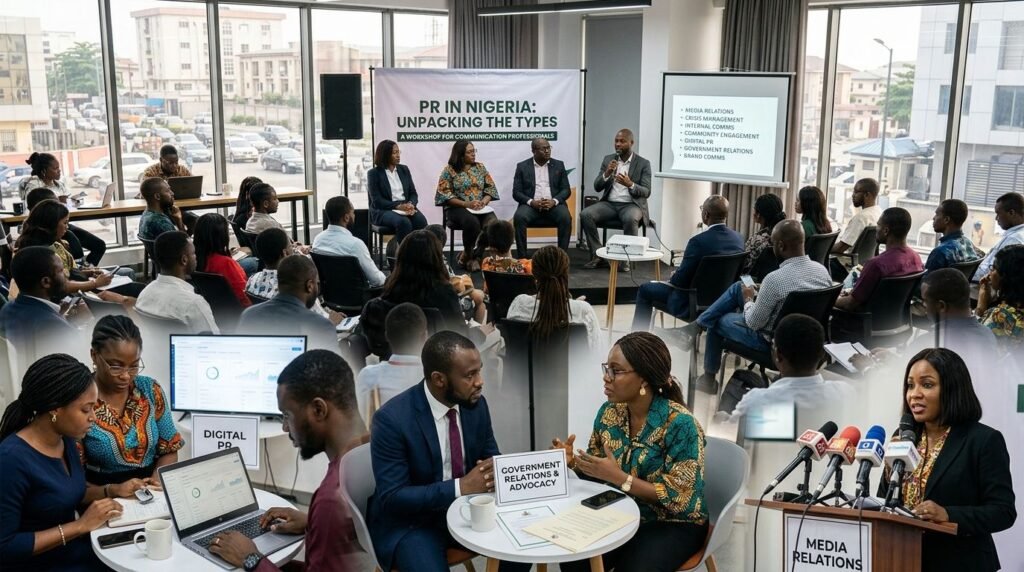
Public relations covers a much wider range of activities, and understanding which type you actually need can save you from paying for the wrong service. This article breaks down the main types of PR practiced in Nigeria, what each one does, and which kinds of businesses typically need them.
Ready to get your brand noticed? Let’s plan your PR strategy today.
What PR Actually Means in the Nigerian Context
Public relations is the work of managing how an organisation is perceived by the public, the media, investors, government, and customers. It is not advertising. You do not pay for the placement directly. The goal is earned coverage and managed reputation, not purchased attention.
In Nigeria, PR has traditionally meant press releases and media relations. That is changing. As more businesses build serious online presences and as social media makes reputations more fragile, the discipline has grown to include digital PR, crisis management, influencer campaigns, and internal communications.
There are at least nine distinct types of PR operating in Nigeria right now. Some overlap. Most businesses only need two or three.
The 9 Types of PR in Nigeria
1. Media Relations
This is the original core of PR. Media relations involves building relationships with journalists, editors, and producers to get your business covered in print, online, broadcast, and radio.
In Nigeria, the most commercially valuable media relationships are with business and news desks at outlets including Punch, BusinessDay, Vanguard, Thisday, The Guardian Nigeria, and Daily Trust. A well-placed feature in BusinessDay can move the needle for a financial services brand far more than three months of Instagram posts.
Media relations is not just about sending press releases. It is about knowing which journalists cover your sector, maintaining contact with them between pitches, and giving them stories that are actually worth publishing. Agencies that do this well have existing contacts and can get your story in front of the right editor within days.
| What It Covers | What It Does Not Cover |
|---|---|
| Press release writing and distribution | Paid advertorial placements |
| Journalist outreach and pitching | Guaranteed media coverage (no ethical agency promises this) |
| Media list management | Social media management |
| Interview coordination and media briefings | Crisis response (separate service) |
2. Crisis Communications
A product recall. A viral complaint. A regulatory investigation. An executive scandal. Crisis communications is the PR discipline that kicks in when something goes wrong and public perception is at risk.
This is one of the most specialised and highest-value types of PR in Nigeria. Done badly, a crisis turns into a full reputational collapse. Done well, it can actually strengthen trust by showing how a business responds under pressure.
Crisis comms work involves developing a response strategy, drafting holding statements, managing media enquiries, and monitoring coverage in real time. Most Nigerian businesses do not have this plan in place before something happens, which is why they end up reacting instead of managing.
The cost of crisis communications management in Nigeria ranges from ₦500,000 to ₦1,500,000 per incident, depending on severity and duration.
3. Corporate PR
Corporate PR manages the overall reputation of a company as an institution, not just its products or services. It is aimed at shareholders, potential investors, government regulators, and the broader business community.
This type of PR matters most for large enterprises, publicly listed companies, and businesses operating in regulated sectors like banking, insurance, oil and gas, and telecoms. Corporate PR includes executive profiling, annual report communications, stakeholder briefings, and thought leadership placements.
In Abuja, corporate PR is also important for businesses that want government contracts or partnerships. Being seen as a credible, well-established institution in the right media creates the perception that supports those relationships.
4. Product and Brand PR
Product PR is what most SMEs and consumer brands in Nigeria are actually looking for when they say “we need PR.” It involves generating media coverage and public attention around a specific product, service, or brand launch.
This includes launch events, influencer seedings, product reviews, brand features, and promotional campaigns that generate editorial coverage rather than paid ads. A Lagos fashion brand doing a collection launch, a fintech company releasing a new payments feature, or an Abuja restaurant opening a second location are all scenarios where product PR is the right tool.
Product PR campaigns in Nigeria typically cost between ₦300,000 and ₦700,000 for a managed launch, depending on the number of outlets targeted and whether events are involved.
5. Digital PR
Digital PR is where traditional public relations meets SEO and online visibility. The goal is to get your brand mentioned, linked to, and cited on high-authority Nigerian and international websites, which builds both reputation and search rankings.
A company featured on BusinessDay’s website, Yahoo Finance, or a major industry blog gets a backlink. That backlink signals to Google that the site is credible. Over time, consistent digital PR coverage improves organic search performance in ways that paid ads cannot replicate.
SoniBaze Digital handles digital PR through its press release distribution service, which reaches over 20,000 media platforms. For businesses that want both reputation management and SEO benefit from their PR spend, digital PR is the most commercially efficient option.
6. Government and Public Affairs PR
Public affairs PR manages a company’s relationship with government, regulators, and policy-making bodies. It is common in industries where regulatory approval or government cooperation is essential to operations.
In Nigeria, this applies most to businesses in oil and gas, construction, power, telecoms, and healthcare. Public affairs PR includes regulatory communications, policy monitoring, government relations strategies, and positioning your organisation positively with relevant ministries or agencies.
This is a specialised field. Few agencies in Nigeria offer genuine public affairs expertise. It tends to be handled either by large integrated agencies or by consultants with direct government relations experience.
7. Internal Communications PR
Internal communications is often overlooked because it does not generate media coverage. But for growing Nigerian businesses and large organisations, how information moves internally has a direct impact on staff performance, culture, and retention.
Internal PR involves managing how leadership communicates with staff, developing employee communication strategies, handling announcements around structural changes, and managing reputation during difficult periods like redundancies or leadership transitions.
This type of PR matters most for companies with more than 50 employees, organisations going through mergers or restructuring, and multinationals operating in Nigeria with headquarters abroad.
8. Community Relations PR
Community relations PR manages how a company is perceived by the communities where it operates. In Nigeria, this is especially important for companies in extractive industries, large construction projects, or businesses operating in communities with strong local leadership structures.
It involves engagement with community leaders, CSR communication, handling grievances, and building goodwill through visible social investment. A company that manages community relations well faces fewer disruptions, secures social licence to operate, and builds local goodwill that is difficult to put a price on.
Even for smaller businesses, community relations has a practical value. An Abuja business that is seen as genuinely invested in its local area builds loyalty among customers who want to support businesses that give back.
9. Influencer and Social PR
Social PR sits at the intersection of public relations and social media marketing. It involves using influencers, content creators, and community figures to shape public perception and generate organic buzz around a brand.
In Nigeria, influencer PR is a growing and commercially active space. Micro-influencers with between 10,000 and 100,000 followers in specific niches can deliver more credible brand endorsements than traditional media placements for consumer-facing brands. The key is authenticity. Audiences in Nigeria are quick to identify paid promotions that feel forced.
Social PR campaigns in Nigeria targeting the FCT market typically run between ₦100,000 and ₦600,000 depending on the number of influencers engaged and the scope of content required.
Ready to get your brand noticed? Let’s plan your PR strategy today.
Types of PR at a Glance
| PR Type | Primary Goal | Best For |
|---|---|---|
| Media Relations | Press coverage in newspapers, broadcast, and online | All business types, especially at launch or growth stages |
| Crisis Communications | Reputation protection when something goes wrong | Any business facing public scrutiny or controversy |
| Corporate PR | Institutional credibility with investors and government | Large enterprises, regulated industries |
| Product and Brand PR | Coverage for a specific product, service, or launch | SMEs, consumer brands, restaurants, retail, tech |
| Digital PR | Online media coverage + SEO backlinks | Businesses wanting both reputation and search visibility |
| Government and Public Affairs | Regulatory and government relationships | Oil and gas, construction, healthcare, telecoms |
| Internal Communications | Staff communication and culture management | Companies with 50+ employees, businesses restructuring |
| Community Relations | Local goodwill and social licence to operate | Extractive industries, large infrastructure projects, local SMEs |
| Influencer and Social PR | Consumer awareness through creators and community figures | Consumer brands, food and beverage, fashion, entertainment |
Which Type of PR Do Most Nigerian Businesses Actually Need?
Most SMEs and growing businesses in Nigeria need two types: media relations and digital PR. Together these cover press coverage, online visibility, and SEO benefit, which is the most commercially useful combination for a business that is not in crisis and is not in a heavily regulated industry.
Product PR is useful at key moments, particularly around launches. Crisis communications is something every business should have a basic plan for even if they never use it. The other types apply to more specific situations.
If you are not sure which type fits your situation, the practical test is this: are you trying to build general awareness, improve your search rankings, or respond to a specific event? The answer tells you which type of PR activity to prioritise.

Frequently Asked Questions
Is PR the same as advertising in Nigeria?
No. Advertising is paid placement. You pay for the space and control the message completely. PR is earned coverage, where a journalist or influencer covers your brand because it is genuinely newsworthy or relevant to their audience. PR placements carry more credibility than ads because they come from a third party, but they are harder to control and cannot be guaranteed.
How much does PR cost in Nigeria?
It depends on the type and scope. A single press release with distribution typically costs between ₦50,000 and ₦150,000. Monthly PR retainers at established Nigerian agencies start from around ₦150,000 for basic media relations and go up to ₦2,500,000 or more for premium corporate PR with full media relations, events, and crisis preparedness included.
Can a small business in Nigeria afford PR?
Yes, particularly digital PR and product PR, which can be done on a project basis without a long-term retainer. A business launching a new product or opening a new location can run a targeted PR campaign for between ₦100,000 and ₦400,000 and get meaningful media coverage. The key is choosing the right type of PR for the specific goal rather than hiring an agency for ongoing retainer work before the business is ready.
What is the difference between digital PR and SEO?
SEO is the technical and content work that helps a website rank on Google. Digital PR generates media coverage and backlinks from external websites, which is one of the strongest signals Google uses to rank sites. The two disciplines complement each other. Digital PR produces the third-party mentions that SEO needs to build authority, and SEO shapes the content strategy that gives digital PR something credible to promote.
How long does it take for PR to show results in Nigeria?
Media coverage can happen within days of a well-pitched press release. Broadcast features and long-form profiles take longer, typically two to six weeks from pitch to publication. Reputational results and organic search improvements from digital PR take longer still, often three to six months of consistent activity before measurable impact is visible.
Do Nigerian businesses need a PR agency or can they do it themselves?
Simple media relations and press release distribution can be done in-house with the right contacts and writing skills. Crisis communications, corporate PR, and government affairs almost always require specialist agency support. Most growing businesses do best with a hybrid approach: basic media relations handled in-house and specialist PR services brought in for launches, crises, or major campaigns.
Conclusion: PR Is Not One Thing
Most businesses that say they need PR are thinking of one type when they say it. But PR covers nine distinct disciplines, and knowing which one applies to your situation makes the difference between spending money effectively and spending it on the wrong service.
Media relations and digital PR deliver the most practical return for the widest range of Nigerian businesses. Crisis communications is the most urgent when it is needed. Corporate and government affairs PR serve specific industries. Influencer and social PR are growing fast and increasingly relevant for consumer brands.
The right starting point is understanding what you are actually trying to achieve, then matching the type of PR to that goal.
Ready to get your brand noticed? Let’s plan your PR strategy today.