Most press releases that get ignored are not ignored because the story is bad. They are ignored because the structure is wrong. Journalists receive dozens of releases every day. The ones that get read are the ones that are formatted correctly and get to the point fast.
A press release in Nigeria follows the same international structure used by newsrooms worldwide. But knowing each component, what it does and where it goes, is what separates a release that gets published from one that gets deleted.
This article covers all seven parts of a press release, what each one must contain, and the mistakes Nigerian businesses commonly make with each component.
Want your brand featured in top media outlets? Let’s make it happen with our press release.
Why Structure Matters More Than You Think
A journalist scanning your release is not reading it the way you wrote it. They are skimming for the headline, the lead paragraph, and the quote. If those three elements do not hold up, the rest never gets read.
Nigerian editors at outlets like Punch, BusinessDay, Vanguard, and Daily Trust receive releases from businesses, government agencies, and PR firms daily. The ones with poor structure, missing datelines, or weak headlines go straight to the bin. Getting the structure right does not guarantee coverage. But getting it wrong almost guarantees you will not get any.
The 7 Parts of a Press Release in Nigeria
1. The Headline
The headline is the single most important line in your entire press release. It determines whether a journalist keeps reading or moves on. One sentence. Specific. Factual. Newsworthy.
A good Nigerian press release headline names what happened, who it happened to, and why it matters. “Karu-Based Tech Academy Launches Free Digital Marketing Training for 500 Abuja Youths” tells the reader everything they need to know in one line. “Exciting New Development Announced” tells them nothing.
Keep the headline under 15 words. Use title case. Do not use exclamation marks or promotional language. Journalists are not your customers. They are gatekeepers, and they respond to news, not advertising copy.
What to avoid: Vague language, superlatives like “leading” or “revolutionary,” and anything that reads more like an advertisement than a news announcement.
| Weak Headline | Stronger Version |
|---|---|
| Company Announces Major News | Lagos Fintech Raises ₦500M Series A to Expand Across West Africa |
| Exciting Product Launch | Abuja Property Firm Lists 200 New Affordable Housing Units in Karu |
| New Partnership Announced | SoniBaze Digital Partners with FCT Schools to Deliver Free SEO Training |

2. The Dateline
The dateline is the line that appears at the very start of your first paragraph, before the body text begins. It states the city of origin and the date of release.
In Nigeria, the standard format looks like this: ABUJA, April 30, 2025 — followed immediately by the opening sentence of the release. The city name is written in capitals. The date follows in standard format. A short dash or hyphen separates the dateline from the body text.
It is a small detail. But a missing or incorrectly formatted dateline signals to editors that the sender does not know what they are doing. It also tells journalists where the story originates, which matters for regionally focused outlets like Daily Trust in the north or Vanguard in the south.
What to avoid: Skipping the dateline entirely, using informal date formats like “30/04/25,” or placing the date elsewhere in the document.
3. The Lead Paragraph
The lead paragraph is your first paragraph after the dateline. It needs to answer five questions: who, what, when, where, and why. All five. In one short paragraph.
This is where most Nigerian press releases fail. Business owners want to build context before getting to the point. Journalists want the point first. Write the most important information at the top and add context below, not the other way around.
A strong lead paragraph for a Nigerian press release is two to three sentences maximum. It states the news plainly and gives the reader enough information to understand what happened without needing to read further. Think of it as a summary, not an introduction.
What to avoid: Opening with company history, background on your industry, or sentences that do not contain the actual news. Every word in the lead paragraph should be earning its place.
4. The Body Paragraphs
The body of the press release expands on what the lead introduced. It provides context, supporting details, background information, and any additional facts a journalist would need to write a complete story.
Each paragraph in the body should cover one idea. Keep paragraphs short, two to three sentences each. Write in third person throughout. Nigerian press releases that shift between first and third person mid-document create a jarring reading experience that undermines credibility.
Use the inverted pyramid structure throughout the body. The most important details come first, followed by supporting information, followed by the least critical background. This structure means that even if a journalist or editor trims the release from the bottom, the essential facts survive.
The body typically runs between three and five paragraphs. Longer releases are not more credible. They are harder to read and more likely to be cut down or set aside entirely.
What to avoid: Writing in first person, padding paragraphs with promotional language, burying important facts in the third or fourth paragraph, and using jargon your audience may not understand.
5. The Quote
Every press release needs at least one quote. It is not optional. The quote is what gives the release a human voice and provides journalists with a source they can attribute directly.
The quote should come from a named individual with a specific title, such as the CEO, founder, director, or spokesperson of the organisation. It should add something that the body paragraphs did not already say, an opinion, a perspective, or a forward-looking statement. A quote that simply repeats factual information already covered in the body is a wasted opportunity.
Write quotes that sound like something a real person would say in a professional context. “We are excited to bring this service to Nigerian businesses and look forward to the impact it will create” is functional but flat. “This fills a gap that has held back thousands of SMEs in the FCT for years” is more specific and more quotable.
In Nigeria, having a quote from a senior figure at a partner organisation, a government official, or a recognised industry voice significantly increases the chances of a release being picked up by major outlets.
What to avoid: Quotes that are pure marketing language, anonymous quotes, quotes without a named title, and more than two quotes in a single release unless the story specifically involves multiple parties.
| Weak Quote | Stronger Version |
|---|---|
| “We are pleased to announce this development.” | “Nigerian SMEs have needed access to this kind of infrastructure for years. This changes that.” |
| “This is an exciting opportunity for our company.” | “We expect this to create over 200 direct jobs in Abuja within the first 18 months.” |
6. The Boilerplate
The boilerplate is a short standard paragraph at the bottom of the release that describes your organisation. It appears after the main body and is separated by the label About [Company Name].
Think of it as your company’s permanent 80 to 100 word bio. It covers who you are, what you do, where you operate, and any credentials worth noting. It does not change from release to release. Once you write a solid boilerplate, you use it on every press release you send.
A Nigerian business boilerplate should include the company name, what it does, who it serves, where it is based, and any relevant credentials or notable facts. For SoniBaze Digital, that would cover being a full-service digital marketing agency based in Karu, Abuja, the services offered, the rating on Sortlist, and the tech academy.
What to avoid: Making the boilerplate too long, updating it with release-specific information, or skipping it entirely. Journalists use the boilerplate to verify the organisation and decide whether the source is credible.
7. The Media Contact Information
The last element of every press release is the media contact block. This tells journalists exactly who to call or email if they want more information, an interview, or high-resolution images.
The contact block should include a full name, job title, phone number, and email address. In Nigeria, include a WhatsApp number if possible since many journalists will reach out via WhatsApp rather than calling or emailing. Some releases also include a website URL and social media handles.
Place the contact block at the very end of the release, after the boilerplate, clearly labelled as Media Contact or For Media Enquiries.
Do not use a generic inbox like info@yourcompany.com for press release contacts. Journalists need to reach a real person quickly. Use the email and phone of whoever will actually respond.
What to avoid: Missing contact details, using a general company phone number that nobody answers, or providing contact information for someone who does not know enough about the release to answer follow-up questions.
Want your brand featured in top media outlets? Let’s make it happen with our press release.
The 7 Parts at a Glance
| Component | Position | Purpose | Ideal Length |
|---|---|---|---|
| Headline | Top of release | Capture attention, state the news | Under 15 words |
| Dateline | Start of first paragraph | State city and date of release | One line |
| Lead Paragraph | Opening paragraph | Answer who, what, when, where, why | 2 to 3 sentences |
| Body Paragraphs | Middle section | Provide context and supporting detail | 3 to 5 paragraphs |
| Quote | Within or after body | Add human voice and attributable statement | 1 to 2 quotes |
| Boilerplate | After body | Describe the organisation | 80 to 100 words |
| Media Contact | Bottom of release | Direct journalists to a real person | Name, phone, email |
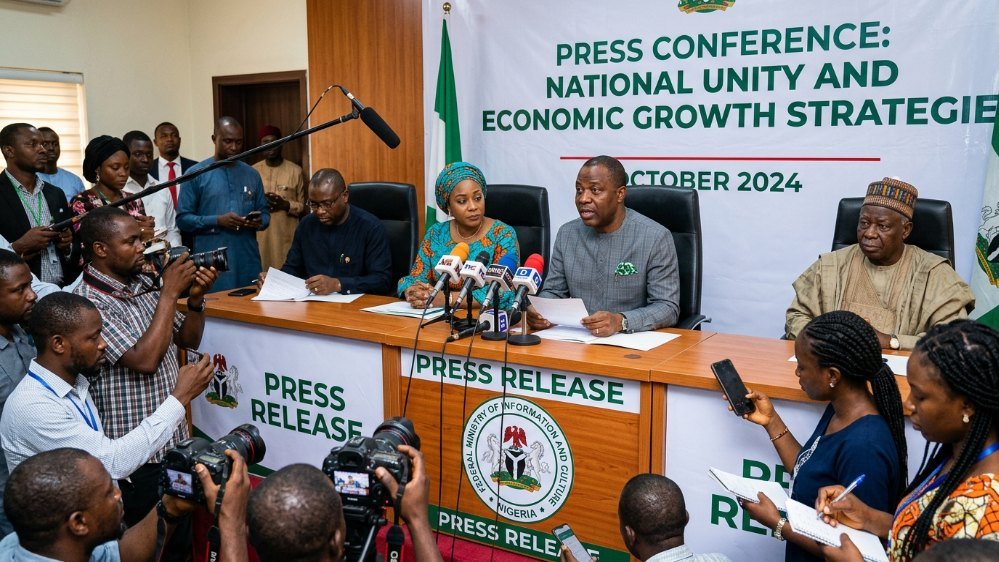
Common Mistakes Nigerian Businesses Make With Press Releases
Starting with a weak headline is the single most damaging mistake. No amount of strong body copy rescues a release that a journalist decided not to read past the first line.
Writing in first person throughout is another frequent error. Press releases are written in third person. Switching to “we” mid-document undermines the credibility of the release and signals that it was written by someone without media experience.
Many Nigerian organisations also send releases with no quote at all, or with a quote from an unnamed “company spokesperson.” Both weaken the release. Journalists need a named, titled individual they can credit.
Finally, skipping the boilerplate or writing a different version every time wastes an opportunity to build consistent brand recognition in every media outlet that carries your stories.
Frequently Asked Questions
How long should a press release be in Nigeria?
A standard press release in Nigeria runs between 400 and 600 words. That is long enough to cover all seven components without padding. Releases that run past 800 words are rarely read in full by editors. Shorter is almost always better. The goal is to give journalists everything they need to write a story, not to tell the whole story yourself.
Do Nigerian press releases need to follow the same format as international ones?
Yes. The seven-part structure is the global standard and Nigerian newsrooms expect it. Major outlets like Punch, BusinessDay, Vanguard, The Guardian Nigeria, and Daily Trust all apply the same editorial criteria as international publications. A release that is missing a dateline, has no quote, or skips the boilerplate will look amateurish regardless of the story it contains.
Should you send a press release as an email attachment or in the email body?
Paste the release directly into the email body. Do not send it as a Word document attachment or a PDF. Journalists are less likely to open attachments from unfamiliar senders, and many email filters flag attachments as potential spam. Include the headline in the email subject line and the full release in the email body with no formatting beyond the basics.
How many quotes should a press release have?
One strong quote from a senior internal figure is the minimum. Two quotes work well when the release involves a partnership or collaboration, with one quote from each party. Going beyond two quotes in a standard release dilutes the impact of each one. The quote should add something new to the story rather than summarise what was already said in the body.
What is the difference between a press release and a media pitch?
A press release is a formal, structured announcement written to be published or excerpted directly. A media pitch is a shorter, more personal message sent to a specific journalist to suggest a story idea. Press releases go to a broad distribution list. Media pitches are targeted and conversational. For major announcements, sending a press release alongside a brief personalised pitch to key journalists significantly improves coverage rates.
Does the order of the seven components ever change?
The headline always comes first and the media contact always comes last. The core body structure, lead paragraph, body paragraphs, quote, and boilerplate, follows a fixed order. What can vary is where exactly within the body paragraphs the quote is placed. Some releases put it after the second paragraph. Others place it at the end of the body before the boilerplate. Both are acceptable. The key is that the quote appears within the body section and before the boilerplate.
Conclusion: Structure Is What Gets You Published
A well-written story buried in a poorly structured release rarely gets coverage. The seven components exist because they reflect how journalists and editors read, evaluate, and use the information you send them.
Get the headline right. Lead with the news. Add a real, named quote. Close with a clean boilerplate and complete contact details. Every component has a job, and when all seven are done well, your release looks professional from the first line to the last.
SoniBaze Digital writes and distributes press releases for businesses across Nigeria through a network of over 20,000 media platforms.
Want your brand featured in top media outlets? Let’s make it happen with our press release.