Most press releases sent to Nigerian media desks never get published. Not because the news isn’t real, but because the writing is weak, the format is wrong, or the release gives editors no reason to care. A bad press release wastes money and time.
A good one gets picked up, quoted, and shared. This article covers exactly what separates a press release that lands in print or online from one that ends up deleted.
Want your brand featured in top media outlets? Let’s make it happen with our press release.
Why Press Releases Still Matter in Nigeria
Nigeria has over 100 active online news platforms and hundreds of print and broadcast outlets. A well-placed press release can reach millions of readers across Channels TV, Punch, Vanguard, Businessday, TheCable, and dozens of regional platforms simultaneously.
The challenge is volume. Journalists in Lagos and Abuja receive dozens of press releases daily. If yours doesn’t immediately communicate value, it’s gone. Understanding what Nigerian media professionals actually look for is the first step to getting published consistently.
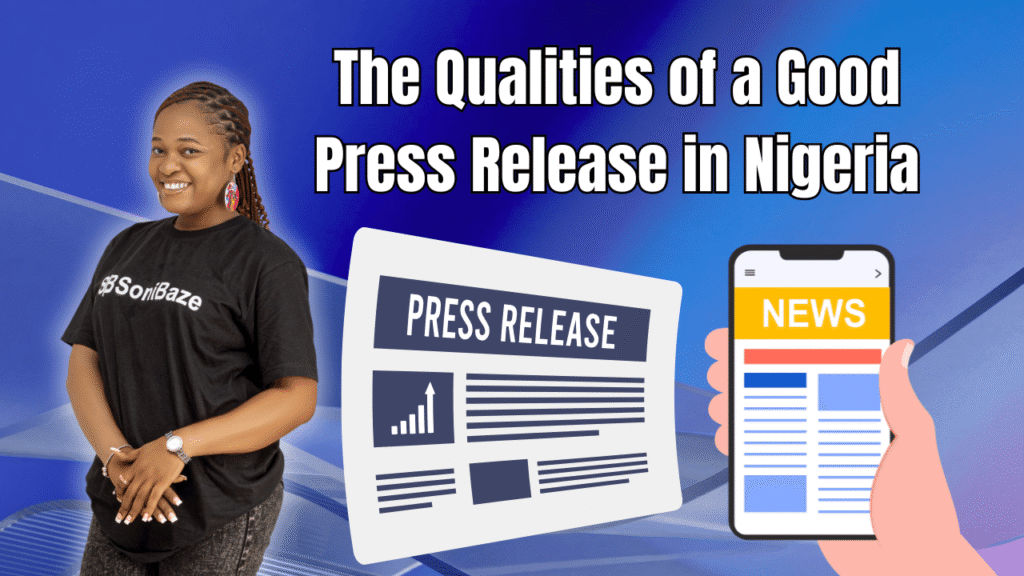
The Qualities of a Good Press Release in Nigeria
1. A Headline That States the News Directly
The headline is everything. Nigerian editors decide in under five seconds whether a release is worth reading.
Your headline should tell the reader what happened, who it involves, and why it matters. No clever wordplay. No vague teasing. A headline like “Abuja Fintech Startup Raises ₦2 Billion in Series A Funding” will always outperform “Company Achieves Major Milestone in Growth Journey.” One states the news. The other says nothing.
Keep headlines between 10 and 15 words. Make every word carry weight.
2. A Strong Opening Paragraph That Covers the Basics
Journalists call it the lead. It answers who, what, when, where, and why, all in the first two to three sentences.
If an editor reads only your first paragraph and nothing else, they should still understand the full story. Many releases bury the most important information in the third or fourth paragraph. By then, most editors have already moved on.
Write your lead as if you’re explaining the story to someone who has never heard of your company.
3. Newsworthiness — A Reason for People to Care
This is where most Nigerian press releases fail. Companies send releases about things that matter internally but mean nothing to a general audience. Announcing that you have “rebranded your visual identity” is not news. Announcing that you’ve partnered with the Federal Government to supply medical equipment to 500 rural health centres is.
Ask yourself honestly: would a journalist at Punch or Businessday call this worth covering? If your release is about an award, a major hire, a product launch, a funding round, a policy impact, or a significant community initiative, you likely have a story. If it’s an internal celebration dressed up as news, you don’t.
4. Factual, Specific Language Throughout
Vague claims destroy credibility. “The company has significantly grown its customer base” means nothing. “The company added 40,000 new customers between January and March 2025” is a fact that editors can quote and readers can understand.
Nigerian media, particularly the business press, will verify claims before publishing. If your numbers don’t check out or your statements can’t be confirmed, the release gets dropped. Use specific figures, dates, and verifiable details wherever possible.
5. A Relevant, Well-Attributed Quote
A press release without a quote reads like a government bulletin. One good quote from a named executive or spokesperson adds a human voice to the announcement and gives journalists something to lift directly.
The quote should add perspective, not repeat the headline. If your headline says you raised funding, the quote should say what the funding will be used for, or what it means for your customers. Keep it to two or three sentences. Attribute it clearly with the full name and title of the speaker.
6. Correct Press Release Format
Nigerian media professionals recognise the standard format and trust it. Releases that ignore the format are treated as promotional content rather than news.
The standard structure runs in this order: headline, dateline, lead paragraph, body paragraphs (most important to least important), one or two quotes, boilerplate about the company, and contact details at the end. The dateline should include the city and date of issue. Abuja, April 26, 2025 is a correct dateline. “Recently” is not.
| Element | What It Should Include |
|---|---|
| Headline | News in 10 to 15 words, no hype language |
| Dateline | City of origin and date of issue |
| Lead paragraph | Who, what, when, where, why in 2 to 3 sentences |
| Body | Supporting detail in order of importance |
| Quote | Attribution with full name and title |
| Boilerplate | 3 to 5 sentence company description |
| Contact | Name, phone number, and email of PR contact |
7. A Boilerplate That Describes Your Company Accurately
The boilerplate sits at the bottom of every press release. It’s a brief paragraph, usually three to five sentences, that tells editors who your company is without requiring them to search for it.
It should state what the company does, where it operates, when it was founded if relevant, and any notable facts like client base size, certifications, or geographic reach. Update your boilerplate whenever your business changes significantly. An outdated boilerplate with wrong information will erode trust with editors who know your brand.
8. The Right Length
Most good press releases are between 400 and 600 words. That’s enough room to cover the story, include a quote, and close with the boilerplate.
Longer is not better. Editors are not reading your full document on a good day. If your release runs to 1,000 words, you’ve almost certainly included information that belongs in a feature article rather than a news announcement. Cut anything that doesn’t directly support the main story.
9. No Promotional Language
A press release is not an advertisement. Nigerian journalists are particularly sensitive to this distinction, and releases written in marketing copy style rarely get published as editorial content.
Avoid words like amazing, world-class, industry-leading, cutting-edge, and revolutionary. These words signal that you are selling, not reporting. Write the same way a journalist would write about your company in a news article, factual, third-person, and restrained.
10. Accurate Contact Information
Every press release should end with the contact details of a real person who can answer questions and provide additional information quickly. A dedicated PR contact, not a generic info@ email, signals that your organisation is prepared for follow-up.
Nigerian journalists work to tight deadlines. If they can’t reach someone within a few hours to verify a detail, they move on to the next story. Slow response to media enquiries is one of the most common reasons a release doesn’t make it to print even after an editor shows interest.
Want your brand featured in top media outlets? Let’s make it happen with our press release.
Quick Reference: Press Release Quality Checklist
| Quality | What to Check |
|---|---|
| Headline | States the news clearly in 10 to 15 words, no vague language |
| Lead paragraph | Covers who, what, when, where, why in 2 to 3 sentences |
| Newsworthiness | Would an independent journalist consider this worth covering? |
| Specificity | All claims backed by named figures, dates, or verifiable facts |
| Quote | Attributed to a named person, adds perspective beyond the headline |
| Format | Follows standard structure: headline, dateline, body, quote, boilerplate, contact |
| Boilerplate | Current, accurate 3 to 5 sentence company description |
| Length | 400 to 600 words total |
| Tone | News writing style, no promotional or advertising language |
| Contact details | Named person, active phone number, and monitored email address |
Frequently Asked Questions
How long should a press release be in Nigeria?
Between 400 and 600 words is the standard range. Anything shorter may not provide enough context for editors to publish without additional research. Anything longer risks losing attention before the key information is reached. If your announcement has more depth, consider pitching a longer feature piece as a follow-up rather than expanding the release.
Should I send a press release in Word or PDF format?
Most Nigerian media desks prefer releases in the body of an email or attached as a Word document, because journalists often need to copy and edit text directly. PDF is acceptable but less convenient. Always paste the full text of the release into the email body as well, in case the attachment doesn’t open. Never send a press release as an image.
What is the best time to send a press release in Nigeria?
Tuesday, Wednesday, and Thursday mornings between 8am and 10am consistently produce the best open and response rates. Mondays are busy with editorial planning meetings. Fridays see attention drift toward weekend content. Avoid public holidays and the week of major national news events, when media desks are overwhelmed and non-urgent releases get delayed.
Can a press release help with SEO in Nigeria?
Yes, directly. When your press release is picked up by high-authority Nigerian news sites like TheCable, Businessday, or NaijaNews, you gain backlinks that improve your website’s search engine rankings. Over time, regular press activity builds domain authority. SoniBaze Digital distributes press releases to over 20,000 media platforms, including Nigerian outlets that carry strong SEO value.
What makes a Nigerian press release different from a global one?
Context and tone. Nigerian media audiences respond better to specific local context, including mentions of relevant government bodies, Nigerian market figures, and named local partners or clients. The writing culture in Nigerian media is also slightly more formal than in Western outlets. Colloquial language and overly casual phrasing can reduce the chance of publication in serious business and national press.
Do I need a PR agency to write and distribute a press release in Nigeria?
Not necessarily. If your team has someone with strong writing skills and media contacts, you can handle it internally. However, a PR agency or distribution service adds value through established media relationships, a wider distribution network, and knowledge of which editors cover which beats. For announcements that need broad national or sector-specific coverage, professional distribution typically produces better results than self-managed outreach.
Conclusion: Good Press Releases Are Built, Not Written
A press release that gets published is the result of clear thinking before a single word goes on the page. Know your news. Know your audience. Know the format.
The ten qualities above are not suggestions. They are the baseline that Nigerian editors expect. Miss one and your release may still get through. Miss several and it won’t.
If your organisation issues press releases regularly, build a simple internal checklist based on this article and review every release against it before distribution. The few extra minutes will improve your publication rate significantly.
Want your brand featured in top media outlets? Let’s make it happen with our press release.