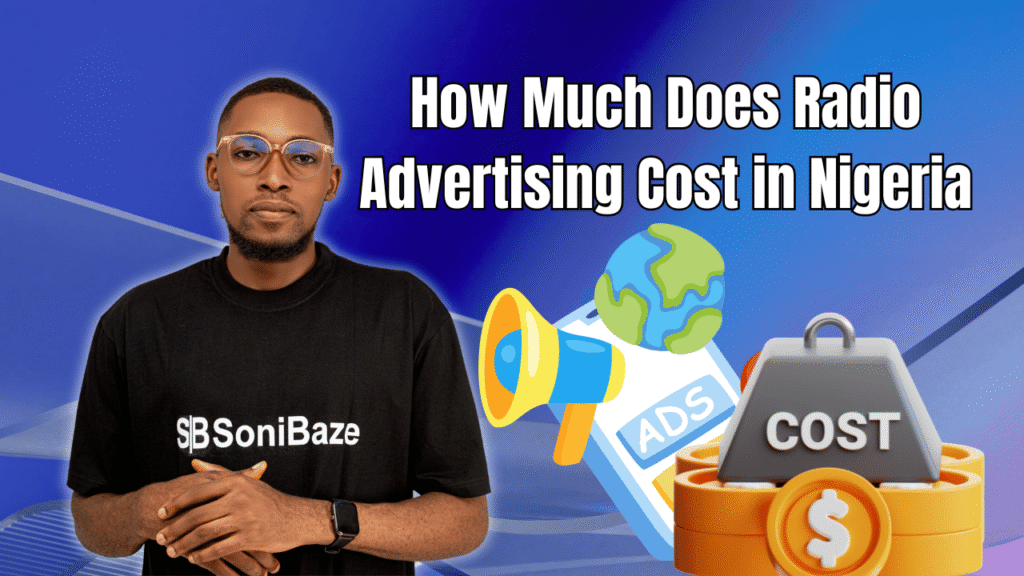
Radio advertising in Nigeria does not have a fixed price list. Ask three different stations the same question and you will get three different answers. Ask an agency the same question and you will get a fourth. The pricing depends on more variables than most business owners expect, and not knowing those variables upfront is how budgets get wasted.
This article breaks down the actual cost of radio advertising in Nigeria, what drives the price up or down, what a realistic campaign budget looks like, and how to know if you are paying a fair rate.
Get your brand on air across Abuja radio stations and beyond with powerful radio ads.
Why Radio Still Matters in Nigeria
Over 90% of Nigerians report listening to radio at least once a week. That is not a small number. Nigeria has more than 300 active radio stations serving a population of over 200 million people, and radio remains the leading home advertising channel in the country.
For businesses that cannot afford TV or are not yet seeing returns from digital, radio fills the middle ground. It is affordable relative to television. It reaches audiences that social media misses. And in cities like Lagos and Abuja where commuters spend hours in traffic every day, drive-time radio slots are some of the most competitive advertising real estate in Nigeria.
Radio also makes up between 20 and 46 percent of the marketing mix for major industries in Nigeria, including banking, electronics, beauty, and FMCG goods. These are not small brands experimenting. They keep coming back because it works.
What Affects the Cost of Radio Advertising in Nigeria
The Station You Choose
This is the single biggest cost driver. Premium national stations like Cool FM, Wazobia FM, Inspiration FM, and Smooth FM charge significantly more than mid-tier or state-owned stations. Wazobia FM averages 9% of all radio listeners in Nigeria. Cool FM and Ray Power follow closely. Advertising on these stations costs more because the audience is larger and more engaged.
State-owned or community stations in cities like Kano, Enugu, or Ibadan charge considerably less. If your product has a regional rather than national focus, a smaller station might give you better value per naira spent.
The Time Slot
Timing changes everything. Drive-time slots, typically 7 AM to 9 AM and 4 PM to 7 PM, are the most expensive because that is when the most ears are tuned in. Lagos and Abuja both have notoriously heavy traffic, and commuters listen for long stretches during these hours.
Off-peak slots, mid-morning and late evening, cost less. If budget is tight, off-peak airtime on a strong station can be a more cost-effective option than peak airtime on a weaker one.
The Length of the Ad
Rates are typically priced by spot duration: 15 seconds, 30 seconds, 45 seconds, or 60 seconds. A 30-second spot is the standard. Going to 60 seconds does not simply double the cost in all cases, but it does push the rate noticeably higher.
The Type of Ad
There are three main formats. A spot or jingle is a pre-recorded audio advert. A live read is where a presenter reads your copy on air. A sponsored segment is where your brand is attached to a specific programme, such as news, sports, or a talk show. Each format is priced differently. Sponsored segments and programme sponsorships typically carry a premium.
Frequency and Duration
A single airing means almost nothing in radio advertising. Frequency is the mechanism. Research in the Nigerian market shows that audiences need repeated exposure before they act. Most effective campaigns run a minimum of three to five spots per day over several weeks.
The total number of spots you buy, and for how long, affects whether the station will negotiate rates with you. Volume deals are common. Committing to a six-week or three-month campaign often brings the cost per spot down.
Production Costs
Before your ad ever airs, it has to be made. Scriptwriting, voiceover talent, studio recording, and background music all come at a cost. Basic jingle production in Nigeria starts from around ₦30,000. A fully produced jingle with professional talent can cost between ₦80,000 and ₦250,000 or more, depending on who produces it and what is involved.
This is a cost many businesses overlook when calculating campaign budgets. The airtime rate is only part of the picture.

Radio Advertising Rates in Nigeria
Airtime Rates by Spot Duration
The table below shows general rate ranges across different station tiers. These are market-level estimates for standard spot placements. Peak rates will sit at the higher end.
| Spot Duration | Community / State Stations | Mid-Tier Stations | Premium National Stations |
|---|---|---|---|
| 15 seconds | ₦3,000 – ₦8,000 | ₦8,000 – ₦15,000 | ₦15,000 – ₦30,000 |
| 30 seconds | ₦5,000 – ₦15,000 | ₦15,000 – ₦35,000 | ₦30,000 – ₦80,000 |
| 45 seconds | ₦8,000 – ₦20,000 | ₦20,000 – ₦45,000 | ₦45,000 – ₦100,000 |
| 60 seconds | ₦10,000 – ₦30,000 | ₦30,000 – ₦60,000 | ₦60,000 – ₦150,000 |
For context, Soundcity Radio’s published rate card shows a 30-second spot at approximately ₦14,700 per placement, with syndicated rates across all their locations rising to around ₦35,000 per 30-second slot. Premium stations in Lagos command rates well above this.
Sample Campaign Budget Estimates
| Campaign Type | Duration | Spots Per Day | Estimated Total Airtime Cost |
|---|---|---|---|
| Basic local awareness (community station) | 2 weeks | 3 | ₦60,000 – ₦150,000 |
| Mid-market campaign (mid-tier station) | 4 weeks | 4 | ₦240,000 – ₦560,000 |
| Premium single-city campaign (e.g. Cool FM Lagos) | 4 weeks | 5 | ₦600,000 – ₦1,600,000 |
| Multi-station national campaign | 6 weeks | 4 per station | ₦2,000,000 – ₦6,000,000+ |
These figures cover airtime only. Add production costs on top.
Production Cost Estimates
| Production Type | Estimated Cost |
|---|---|
| Basic voice-over script and recording | ₦30,000 – ₦70,000 |
| Professional jingle with music | ₦80,000 – ₦200,000 |
| Full production with known voice talent | ₦200,000 – ₦500,000+ |
Going Through an Agency vs. Going Direct
Some businesses go directly to the station. Others work through a media buying agency. Both routes have trade-offs.
| Approach | Typical Saving | Practical Notes |
|---|---|---|
| Direct to station | None | You pay the published rate card |
| Via media agency | 15% – 30% below rate card | Agencies have pre-negotiated deals and volume discounts |
<citation index=”4-1″>Agencies in Nigeria have subsidised pricing arrangements with stations. A business that goes directly to a radio station and pays ₦100,000 for a one-minute spot may find an agency can secure the same placement for around ₦70,000 or less.</citation> That gap is meaningful across a multi-week campaign.
What a Realistic Radio Campaign Costs in Nigeria
A small business running a local campaign in Abuja on a mid-tier station for four weeks, with five spots per day and a basic jingle produced, should budget between ₦350,000 and ₦700,000 in total. That covers production and airtime.
A medium-sized business running on a premium station like Wazobia FM or Cool FM in Lagos, with a full four-week campaign at five spots daily, should budget between ₦800,000 and ₦2,000,000 or more. Premium placement on high-traffic programmes adds to that figure.
National campaigns across multiple stations push into the millions quickly. These are not small decisions, and the investment only pays off with a strong script, the right station for your audience, and enough frequency to register.

Red Flags: Signs You Are Being Overcharged
Most businesses do not know the going rate before they negotiate. That information gap works against you. Watch for these warning signs.
You are never shown a rate card. Legitimate stations have published rates. If the sales rep quotes you verbally without documentation, ask for the rate card in writing before agreeing to anything.
The package is vague. A good proposal tells you exactly how many spots you are getting, which time slots they run in, which programmes they are attached to, and what the per-spot rate is. If the proposal says “extensive airtime” or “significant exposure” without specifics, do not sign it.
You are quoted the same price for peak and off-peak slots. They are not the same. Drive-time inventory is more expensive. If a sales rep is quoting you flat rates across the day, either the spots are off-peak or the rate card is being inflated.
There is no mention of spot reports. After a campaign runs, a station should be able to provide a post-campaign report showing when your spots aired. If that is not offered, there is no way to verify you got what you paid for.
Get your brand on air across Abuja radio stations and beyond with powerful radio ads.
Radio vs. Other Advertising Channels in Nigeria
If you are weighing radio against other options, this comparison puts the cost in context.
| Channel | Entry-Level Cost | Reach | Measurability |
|---|---|---|---|
| Radio (community station) | ₦60,000 for 2-week campaign | Local / city-wide | Low |
| Radio (premium national station) | ₦600,000+ for 4-week campaign | National | Low |
| Billboard (Abuja, non-prime) | ₦150,000 – ₦400,000 per month | Location-specific | None |
| Google Ads | ₦50,000+ per month | Targeted national / global | High |
| Meta Ads (Facebook/Instagram) | ₦30,000+ per month | Targeted national / global | High |
| TV (mid-tier channel, 30 seconds) | ₦200,000 – ₦600,000 per spot | National | Low |
Radio is cheaper than TV. It is harder to track than digital. For brand awareness at scale, it works. For direct response or lead generation, digital advertising gives you far more control over what you spend and what you get back.
SoniBaze Digital manages Google Ads and Meta Ads campaigns for businesses across Nigeria, with full reporting on every naira spent. If you are comparing channels and want a clear picture of what digital can deliver for your budget, that is a conversation worth having.
Frequently Asked Questions
How much does a 30-second radio advert cost in Nigeria?
A 30-second radio spot in Nigeria costs between ₦5,000 and ₦80,000 per airing depending on the station tier and time slot. Community and state-owned stations sit at the lower end. Premium national stations like Cool FM and Wazobia FM charge significantly more, particularly for peak drive-time placements.
Can a small business afford radio advertising in Nigeria?
Yes, but budget expectations need to be realistic. A small business can run a basic local campaign on a community or state-owned station for between ₦60,000 and ₦200,000 over two to four weeks, production included. The limitation is reach. Community stations cover a smaller audience, so the impact depends on how well the message is targeted.
Is it cheaper to use an agency for radio advertising in Nigeria?
In most cases, yes. Agencies have pre-negotiated rates with stations and can access volume discounts that individual businesses cannot. The saving is typically between 15 and 30 percent off the published rate card. For a campaign costing ₦500,000 in airtime, that difference is meaningful.
How many times should a radio ad run for it to be effective?
Most advertising research recommends a minimum of three to five exposures before an audience takes action. For radio, that typically means running at least three to four spots per day over a minimum of two to three weeks. A single week of airtime rarely produces measurable results. Frequency over time is what builds recall.
What is the difference between a jingle and a live read on Nigerian radio?
A jingle is a pre-recorded audio advert with music, voiceover, and production elements played during ad breaks. A live read is where the station presenter reads your ad copy directly on air, often in their own voice and style. Live reads can feel more personal and often command higher attention from listeners. They also tend to cost more than standard spot placements at premium stations.
Do radio stations in Nigeria offer packages for new advertisers?
Some stations offer introductory packages for new clients, particularly smaller or mid-tier stations looking to fill unsold inventory. These packages often come with discounted rates in exchange for flexibility on time slots. It is worth asking. The worst outcome is being told no, and negotiating from a lower starting point is always better than accepting the first number quoted.
Conclusion: Know the Numbers Before You Commit
Radio advertising in Nigeria can deliver genuine reach at a reasonable cost. It can also absorb a large budget without producing measurable returns if the campaign is poorly planned. The difference comes down to choosing the right station for your audience, negotiating the right rate, running enough spots for frequency to work, and making sure your production is strong enough to hold attention in a 30-second window.
Before committing to any radio campaign, get the rate card in writing, compare at least two or three stations, understand what time slots your spots will actually run in, and factor production into the total budget. A campaign that looks affordable at first quote can look very different once all the costs are on the table.
Get your brand on air across Abuja radio stations and beyond with powerful radio ads.