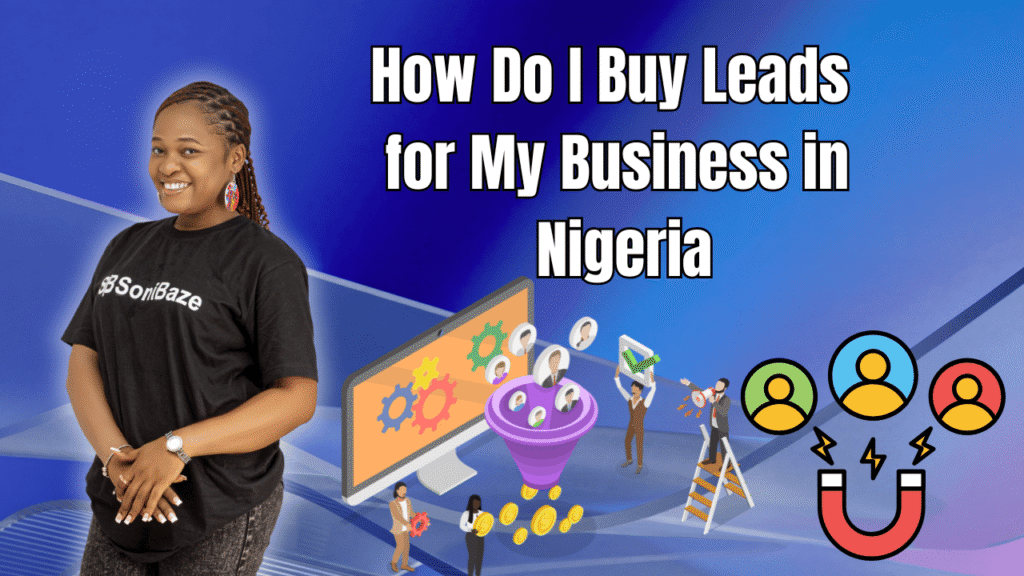
Every business in Nigeria needs customers, but finding them consistently is one of the hardest parts of running a company. Some business owners wait for referrals. Others post on social media and hope people reach out. A growing number are asking a more direct question: can I simply buy the leads I need?
The answer is yes, but how you do it, who you buy from, and what you do with those leads afterward makes the difference between a worthwhile investment and wasted money. This article explains exactly what buying leads means in the Nigerian context, what your options are, what it costs, and how to make it work for your business.
Let’s generate qualified leads for your business. We’ve got the strategy that converts.
What Does Buying Leads Actually Mean in Nigeria?
A lead is any person or business that has shown some level of interest in a product or service like yours. Buying leads means paying a third party to provide you with contact information for potential customers, rather than generating those contacts yourself through marketing.
In Nigeria, this can take several different forms. Some vendors sell pre-collected databases of phone numbers and email addresses organized by industry or location. Others run targeted advertising campaigns on your behalf and deliver the names and contact details of people who responded. Some platforms connect businesses directly with people who are actively searching for specific services.
The important distinction is between a cold contact and a warm lead. A cold contact is someone whose number was scraped from a directory or database. A warm lead is someone who actually expressed interest in something related to what you sell. Warm leads convert at significantly higher rates and are worth considerably more.
Types of Leads You Can Buy in Nigeria
Understanding what kind of lead you are purchasing helps you evaluate whether the price is justified and what follow-up strategy to use.
| Lead Type | What It Is | Typical Conversion Rate | Best For |
|---|---|---|---|
| Cold database leads | Pre-collected phone numbers or emails, no prior interest expressed | Very low (1% to 3%) | High-volume businesses with strong telesales teams |
| Warm inbound leads | People who clicked an ad or filled a form showing interest | Medium (5% to 15%) | Most businesses with a clear offer |
| Exclusive leads | A lead sold only to your business, not shared with competitors | Higher (10% to 25%) | High-ticket sales, real estate, insurance, financial services |
| Shared leads | Same lead sold to multiple businesses simultaneously | Lower (3% to 8%) | Businesses that can respond fastest |
| Verified leads | Contacts confirmed to be active and reachable | Medium to high | Businesses where contact accuracy matters most |
| Industry-specific leads | Filtered by sector, job title, or business type | Varies | B2B businesses and niche service providers |
Where to Buy Leads in Nigeria
1. Digital Marketing Agencies Running Lead Generation Campaigns
This is the most reliable method for most Nigerian businesses. Rather than buying a static database, you hire a digital marketing agency to run targeted campaigns on Google or Meta that attract people genuinely interested in your offer. Those people fill out a form or send a message, and those contacts become your leads.
The agency manages the campaign, optimizes for cost per lead, and delivers verified contacts. You pay for the service and the ad spend, but the leads you receive expressed actual interest rather than being pulled from a random list.
SoniBaze Digital runs lead generation campaigns for businesses across Abuja and Nigeria, combining paid advertising with landing page optimization and follow-up strategy to deliver leads that convert rather than just contacts that sit in a spreadsheet.

2. Lead Generation Platforms and Marketplaces
Several Nigerian and Africa-focused platforms connect businesses with potential customers who are actively searching for services. Examples include platforms in the real estate, recruitment, and professional services categories where buyers browse and submit inquiries.
On these platforms, businesses typically pay per lead or pay a subscription to access inquiries from interested prospects. The quality is generally better than cold databases because the prospect initiated contact.
3. Purchased Databases and Contact Lists
Several vendors in Nigeria sell contact databases organized by industry, location, job title, or demographic. These are cold leads. The person whose number appears in the database has not expressed any interest in your specific business or service.
These lists can work if you have a strong outbound sales team that can make high volumes of calls or send targeted messages, and if your product has broad appeal. They work poorly for complex, high-value services where trust and context matter before a prospect will engage.
4. Affiliate and Publisher Networks
Some digital publishers and content platforms in Nigeria sell leads generated through their own editorial content. A website about real estate in Lagos, for example, might sell inquiries from readers who clicked on a mortgage calculator or property search tool. These leads come with some context about what the prospect was looking at, which makes them warmer than raw database contacts.
5. Social Media Lead Generation Ads
Meta’s lead generation ad format allows businesses to collect contact information directly inside Facebook or Instagram without the user leaving the app. The prospect sees your ad, taps a button, and a pre-filled form appears with their name and contact details. They confirm and submit, and you receive the lead.
This is one of the most cost-effective ways to generate warm leads in Nigeria, particularly for consumer products, financial services, real estate, education, and training businesses.
How Much Does It Cost to Buy Leads in Nigeria?
Lead pricing in Nigeria varies enormously depending on the source, the industry, the quality of the lead, and whether it is exclusive or shared.
| Lead Source | Cost Per Lead Range | Lead Quality | Notes |
|---|---|---|---|
| Cold database (bulk purchase) | ₦50 – ₦500 per contact | Very low | High volume, low conversion |
| Meta lead generation ads | ₦500 – ₦5,000 per lead | Medium | Depends heavily on targeting and offer |
| Google search ads leads | ₦1,000 – ₦10,000 per lead | Medium to high | High intent, person was actively searching |
| Agency-managed lead generation | ₦2,000 – ₦15,000 per lead | High | Includes strategy, optimization, and reporting |
| Exclusive leads (real estate, insurance) | ₦5,000 – ₦50,000 per lead | High | Prospect verified, not shared with competitors |
| Shared platform leads | ₦500 – ₦3,000 per lead | Medium | Same lead may go to 3 to 5 businesses |
| Industry database (B2B) | ₦200 – ₦2,000 per contact | Low to medium | Better for B2B than B2C |
The cheapest leads are almost never the most profitable. A ₦200 cold contact that requires 50 calls before converting is more expensive in real terms than a ₦5,000 warm lead that closes on the second follow-up.
Let’s generate qualified leads for your business. We’ve got the strategy that converts.
Lead Generation vs Buying Leads: Key Differences
Many businesses use both approaches depending on their goals and budget. Understanding when to buy leads versus when to generate them matters for how you allocate your marketing spend.
| Factor | Buying Leads | Generating Leads (Digital Marketing) |
|---|---|---|
| Speed | Immediate, contacts available same day | Takes days to weeks to set up and optimize |
| Cost structure | Pay per lead or per database | Pay for ads and agency management |
| Lead quality | Variable, often cold | Usually warmer, prospect showed intent |
| Scalability | Limited by vendor inventory | Scalable with budget increases |
| Brand awareness built | None | Yes, builds visibility alongside leads |
| Long-term value | Low, no asset created | High, builds audience and organic data |
| Control over targeting | Low with databases, higher with ads | High |
| Best for | Filling an immediate pipeline gap | Sustainable, long-term customer acquisition |
For most growing Nigerian businesses, generating leads through digital marketing delivers better long-term returns. Buying leads works best as a short-term tactic to fill a pipeline gap while a proper lead generation strategy is being built.
What to Look for in a Lead Vendor in Nigeria
Nigeria has no shortage of people selling “hot leads” and “verified databases” online. Many of them sell the same recycled lists to dozens of businesses. Before paying anyone for leads, ask these questions.
Where did the leads come from and how recently were they collected? A database from two years ago has significantly lower contact accuracy than one collected in the last six months.
Are the leads exclusive or shared? If the same lead is being sold to five competing businesses, your chances of closing drop sharply because you are racing against competitors who received the same contact at the same time.
Can they show you a sample before you pay? Any reputable lead vendor will provide a small verified sample so you can test contact quality and relevance before committing to a full purchase.
What is the refund or replacement policy for invalid contacts? Phone numbers that are switched off, emails that bounce, or contacts that have no connection to your target audience should be replaceable at no additional cost.
Industries in Nigeria Where Buying Leads Works Best
Lead purchasing and lead generation campaigns are not equally effective across all industries. Some sectors have strong demand and high willingness to engage, making lead conversion faster and more predictable.
| Industry | Why Lead Buying Works Well | Recommended Lead Type |
|---|---|---|
| Real estate | High-value transactions justify high cost per lead | Exclusive warm leads, Google search ads |
| Financial services (loans, insurance) | Large addressable market, strong online search demand | Meta lead ads, exclusive leads |
| Education and training | Prospective students actively research online | Meta lead ads, Google ads |
| Recruitment and HR services | Companies always hiring, constant demand | B2B database, LinkedIn campaigns |
| Health and wellness | Growing online search for clinics, specialists, gyms | Google search ads, Meta lead ads |
| Automobile sales | High-ticket, strong intent signals online | Google ads, classified platform leads |
| Legal services | People search for lawyers at specific life moments | Google search ads |
| E-commerce | High volume, broad audience | Meta lead ads, retargeting campaigns |
How to Maximize the Value of Purchased Leads
Buying leads is only the first step. What happens after you receive a contact determines whether you get a return on that investment.
Speed of follow-up is the single biggest factor in lead conversion across every industry. Research consistently shows that leads contacted within the first five minutes of submitting an inquiry are far more likely to convert than those contacted an hour or a day later. If you are buying leads but your follow-up is slow, you are wasting money regardless of lead quality.
Personalization matters in follow-up. A WhatsApp message that references exactly what the prospect expressed interest in performs significantly better than a generic sales pitch sent to every lead on the same script. Use whatever context you have about the lead to make the first message feel relevant.
Nurturing leads that do not convert immediately is equally important. Most Nigerian business owners follow up once or twice and give up. The majority of sales across many industries come after the fifth to eighth follow-up contact. A simple CRM or even a well-maintained spreadsheet tracking lead status and follow-up dates can double your conversion rate without spending any additional money on new leads.
Red Flags When Buying Leads in Nigeria
| Red Flag | What It Usually Means |
|---|---|
| Guaranteed conversion rates | No legitimate lead vendor can guarantee conversions |
| Extremely low price per lead (₦20 to ₦50) | Scraped, unverified, or recycled database |
| No sample available before purchase | Vendor is not confident in contact quality |
| No clarity on lead source | Data may have been collected without consent |
| Leads arrive as a raw Excel file with no metadata | Cold database, not campaign-generated leads |
| Vendor cannot explain their targeting methodology | Leads are likely untargeted and irrelevant |
| No refund or replacement policy | Low accountability for data quality |
Frequently Asked Questions
Is it legal to buy leads in Nigeria?
Purchasing contact databases and using them for marketing exists in a grey area in Nigeria depending on how those contacts were collected. Leads generated through opt-in campaigns where the person submitted their own details are clearly legitimate. Cold databases where contacts were collected without explicit consent carry more risk, particularly as data protection awareness grows. Nigeria’s Data Protection Act 2023 requires that personal data be collected and processed with the subject’s knowledge and consent, so always ask vendors how their data was sourced.
How many leads do I need to make a sale in Nigeria?
This depends entirely on your industry, offer, and follow-up quality. A reasonable benchmark for most Nigerian businesses using warm leads is a conversion rate of five to fifteen percent, meaning you need between seven and twenty leads to make one sale. For cold databases the ratio is much worse, often one hundred or more contacts per sale. Knowing your conversion rate helps you calculate whether the cost per lead makes financial sense for your business.
Can I buy leads for a B2B business in Nigeria?
Yes. B2B lead generation and database purchasing is common in Nigeria. The most effective B2B approaches include LinkedIn advertising, industry-specific contact databases organized by company size and sector, and Google search ads targeting specific business problems your service solves. B2B leads typically cost more per contact than B2C but have higher deal values that justify the expense.
What is a good cost per lead for a Nigerian business?
There is no universal answer because acceptable cost per lead depends entirely on what a customer is worth to your business. A real estate company closing transactions worth ₦50,000,000 can afford to pay ₦50,000 per qualified lead. A business selling a ₦10,000 product cannot. Calculate your customer lifetime value and your average closing rate, then work backwards to determine the maximum you can profitably pay per lead.
Should I use a lead generation agency or buy a database?
For most Nigerian businesses, working with a lead generation agency that runs targeted advertising campaigns delivers significantly better results than buying a cold database. Agency-generated leads come from people who expressed genuine interest, are more recent, and are more likely to convert. Cold databases are cheaper per contact but require much higher volumes and stronger sales teams to produce comparable revenue. Unless you have a high-volume outbound sales operation, a well-run digital marketing campaign is the more cost-effective path.
How quickly should I follow up on purchased leads in Nigeria?
As fast as possible. The ideal follow-up window for any warm lead is within five to fifteen minutes of receiving the contact. Beyond one hour, the probability of conversion drops significantly because the prospect’s attention has moved on or a competitor has already reached them. Set up a notification system so that new leads trigger an immediate alert to your sales team.
Conclusion: Buy Leads Strategically, Not Desperately
Buying leads in Nigeria can work well when you approach it with realistic expectations, a clear understanding of what type of lead you are purchasing, and a strong follow-up process in place before the first contact arrives.
Cold databases are cheap and mostly ineffective unless you have a serious outbound sales infrastructure. Warm leads generated through targeted digital campaigns cost more per contact but produce better conversion rates and build your brand in the process. Exclusive leads in high-value industries justify their premium price when your sales process is strong enough to close them.
The businesses getting the best results from lead buying in Nigeria are not simply purchasing contacts and hoping for the best. They are combining paid lead acquisition with a consistent follow-up system, a clear value proposition, and a CRM process that keeps prospects engaged until they are ready to buy.
SoniBaze Digital runs lead generation campaigns for businesses across Abuja and Nigeria, using Google Ads, Meta Ads, and landing page strategy to deliver warm, verified leads that match your target customer profile.
Let’s generate qualified leads for your business. We’ve got the strategy that converts.